Under The Radar: How Taiwan Compares to Sexism in the East

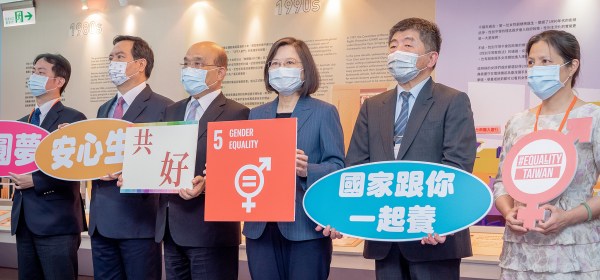
Written by Zoe Parrott. There is no doubt that, as three examples of major developed East Asian countries, Japan, South Korea, and Hong Kong are able to boast of countless laudable achievements. Furthermore, compared to other countries, all of these nations have impressive Human Development Indexes, ranking higher than the United States. However, there is one aspect of each of these nations that often flies under the radar – the infamous gender inequity these nations are characterised by. For concrete examples, look no further than DJSoda, who was sexually assaulted during her show in Osaka, Johnny Kitagawa, who, for decades, dangled “the price of stardom” as an explanation for his sexual abuse, and the four undergraduates who were sexually harassed and/or raped by their older 28-year-old peer at the Education University of Hong Kong.  However, there seems to be one outlier among its peers – Taiwan, otherwise known as the Republic of China.
#MeToo Cases Lead to Legal Hotline for Victims. But Will This Change Engrained Social Attitudes?

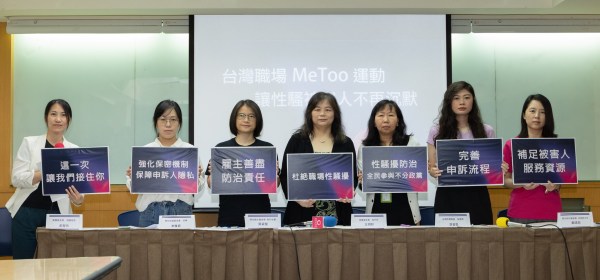
Written by Darice D. Chang, Caritta Lin, and Rita Jhang. The #MeToo movement blossomed in Taiwan in May 2023 partly due to a successful TV show, Wave Makers, which features sexual harassment in the political world and partly due to several high-profile sexual harassment cases brought to light in Taiwanese politics around the same time. While increased social awareness and scandal brought swift legislative action and increased support for victims in the form of both social support and legal aid, which we will delve into more detail, amendments to laws that have failed victims previously and increasing support are not a definitive solution to an entrenched social issue — instead, we should consider the various factors that have contributed to a society where power based gender violence could be an open secret.

The Green Party Taiwan’s Achievements and Challenges in Promoting Gender Equality

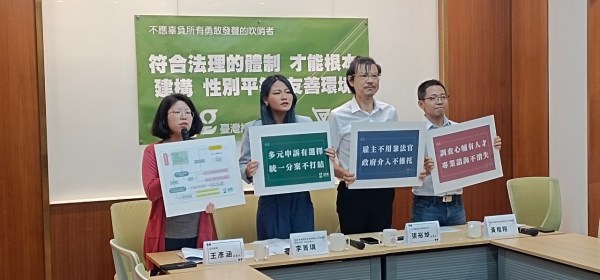
Written by Wang Yan-han, Dafydd Fell and Peng Yen-wen. Founded in January 1996, Green Party Taiwan (GPT) was the first Green Party to be established in Asia. It is one of the oldest movement parties in Taiwan, created through the efforts of student activists and several civil society groups, including activists from the eco-feminist Homemakers United Foundation. One of the main reasons Taiwan has made such impressive progress in the realm of gender equality has been due to civil society activism. Since Green Parties operate on the boundaries between civil and political society, an examination of the GPT’s case can bring a different perspective on Taiwan’s achievements and challenges in the realm of gender equality.

Gender Politics: Public Views of Women in Politics

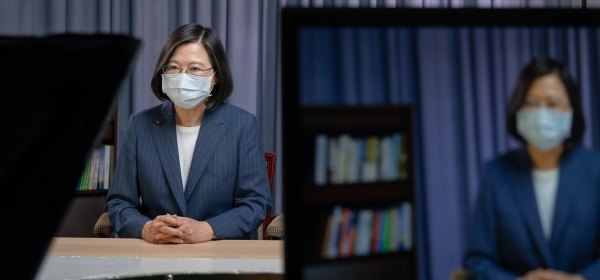
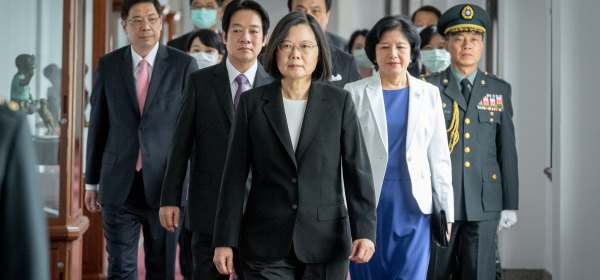
Written by Timothy S. Rich, Madelynn Einhorn, and Isabel Eliassen. Taiwan’s efforts at gender parity for electoral offices have resulted in a legislature where women currently hold 41.6% of seats. This leaves Taiwan ranked 12th globally, with only one Asian country (Timor-Leste) with similar rates. However, despite the success of President Tsai Ing-wen, the vast majority of executive offices (mayors and magistrates) are still held by men. Gender equality and the rise of women in national politics are common narratives when discussing Taiwanese politics.

The Entangled Histories of Taiwan’s Women’s Movements: A look at Two Pioneering Groups

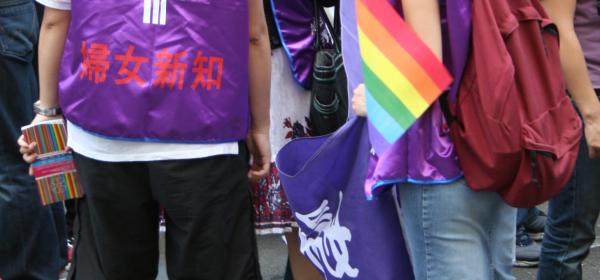
Written by Elizabeth Frost. Much of Taiwan’s impresive progress towards gender equality is thanks to the Taiwanese island’s women’s movement. Two groups that have been instrumental in the post-martial law era Taiwanese women’s movement are Awakening and the Homemakers United Foundation (HUF). The early stages of both groups were similar – Awakening began as a magazine in 1982, and HUF was initially established as the women’s auxiliary of the New Environment magazine in 1987. After the lifting of martial law, the groups were incorporated into independent foundations – Awakening in 1987 and HUF in 1989. Awakening is one of the most influential feminist groups in Taiwan, and HUF is now one of Taiwan’s largest environmental NGOs. 

Positioning Taiwanese Queer Cinema on the Global Stage

Written by Yi Wang. Significant progress and landmark rulings in advancing LGBTQ+ rights have been made across Asia in recent years, though many challenges and obstacles remain. Asians are among the fastest-growing ethnic groups in the UK, but Asian LGBTQ+ communities are not widely represented. Film reflects society and a medium capable of raising awareness amongst audiences in a direct and accessible way. Queer representation in the media is strongly linked to the wider public’s views on LGBTQ+ communities. I founded Queer East to amplify the voices of under-represented queer Asian and diasporic communities.

Keeping the Door Open: How Taiwan’s Gender Quotas Brought More Women into Office – and Why We Need More

Written by Rose Adams. At only 20 years since its first democratic transfer of power, Taiwan’s democracy is shockingly well developed. With a voter turnout of 74.9% in 2020’s national election and a female President, Taiwan has achieved democratic feats that even the United States has yet to realize with 200-plus years of democratic experience. One of the more impressive of these records is Taiwan’s current percentage of women in government: a whopping 38% of legislative seats, one of the highest of any democracy. Compare that 38% to Japan and Korea, two of Taiwan’s neighbours who have similar electoral systems. At 10% and 17 %, respectively, of Japan and Korea’s legislature seats filled by women, Taiwan’s success is miraculous.

Living with and through Patriarchy: My Experience as a Migrant Worker and Migrant Wife in Taiwan

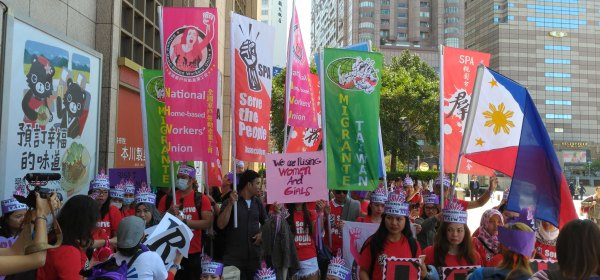
Written by Nguyễn Thị Thanh Hà and Isabelle Cheng. It has been more than three decades since Southeast Asian nationals began to work and establish their families in Taiwan. Men and women from the Philippines, Thailand, Indonesia, Vietnam and Cambodia fill the labour shortage in construction, fishing, manufacturing, care and agricultural industries, whilst the women became members of Taiwanese society because of their marriage and family formations. This ongoing regional migration flow has enriched the socio-cultural landscape of Taiwan, where multiculturalism becomes the prevailing normative value that respects and appreciates differences. Nevertheless, this development has not been smooth or unchallenged.