The KMT, Ethnic Chauvinism, and the Freddy Lim Recall

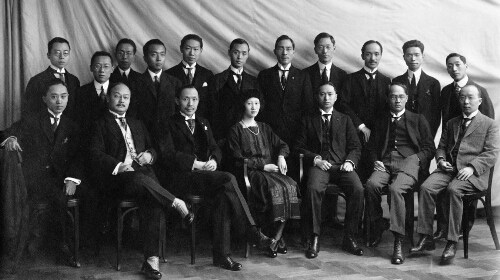
Written by Michael A. Turton. Of course, ethnic chauvinism is not the only reason for the two recalls but given how rightist politicians spearheaded the recalls, it obviously played a role. Chen and Lim’s energetic, intelligent, self-aware Taiwaneseness was obviously provoking for a colonial elite whose ideological heart contains a powerful streak of racism and ethnic chauvinism directed at other ethnicities in Taiwan. Hopefully, discussions of Taiwan politics will shed more light on this key shaper of KMT attitudes toward Taiwan, and Taiwanese attitudes toward the KMT, especially among the young.
Unpacking the Colonialist Undertones of the Indigenous People’s Basic Law: Law as a Tool of Oppression in Taiwan

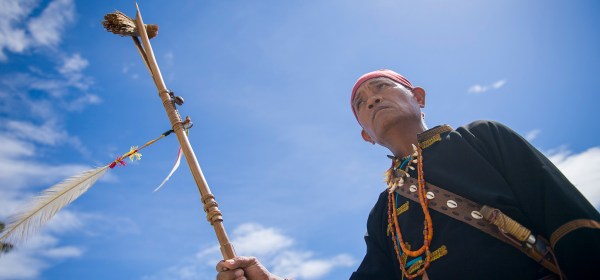
Written by Aaron Chen. In May 2021, Taiwan’s Constitutional Court considered a high-profile case concerning indigenous hunting rights. First opened in 2013, the Bunun man, Tama Talum, had been convicted for violating the Wildlife Conservation Act, which limited indigenous poaching to solely ceremonial activities. He was also prosecuted under the Controlling Guns, Ammunition and Knives Act, legislation that only allowed indigenous peoples to hunt using homemade weapons, whilst Tama Talum did otherwise.

The Problem of Naming the Most Popular Non-Mandarin Language Used in Taiwan

Written by Hung-yi Chien. There seems to be no problem with saying “Taiwanese” or “Taigi” in English. People know Taiwanese is the most spoken non-Mandarin language in Taiwan, and Taigi (Tai[wan] language) is how the language calls itself. However, these names give a false impression that Taiwanese is the only language that genuinely belongs to Taiwan and neglects the existence of Hakka and indigenous languages in this culturally and ethnically diverse country. Hakka activists have complained about the name Taigi for decades. They urge to use other names to call this language and reserve Taiwanese/Taigi for all languages spoken in Taiwan. The Taiwanese/Taigi fellows do not welcome this proposal because there is no agreement on how to call this language if Taiwanese/Taigi is not an option. Up until today, the name of the most spoken non-Mandarin language in Taiwan is still in dispute.

Remembering Chiang Kai-shek in Japanese Media

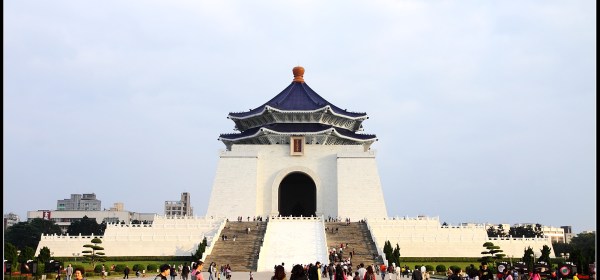
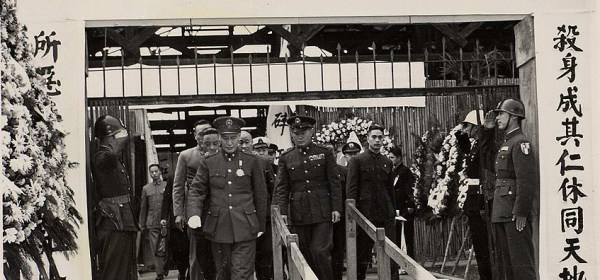
Written by Robert Hoppens. Just before midnight on April 5, 1975, Chiang Kai-shek (b. 1887), long-time leader of the Chinese Nationalist Party (KMT) and president of the Republic of China (ROC), died at his home in Taipei at the age of 87. Around the world, Chiang’s death occasioned media retrospectives on his long career and speculation about the future of Taiwan, where his government had spent the last quarter-century in exile.

Colonial Racial Science and Taiwan: How Indigenous Peoples Became Anatomy Data Points. Part II 

Written by Ko-yu Chiang, We received a reply confirming that the Mudan remains were indeed still stored in their collection. So, at this point, the puzzle was finally complete. This is the full story of the journey taken by these unfortunate victims. They came from a battle in Pingtung, to an anatomy lab in Yokohama, to the University of Edinburgh, where they were left in storage. 

Colonial Racial Science and Taiwan: How Indigenous Peoples Became Anatomy Data Points. Part I

Written by Ko-yu Chiang, Under the beating sun in Taiwan’s most southern tip, Mudan Township, an indigenous Paiwanese district with a current population of 5,000, opened a public committee in May 2020. Despite being in a small township in Taiwan’s far south, this committee was an international affair. In attendance was the council of Indigenous Affairs, Bureau of Cultural Heritage of the Ministry of Culture, the Pintung County government. The committee also extended to the other side of the world: Edinburgh University in the United Kingdom and the spirits of sixteen Paiwanese Mudan soldiers who have only recently returned home after 146 years abroad.

George Psalmanazar and the fake history of Taiwan

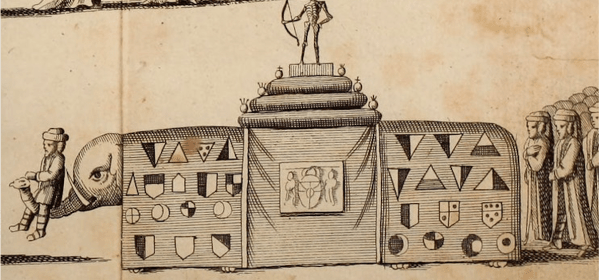
Written by Hung-yi Chien. In the spring of 1704, Psalmanazar published his book An Historical and Geographical Description of Formosa and reported many strange customs beyond people’s imagination. He claimed Formosa had a sophisticatedly organised society but was conquered by Japan in the seventeenth century. People of Formosa sacrificed thousands of boys’ hearts to worship their deities.

The Western Gaze: Modern Art and Cultural Diplomacy in 1950s and 1960s Taiwan

Written by Man-hua Chen. Taiwanese modern art burgeoned in the Japanese colonial period. After World War II, along with the change in regime in Taiwan, participation in international art exhibitions as a country became an essential cultural and diplomatic means adopted by the ROC government. The original motive behind this initiative was purely political; nevertheless, it has been a key driver for promoting the development of modern art in Taiwan.

Combatting Human Trafficking during Republican China

Written by Bonny Ling. One of the most interesting chapters in the history of modern China and international law is the vibrant and dynamic engagement of the Republican Chinese government with the League of Nations, the intergovernmental precursor to the United Nations, to address the exploitation of women for prostitution, known then as the “traffic in women.” It is an overlooked prologue that provides the historical context for efforts by successive governments on both sides of the Strait to combat exploitation. This issue remains just as relevant today as it did close to a century ago.

The “Lost Outlying Island” of the Tachen Diaspora

Written by Kai-yang Huang. As Taiwan’s identity debates are slowly eking towards a consensus, it is essential to also pay attention to the diverse marginal voices of the people of Taiwan. Thus, because discourse about Taiwan as a “maritime nation” is increasingly common, more attention has been paid to marine conservation—for example, the IOC established the Maritime Protection Agency and has preserved traditional fishing techniques (for example, the Marine Science Museum exhibits traditional Han fisheries). For the Tachen diaspora, the ocean has long been an important part of their customs and a poignant reminder of their forced migration from their homeland due to the Chinese civil war and their subsequent migration to the United States. Supposing that Taiwan perceives itself as a “maritime nation.” In that case, these narratives deserve a place in Taiwan’s modern historical understanding.

The Penghu Migrants Behind Kaohsiung’s Post-war Boom

Written by Tshinn-Hun Miguel Liou. Strictly speaking, there’s nothing inherent about the connection between the people of Kaohsiung and Penghu, and the route that many people from Penghu took from Kaohsiung was often more treacherous than the path for those emigrating within Taiwan. However, the consensus linking people from these two places should give pause for thought. So, why is Kaohsiung the first choice for people from Penghu who move to Taiwan? 

1 2 3 4 5 6 9