Indigenous Identity in Taiwan’s Contemporary Cinema: From Screen to Self

Written by Ana Paloma Martínez Gómez. This article explores how Indigenous identity is portrayed on screen and how film supports cultural revitalisation and self-representation through a decolonial and gendered lens. As a new Taiwanese national identity emerges, the gap between official recognition and ongoing cultural marginalisation reveals the complex space Indigenous communities occupy.

Crossing Paths: A Cultural Odyssey from Taiwan to Seattle 

Written by Sayang  Anang. In November 2023, I had the honour of being invited as a member of the Taiwanese Indigenous delegation to the Kuroshio Odyssey exhibition hosted by the Burke Museum at the University of Washington, Seattle. Before embarking on this journey, I hadn’t given much thought but to grasp the rare opportunity to share the traditional cultural practices of my tribe—the Lidaw tribe of the Amis in Hualien, Taiwan—with my foreign friends. Excitement filled me as this was my first time setting foot on American soil, and I relished every exchange I made. The thrill stemmed from meeting new people, exploring the UW campus’s rich history, or appreciating the proximity of Burke Museum’s collections. With each encounter, we absorbed different nutrients, stimulated more reflection and feedback, and made this trip a fruitful one. 

Indigenous Taiwan through Critical Lenses: Comparative and Place-Based Perspectives 

Written by Yi-Yang Cheng, Ssu-Chieh Jessica Fan and Susan Hou. Centring on Indigeneity in Taiwan, the interdisciplinary roundtable “Indigenous Taiwan through Critical Lenses: Comparative and Place-Based Perspectives” conceptualized Taiwan as a grounding point for multiple geographical perspectives. Instead of positioning Taiwan as a boundary object between the East and the West, it prompted a fresh envisioning and repositioning of Taiwan as a liminal space of unbounded and interconnected possibilities. Put differently, the roundtable discussions explored alternative ways of positioning Taiwan in/and the world, including perspectives which might have previously been marginalized or eluded consideration.

Beyond Maps: Indigenous 3D Mapmaking as a Path to Indigenous Resurgence

Written by Sra Manpo Ciwidian. To assert Indigenous sovereignty over our land, especially the traditional territories, the Indigenous peoples of Taiwan have employed various approaches to demonstrate our rights. Making a three-dimensional map model of Indigenous communities is the most prevalent among these approaches. Since the late 1990s, when the Kucapungane community of Rukai people produced the first Indigenous 3D map model in Taiwan, contemporary Indigenous communities in Taiwan have been developing this community-based mapping method for over three decades. 

Storytelling Behind the Overseas Taiwan Indigenous Collections: Material Cultures as a Means to Connect with International Indigenous Communities

Written by Nikal Kabalan’an (Margaret Yun-Pu Tu). Taiwan’s Indigenous artefacts were taken, bought, brought, or even got stolen and ended up miles away from the Indigenous communities where they were made by the hands of Indigenous ancestors. Some of these Taiwan Indigenous collections were already kept in a foreign museum overseas for almost a hundred years. Some of these museums are devoted to reflecting the devastating colonial history and decolonising the space by, for example, rewriting the narratives, displaying their collections in more inclusive ways, and collaborating with the cultural communities from which these cultural holdings originated. The Burke Museum of Natural History and Culture in Seattle, Washington States, United States, where I am currently leading the review and engagement plan for the Indigenous Taiwan holdings with my colleagues, is one example of decolonising the museums.

Indigenous Youth Actions in Taiwan: Connecting Our Voices to the Global Stage 

Written by Sra (Bo-Jun Chen). Taiwan’s Indigenous peoples are becoming increasingly concerned with various global issues that are also highly pertinent to our own situation in Taiwan, such as environmental, human rights, and cultural heritage issues. In recent years, for instance, Indigenous youth in Taiwan have realised the significance of language and identity revitalisation, which may assist us in combating oppression. Moreover, we have found that the insensitivity of our lands and ignorance of our history pose a far greater threat to us than the plundering of our resources and hazards to our lives. Some Indigenous youth are thus committed to overcoming obstacles influenced by colonialism and strive to bring our voices and agendas to the global stage. Through our participation on the international stage, we aspire to be heard and have more conversations about similar difficulties. 

The Mysterious Tsou Shaman: The Guardian of Traditional Culture

Written by tanivu yasiungu and Aaron Valdis Gauss. Living high up in quiet Ali Mountain, the Tsou shamans intimately connect with the earth and the ancestral spirits. But, of course, they are also connected with the most beloved god of the Tsou tribe––Hamo. Another important role of the Tsou shamans is to preserve, perpetuate and affirm Tsou myths, thereby maintaining a connection with the ancestors. Tsou shamans believe that working with nature is the most suitable way for everyone to live. We, the Tsou people, have always believed that being simple and pure in our beliefs is the only way to maintain the closest relationships with our god Hamo.

Displaying Indigenous People’s “Heirlooms” in Museums? Lessons from the Heirloom Exhibition of Pingtung Indigenous Peoples Museum

Written by Drangadrang Kaljuvucing. “The Family Heirlooms of Slop-Dwelling Peoples” exhibition was the fruit of a competition to discover Indigenous heirlooms that still exist in Indigenous communities. It was the Pingtung Indigenous Peoples Museum (PIM) partnering with four other Indigenous museums in Pingtung County, including Wutai Pavilion, Sandimen Pavilion, Laiyi Pavilion, and Shizi Pavilion, to conduct exhibition collection, field surveys, and promotion as part of a project with the Ministry of Culture in Taiwan. The thirteen heirlooms for the exhibition, which included clothing, accessories, paintings, weaves, wood carvings, clay pots, and other living implements, originated from seven Indigenous towns in Pingtung County, except for Chunri Township. While the exhibited pieces were grouped into three categories: “Living Etiquette,” “Decorating Life,” and “Cultural Heritage,” the exhibition highlighted the diversity and uniqueness of the heirlooms revealed by their owners through interview processes.

At the Edge of State Control: The Creation of the “Matsu Islands”

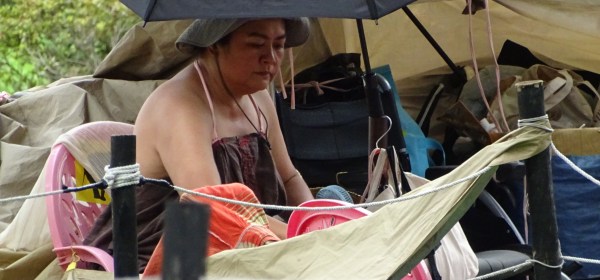
Written by Sheng-Chang Lin. As well as creating Matsu as a region, the Cold War also tied Matsu to Taiwan. Communication had been minimal between the two before the war—Taiwan was a colony of Japan, whereas Matsu was part of Fujian—but not both regions were part of a new post-war state. Especially due to the prosperity on Taiwan Island, migration from Matsu to Taiwan has become increasingly common. Nowadays, the Bade district of Taoyuan City(桃園市八德區) and Keelung City (基隆市)are known for their large Matsu population.

Rethinking Self-Identity and Taiwanese Indigenous Musicians’ Contemporary Presentation on Social Media

Written by GuoTing Lin (Kuing). This work uses digital ethnography to consider how Taiwanese indigenous musicians utilise Facebook as their primary official platform for audience communication. I go about this by analysing cover images, profiles, photos, and feeds on Facebook, which is used to depict the details of the texts, photos, and videos. It thus shows the self-presentation and the communication of Taiwanese indigenous musicians concerning cultural and social issues. Moreover, I argue that indigenous musicians perform their identity through online self-presentation in everyday life.

When 50 Steps is Further than Taipei: Indigenous Contemporary Art and Temporal Orientation

Written by DJ Hatfield. Over the past ten years, images of Indigenous people have increased both in Taiwan and international representation. Indigenous people appear in depictions of Taiwan’s relationships to Southeast Asia and the Pacific, in promotions of Taiwan as a tourist destination, in discourses of sustainability, and images of environmental protest. In relationship to these representations of Indigenous people, Taiwanese Indigenous contemporary artists maintain an ambivalent footing, aware that current indigenous visibility rearticulates Taipei (here referring broadly to settler power) rather than displacing it.

1 2