Hou You-yi and Terry Gou in the KMT nomination process: electoral prospects for 2024

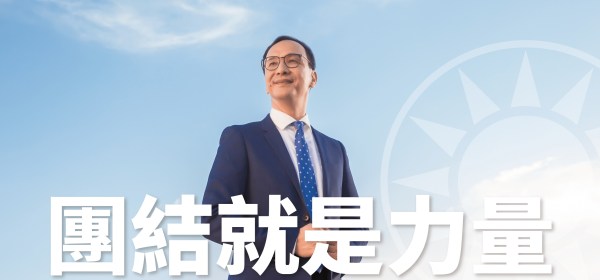
Written by Mingke Ma. Unlike the nomination process for the General Election in 2020, the Chinese Nationalist Party (中國國民黨, KMT) decided to forgo a party primary election to nominate its presidential candidate for the upcoming General Election in 2024 to ‘avoid internal strife’. New Taipei City Mayor Hou You-yi (侯友宜) and the founder of Foxconn, Terry Gou(郭台銘), have publicly declared their interest in endeavouring for the KMT’s presidential nomination. In this piece, I will show that although Hou seems more likely to receive the KMT’s final nomination, Terry Gou remains an important asset for the KMT’s overall electoral prospects.

Internal Divisions, Regardless of the Outcome: The KMT’s Troubled Candidate Decision-Making Process

Written by Brian Hioe. At this stage in the election, the KMT has already announced some of its planned legislative candidates. In addition, the KMT is slated to announce its presidential candidate sometime this month, with a party congress planned in July. But the KMT’s process to decide both the presidential and legislative candidates that the party will field in the 2024 elections has already been controversial. Moreover, the primary outcome threatens to further divide the party at a time when the pan-Blue camp is already plagued by in-fighting. Likewise, the controversies that have already occurred reflect the party’s unresolved internal divisions at a time when the party likely needs unity if it hopes to prevail in the 2024 elections.

Battle for the KMT: For election or ideology?

Written by Adrian Chiu. It was generally thought that political parties are either election-based or ideology-based, depending on the factions dominating the party. The Chinese Nationalist Party (KMT), having lost two presidential elections in a row, are now at crossroads to decide which they are for. As a mainstream party in a two-party system, the KMT is generally assumed to be aimed at winning elections. But as a former authoritarian party, adapting to electoral politics has always been tricky for the party. The increasingly vocal ‘deep blue’ faction within the party also seemed to suggest otherwise. As the general elections draw near, the temperature is rising for the battle for the party.

Can Democracy be fed (or fed up)? Economic Factors Towards Democratic Development and Political Efficacy in Taiwan Presidential Election (1996-2020)

Written by The Fengze Strategy. Taiwan’s 2024 presidential election is approaching. Although candidates from different major parties have yet to stand out representing their parties, economic development has been considered an essential issue in every campaign. Some political entrepreneurs thought that democratic values could not be sufficient for economic development; in other words, citizens who prefer economic development the most would consider the so-called democratic value to be “a castle in the sand”. In this article, we will examine the presidential elections in Taiwan from 1996 to 2020 through the basic factor of economic development, the gross domestic product (GDP).

Blue-White Cooperation Will Always Remain A Rumour

Written by Jonathan Leung. The occasions of politicians from the TPP and the KMT appearing in the same scene has increased gradually; their ambiguous relationship has become one of the trendiest topics in the party politics of Taiwan. Ann Kao, the TPP elect Hsinchu Mayor, was publicly endorsed by KMT politicians. Various TPP councillor candidates were also caught campaigning with KMT candidates in the previous election. The rumours of the two parties forming a political alliance have been rising in the past year, especially regarding the campaign of the 2022 local elections. People are concerned about their relationship this year as the national election is coming in January 2024. The voices of the two parties jointly nominating presidential candidates is the most discussed topic now. This article concludes their previous interactions and examines their probable future relation.

Kuomintang Through the Ages

Written by Pradeek Krishna. The Kuomintang Party (KMT), established in 1912, ruled China from 1927 until 1948 before moving to Taiwan. The origins of the Kuomintang could be traced back to the decline of the Qing Empire. However, the party that held the mantle of the Chinese Revolution and ushered China into an era without Imperial rule had been forced to retreat outside of China. In recent years, the KMT failed to win the presidency in the 2016 and 2020 elections in Taiwan, raising questions over its legitimacy and relevance in a younger world.

Reflections on the 2022 Taiwan Local Elections: Demise of Taiwan Identity Politics?

Written by Chia-hung Tsai. From the perspective of identity politics, the 2022 local election results are puzzling. Tsai Ing-wen remains popular, partly because the DPP government successfully contains the Covid-19 pandemic in general while maintaining economic growth. China’s military exercises as revenge for the visit of the US speaker of the House, Nancy Pelosi, seem to drag down Chinese’ image to a lower level. These achievements and events should boost Taiwanese identity and hence favour the DPP candidates. However, the DPP was not credited for the Covid-19 measures, economic growth, and closer relations with the US. Instead, the DPP was criticized for delayed nomination, mismanagement of quarantine policies, and long-standing income inequality. In other words, identity did not play a big part in this election.

‘Ditching the DPP’, ‘Resisting China and Preserving Taiwan’, and Democracy: Interpreting the Results of Local Elections in 2022

Written by Mei-chuan Wei. The election results led many to conclude that Taiwan voters are more concerned about the ruling DPP’s inability to deliver on its promise to create a more just society and less worried about situations in the Taiwan Straits. However, this is misleading if we consider the results of local councils. The seats of local councillors of DPP have increased, while the KMTs have decreased. How, then to interpret the signals sent by the voters as embodied in the election results from the perspective of democracy in Taiwan?

How did the DPP perform in the local elections?

Written by Jonathan Leung. Less than a week after the 2022 local elections, the mid-terms showed a completely different result than the national election two years ago. With a landslide victory of 8.17 million votes in the 2020 presidential election, the Democratic Progressive Party (DPP) has only received 4.74 million ballots for the mayoral and magistracy elections. Under Tsai Ing-wen’s leadership, the party has received the highest and lowest votes in history in national and local elections.

Taiwan’s mid-term elections: Most politics is local, the KMT remains a force to be reckoned with, and the DPP needs to regroup

Written by Gerrit van der Wees. The main indicator of how well the parties did, was the number of city mayor and county magistrate positions they gained or lost: the ruling DPP went down from their current number of seven positions to five, while the opposition KMT went down from their current number of 14 to 13, with two of the remaining seats going to independents, and one, Hsinchu City, to the Taiwan People’s Party of Taipei mayor Ko Wen-je. In one location, Chiayi City, the election had to be postponed until December 18 because of the death of a mayoral candidate.

Taipei Mayoral Race: For the City or for the Party?

Written by Jonathan Leung. Less than three weeks before the 2022 Taiwanese Local Elections, the limelight is on Taipei City, Taoyuan City, Hsinchu City and Miaoli County. Multiple candidates from different parties running in these constituencies are unprecedented and will surely add uncertainties to the polling results. The first pass-the-post system renders the mayoral campaign a competition between the Chinese Nationalists Party (KMT) and the Democratic Progressive Party (DPP). Yet, the young established New Power Party (NPP) and Taiwan People’s Party (TPP) have both nominated candidates to run for mayoral and magistrate posts and city councillors. Rather than being also-rans, they now stand a decent chance to win. This article examines the case of the Taipei City Mayoral Election, evaluating the differences between the two traditionally dominant parties and the newly established ones.

1 2 3 4 5 12