Distance Between Goals and Actions: The Challenges of Implementing Legal Frameworks for Climate Change Adaptation in Taiwan 

Written by Chien-Liang Lee. This article examines the evolution of Taiwan’s legal framework for climate change adaptation, identifying gaps between the current framework and the adaptation goals. It argues that the most critical missing link is the lack of robust normative connections between the various special administrative laws. It calls for more cohesive legal mechanisms to better connect multiple relevant sectors involved in climate adaptation actions.

TACPS Cultural Petition to the 2024 Presidential Election: The Sustainability of Culture and Democratic Governance in Taiwan

People are the mainstay of Taiwan’s culture, and “freedom” is at the centre of people’s thoughts and creations. Since the early 2000s, Taiwan has undergone a series of citizen-led cultural reforms, including a series of citizens’ cultural movements from 2000 to 2010 (such as the advocacy for community development and multicultural policies), the establishment of the Ministry of Culture in 2012, the National Cultural Conference in 2017/2022, and the White Paper on Cultural Policy in 2018. With the promotion of the Cultural Fundamental Act in 2019, Taiwan has, on the one hand, established the prototype of the country’s “cultural governance” system and civic and cultural awareness, and on the other hand, demonstrated its uniqueness in practising sustainable cultural democracy and participatory cultural governance among the global society.

Why Do We Have Poor Health? How Colonialism Continues to Marginalise Indigenous Peoples

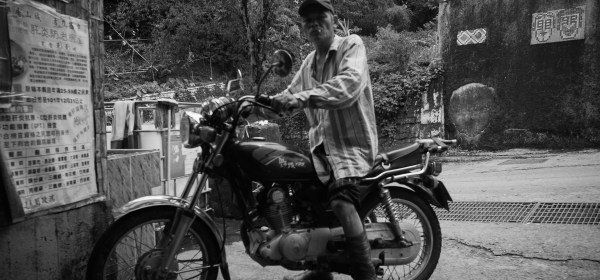
Written by Wasiq Silan. Despite the varying colonial histories with Indigenous peoples in other parts of the world, Indigenous people in Taiwan have one disturbing issue in common: poor health. Among other indicators (such as maternal mortality, birthweight, malnutrition, obesity and so on), Indigenous peoples in Taiwan die almost a decade sooner than the general population. Why this disparity? We are taught to believe the argument that blames Indigenous peoples for their own high-risk behavioural choice, lack of awareness, low educational attainment, and dysfunctional families; closer examination shows that we need to look beyond the individual level.

Taiwan’s Asylum Policy: A Lack of Political Will to Implement the Law?

Written by Kristina Kironska. Taiwan is considered one of the most progressive countries in Asia but has no asylum law. Although debates on the issue occasionally occurred for more than ten years, there has been no progress on the draft asylum law since its second reading in 2016. One significant point of contention is to what extent an asylum law should address not only people from “uncontroversial” foreign countries, such as the Rohingya in Bangladesh, but also people from China, Hong Kong, and Macau. As with any issue that touches on cross-strait relations, the situation is complicated: on the one hand, the government celebrates Taiwan’s status as a beacon of human rights; on the other, extending asylum to PRC citizens risks stoking tensions with Beijing. 

Landlords, Subsidies, and Policy Failures: Renting in Taipei and New Taipei City

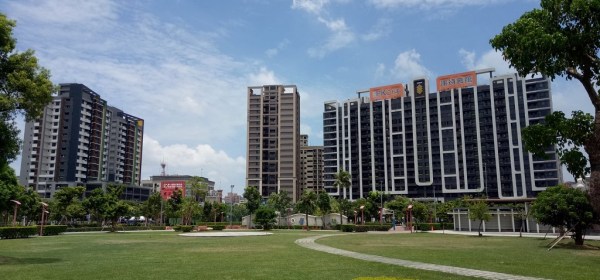
Written by Natalie Dai(戴淨妍), Jessica Hsu(徐卉馨), Sophia Lee(李昕儒), Dennis He(何正生); Translated by Sam Robbins. In August 2020, Lin Nuo-ning signed a half-year contract with her landlord and planned to stay in this apartment during her career move. However, when Nuo-ning applied for the subsidy for a second time, she received a call from her landlord whilst at work, criticising her for applying for the subsidy without telling her landlord first. As a result, her landlord asked her to move immediately. In applying for the subsidy, Nuo-ning had unintentionally caused the national tax bureau to contact her landlord to expect her tax records.

A Tale of Two Cities: Taiwan’s Social Housing Policy Practice in Taipei and Taoyuan City, 2014-2018

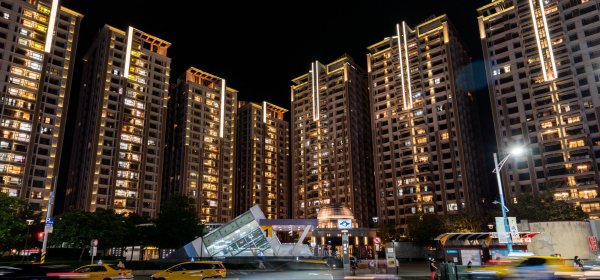
Written by Chris Chih-Hua Tseng. Taipei has spawned some policy innovations. Meanwhile, in Taoyuan, an adjacent developing city that has built massive amounts of social housing, none of the above happened. Instead, the city government proudly announced it had built social housing the fastest. Why has social housing developped much more sluggishly in the capital than it has in Taoyuan? To answer the differences between these two cities, we need to expand our scope to broader urban politics and urban developmental processes.