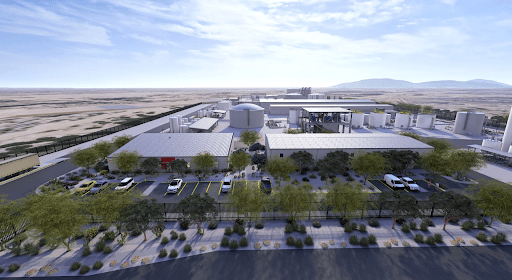
Water Nexus: Can Semiconductors and Sustainability Coexist in Taiwan?

Written by Alexis Huang. This article examines Taiwan Semiconductor Manufacturing Company (TSMC)’s water–energy nexus, tracing its ecological costs, sustainability efforts, and infrastructural challenges. Despite advances in wastewater recycling and renewable integration, TSMC’s growth remains constrained by environmental limits, showing that long-term leadership depends on systemic reform, not technological fixes.
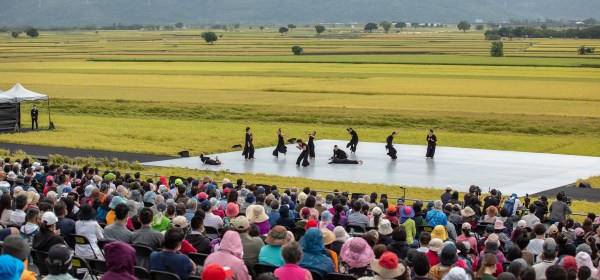
A Time of Extinction: Dedicated to Whom? Exploring Sustainability through the Lens of Theater, Let’s Be Consciously Wasteful

Written by Charles Lee. This article raises fundamental questions about theatre sustainability. It focuses on theatre venues and infrastructure in Taiwan by critically examining productions that attempt to respond to the concerns through distinct approaches. The author also investigates the unique dynamics Taiwanese The author also explores the unique dynamics that Taiwanese audiences have with the “aesthetics of Anthropocene theatre”.

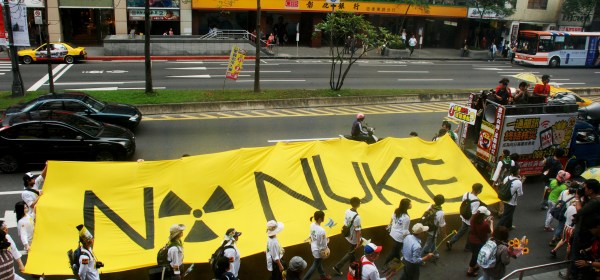
Taiwan’s energy policy at the crossroads in the presidential election in 2024? 

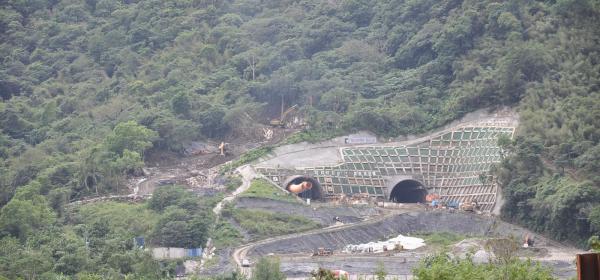
Written by Anthony Ho-fai Li. Energy policy remains a highly controversial policy arena in Taiwan after democratisation, given its importance for Taiwan’s security, environmental sustainability and economic development. Under the presidency of Tsai Ing-wen, the agenda of “Nuclear-free Homeland 2025” (2025非核家園) proposed by the Democratic Progressive Party (DPP) in 2016 has been subject to political challenges, which involved the debates about the use of nuclear energy beyond 2025 and the reduced capacity of coal-fired electricity plants for air pollution mitigation. The policy strategy to replace nuclear energy with rapid solar energy development has also faced enormous social challenges as its large-scale installation conflicts with the existing land uses. 

Improving Conditions of Artistic Labour and Local Economic Sustainability 

The essence of cultural policy lies in nurturing and stimulating social creativity, which involves both the preservation of classics and the kindling of future possibilities. The durability of policy development hinges on the transmission of memory and skills. Rather than being a political display, citizens occupy a central role in artistic performance, whether as creators or audience members. Does the support for creators aim to ensure the vitality and competitiveness of society, to enhance cultural production, or does its impact merely extend to safeguarding welfare measures? 

Cultural Assets and Spatial Redevelopment for Sustainability 

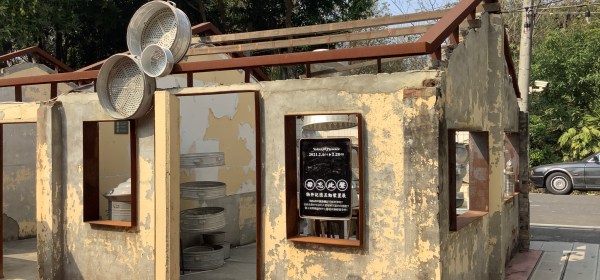
Since the Ministry of Culture introduced the “Regeneration of Historic Sites” policy in 2017 to harmonise cultural and spatial governance, counties and cities have been grappling with a range of challenges involving restoration, repurposing, operational management, and interdepartmental coordination. While these issues are not new, the substantial investment in the “Regeneration of Historic Sites” policy has shed light on the ongoing struggles in cultural asset management. Today, cultural heritage is no longer solely a cultural concept; it has evolved into a medium and a realm for reflecting and reconstructing urban and rural environments. Whether we refer to it as “cultural heritage” or “cultural inheritance,” the emphasis remains on preserving cultural value. Consequently, alongside the growth of developmentalism, the spirit and techniques of preservation, maintenance, and reuse have become pivotal benchmarks for reshaping urban and rural environments.

Cultural Sustainability as A Practice of Democracy

In the context of sustainable development, culture is seen as an important component of development, along with the economy, society and the environment, which are all interrelated. For the development of a country, it is necessary to go beyond the economic perspective and adopt a cultural approach, incorporating cultural policies as a key element of the development strategy. This also implies the re-democratisation of culture in all policies and actions. To actively participate in cultural activities and give their voices in determining development goals and means of development. The bottom-up approach, with the idea of people as the subject, will promote the shaping of public culture on the one hand and the practice of cultural democracy on the other.  

TACPS Cultural Petition to the 2024 Presidential Election: The Sustainability of Culture and Democratic Governance in Taiwan

People are the mainstay of Taiwan’s culture, and “freedom” is at the centre of people’s thoughts and creations. Since the early 2000s, Taiwan has undergone a series of citizen-led cultural reforms, including a series of citizens’ cultural movements from 2000 to 2010 (such as the advocacy for community development and multicultural policies), the establishment of the Ministry of Culture in 2012, the National Cultural Conference in 2017/2022, and the White Paper on Cultural Policy in 2018. With the promotion of the Cultural Fundamental Act in 2019, Taiwan has, on the one hand, established the prototype of the country’s “cultural governance” system and civic and cultural awareness, and on the other hand, demonstrated its uniqueness in practising sustainable cultural democracy and participatory cultural governance among the global society.

Excavating Ancient Knowledge: Climate Action and the Practice of Sustainability

Written by Chung-chun Wang. Since museums are highly and closely related to society and the public with their transformation, the new definition demonstrates that accessibility, inclusiveness, diversity and sustainability are the key aspects that echo the contemporary trends. Therefore, museums usually aim to include these notions in their plans, research, and exhibitions. For example, the emphasis on “environmental education” is widely seen in museums, as it is directly linked with sustainability associated with the current energy and food crises. In this regard, how does archaeology, a discipline considered an old, ancient, and mysterious field with studying prehistories and peoples, respond to the vision of sustainability?

Taiwan’s Experience and Global Efforts in Reponse to Covid-19: Towards a Digitalised and Sustainable World

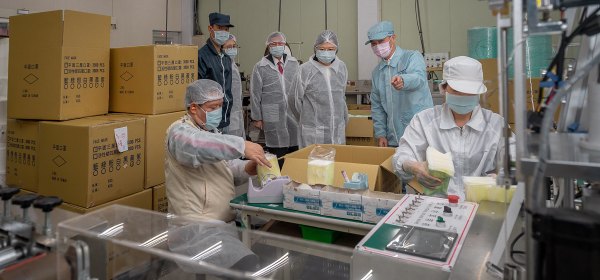
Written by Chih-Wei Chen. In recent decades, the world is facing increasingly severe challenges caused by climate change, natural disasters, worldwide public health issues, and so on. To combat the challenges, the United Nations officially launched Sustainable Development Goals (SDGs) in 2015 and advocated that all countries around the world endeavour to cooperate to achieve the goals. On the other hand, the advent of the digital era and the rapid development of digital technologies, such as big data analytics and artificial intelligence (AI), have provided new opportunities for people to implement sustainable development measures.