Resolution 2758 and Taiwan’s Global Struggle for Recognition

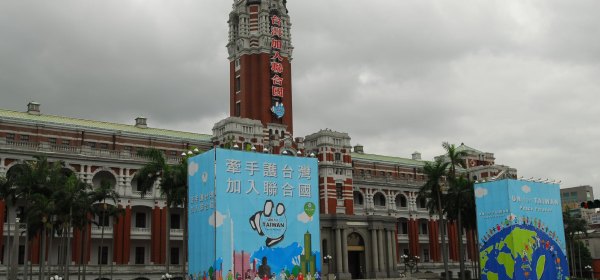
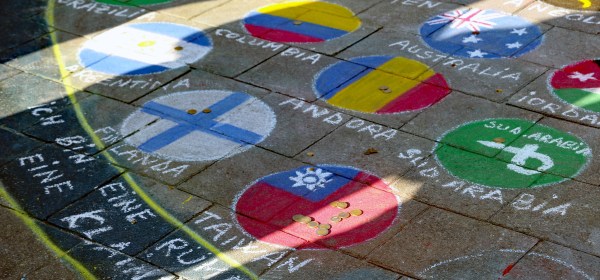
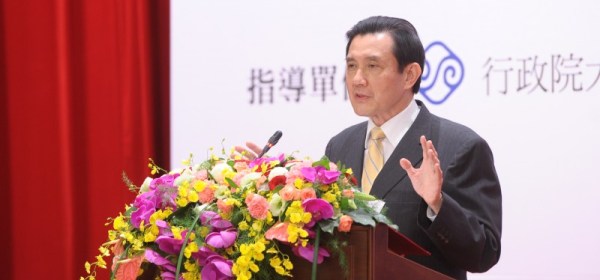
Written by Yenting Lin. This article examines the misinterpretation and misuse of UN Resolution 2758, which defines China’s representation in the UN but not the status of Taiwan. But it has been used by Beijing to endorse the “One China Policy”. Pushback against China’s interpretation has begun to emerge in recent years as Taiwan’s contributions to international society are recognised.
Is Going Green Hurting Indigenous Communities? Reflection from Participating in the United Nations Permanent Forum on Indigenous Issues 

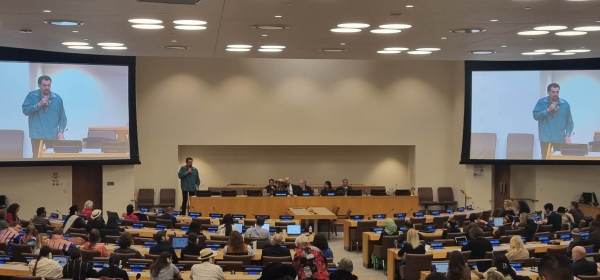
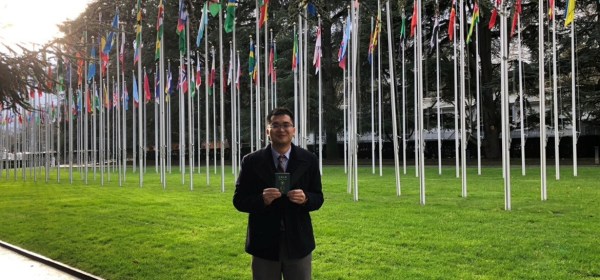
Written by Wasiq Silan. Is going green hurting Indigenous communities? Not necessarily. However, exclusionary conservation measures create a lose-lose outcome for non-Indigenous and Indigenous communities. Indeed, Indigenous peoples’ full and substantial participation is a prerequisite to achieving a sustainable future and halting the rapid loss of global biodiversity. This is true for the Indigenous communities in Taiwan, such as in the case of the solar panel controversy on the Katratripulr Pinuyumayan (Beinan in Mandarin Chinese) people’s traditional territory. Drawing from the experience of the Sámi, my recent participation in the United Nations Permanent Forum on Indigenous Issues (UNPFII) may shed light on this issue.

Taiwan on the eve of the International Decade of Indigenous Languages: a comparative perspective

Written by Brett Todd. Amidst the upheavals of this pandemic period, few would recall that 2019 was the International Year of Indigenous Languages, and fewer still realise that the International Decade of Indigenous Languages 2022-2032 is about to commence. Both were declared by the UN General Assembly, a space in which Taiwanese voices are not heard. However, Taiwanese Indigenous representatives have participated in the UN Permanent Forum on Indigenous Issues (UNPFII), which joined UNESCO in calling for urgent action to arrest the declining use of native tongues worldwide.

Three ways to suppor Taiwan’s UN membership

Written by Thomas J. Shattuck. ago, with the passage of United Nations General Assembly Resolution 2758, the United Nations admitted the People’s Republic of China and expelled the Republic of China (Taiwan). Since then, Taiwan has been internationally isolated and largely prevented from fully participating on the international stage. As Beijing continues its coercive campaign against Taipei and as U.S.-China competition intensifies, Taiwan’s international participation—centered around the United Nations—has again become a major issue. President Richard Nixon may provide a pathway for how the Biden administration should approach this problem

Taiwan, UN Membership and Human Rights Accountability: More than a Diplomatic Win

Written by Bonny Ling. Taiwan continues to be dogged by cases of extrajudicial killing, violating the fundamental human right to life, liberty, and security of person. A recent prominent case is the killing of a young Vietnamese migrant worker, Nguyen Quoc Phi, in August 2017 by a novice police officer in Hsinchu. The killing of Nguyen, immortalised in the two Taiwanese documentaries of the same name “Nine Shots” by Su Che-hsien and Tsai Tsung-lung, was marked by police brutality. The title is a reference to the number of bullets fired by the police officer in mere 12 seconds, killing an unarmed and unclothed Nguyen.

Taipei’s New Expectations on UNited Nations membership – analysing the impact of new dynamics in the Beijing-Washington Relationship

Written by Jinpeng Ma. Since the end of the Chinese Civil War in 1949, the US has exerted considerable influence on bilateral relations between Taipei and Beijing. A result of this is that the Taiwan issue (and in particular recognition of the One China Principle) has become a prominent dimension of the Beijing-Washington relationship. Looking back at the evolution of the relationship over the past three decades, it is clear that the Beijing-Washington relationship is entering into a new stage. From 1949 to 1971, the US’s commitment to protect the regime of the Republic Of China (ROC) in Taiwan became a source of hostility in its relationship with the People’s Republic of China (PRC). However, this was mitigated by the impact of a radical geopolitical shift.

Taiwan’s Experience and Global Efforts in Reponse to Covid-19: Towards a Digitalised and Sustainable World

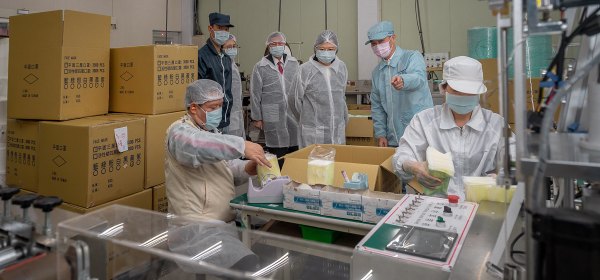
Written by Chih-Wei Chen. In recent decades, the world is facing increasingly severe challenges caused by climate change, natural disasters, worldwide public health issues, and so on. To combat the challenges, the United Nations officially launched Sustainable Development Goals (SDGs) in 2015 and advocated that all countries around the world endeavour to cooperate to achieve the goals. On the other hand, the advent of the digital era and the rapid development of digital technologies, such as big data analytics and artificial intelligence (AI), have provided new opportunities for people to implement sustainable development measures.

Taiwan and the United Nations: Is the Tide Turning?

Written by Chieh-chi Hsieh. Recent international developments have prompted some to speculate that we are in the midst of a critical juncture for Taiwan’s bid for admission to the United Nations (UN). On the plus side, Taiwan has received considerable international recognition for its successful policy responses toward the COVID-19 pandemic. However, it is arguable that this in itself will increase the odds for its campaign to join the UN.

An Open Letter: 「23.5 million Taiwanese people should be included into the United Nations (UN)」

FROM The Taiwan United Nations Alliance (TAIUNA), The Citizens of Taiwan TO the Honorable Dr. António Guterres, Secretary-General of the UN: For many years since 1972, Taiwan has been and is, once again, knocking on UN’s door seeking membership in this global inter-governmental organization. As part of the greater world population, the 23.5 million people of Taiwan are without representation and have been unjustly excluded since 1971.

The 1992 Consensus and the Future of the Cross-Strait Relationship: Examining the Stakes for Taiwan’s Application for UN Membership

Written by Joshua Bernard B. Espeña and Chelsea Anne A. Uy Bomping. The 1992 Consensus has framed the status quo of the Cross-Strait relationship for decades. However, more recently, rising nationalisms and geopolitical developments have expedited the erosion of the consensus. Moreover, the United States’ (US) commitment to Taiwan is ambiguous, despite the Trump administration adopting a more hardline stance against China. These factors complicate Taiwan’s quest for membership in the United Nations (UN), and add to doubts as to whether the consensus is still a source of stability in the Cross-Strait relationship.

1 2