President Lee Teng-hui as a Scholar- A Recollection and Tribute: part I

Written by Frank S.T. Hsiao The year 2000 saw the first peaceful regime change from the long-governing KMT (in power since first coming to Taiwan in 1945) to the Democratic Progressive Party (DPP). All these were accomplished adroitly without bloodshed. He did not even have his own political clique, military backup and secret service supports. Unquestionably, Lee was indeed one of the greatest politicians in the World. The Taiwanese and foreign media have very well documented all these achievements. What is seldom mentioned is his academic achievements and scholarship in the field of Agricultural Economics and his various writings.

The Growing Complexity and Diversity of Taiwanese Families

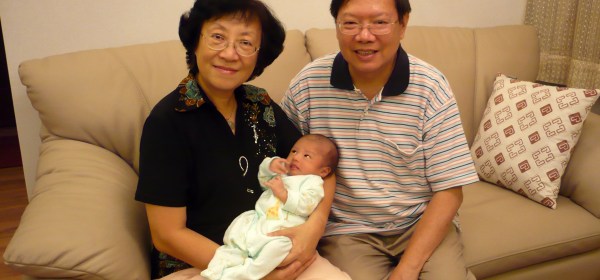
Taiwanese families look different than they did a couple of decades ago. Partnering behaviours have changed substantially, with young people increasingly choosing to postpone marriage and parenthood. The mean age of first marriage has risen to 32.6 for men and 30.4 for women as of 2019. Gains in opportunities outside of marriage – together with the increasing costs of raising children – mean that the traditional male-breadwinner family has lost its appeal to young women. This is especially the case for well-educated women. Even though the total fertility rate (TFR) has fallen at a rapid pace over the past few decades, childbirth remains strongly associated with marriage.

Changing Families in Contemporary Taiwan

Written by Yen-hsin Alice Cheng. While family and social values are gradually becoming more liberal, more substantial changes in socially acceptable behaviours require more time. Hence, in addition to policies promoting childbearing, the Taiwanese Government should also consider how to sustain or improve citizens well-being, regardless of their union status, in an ultra-low fertility context. Research on the obstacles to fertility in East Asia mostly studied the married population, yet obstacles to marriage among the single population are perhaps equally important in this region.

Raising Global Families: Notes from My Book Tour

Written by Pei-Chia Lan. My recent book, Raising Global Families: Parenting, Immigration, and Class in Taiwan and the US, started with a puzzle: Why do Taiwanese parents nowadays face even more intensified pressure, anxiety, and uncertainty, despite their expanded access to cultural resources, market services, and global mobility in comparison with the earlier generations?

Does the DPP Victory in Kaohsiung Mark a Return To Normal?

Written by Hiro Fu. Few observers were surprised to see Chen Chi-mai of the Democratic Progressive Party (DPP) win Kaohsiung’s mayoral by-election. In his victory speech, Chen called his win “Democracy’s victory, Kaohsiung’s victory.” This is an image that the DPP hopes to cast upon its return to power after Chen’s defeat in the 2018 mayoral elections. However, the DPP’s victory should not be confused with a victory for democracy, or necessarily as a victory for Kaohsiung.

How and Why Racism and Discrimination will eventually Fade in Contemporary Taiwan: A Brief Introduction

Written by Ji-Ping Lin. Although ethnic integration had played a crucial role in promoting ethnic harmony, ethnic relations in Taiwan was typified by hates” outweighing “loves.” Nevertheless, such a situation changes in the late 1980s and the 1990s. Indeed, Taiwan’s political, socioeconomic, and cultural systems began experiencing several fundamental transitions; a transition from authoritarian to democratic polity, from a planned economy to globalised one, and from close to open and multi-culturalism society.

Desired Female Care Labour, Undesirable Migrant Care Workers, and Their Unwanted Reproduction

Written by Isabelle Cheng. [Migrant] men can’t produce babies, but women can. We can’t allow foreigners to give birth in Taiwan and breed more foreigners […] It is indeed inhumane to repatriate a pregnant woman. However, even permitted to give birth in Taiwan, she and her child would have to be deported eventually. It is even more inhumane to break her family and separate the child from the [Taiwanese] father after they’ve developed bonds (the Legislative Yuan, 17 April 1992, Taipei).

1 2