
Written by Dafydd Fell.
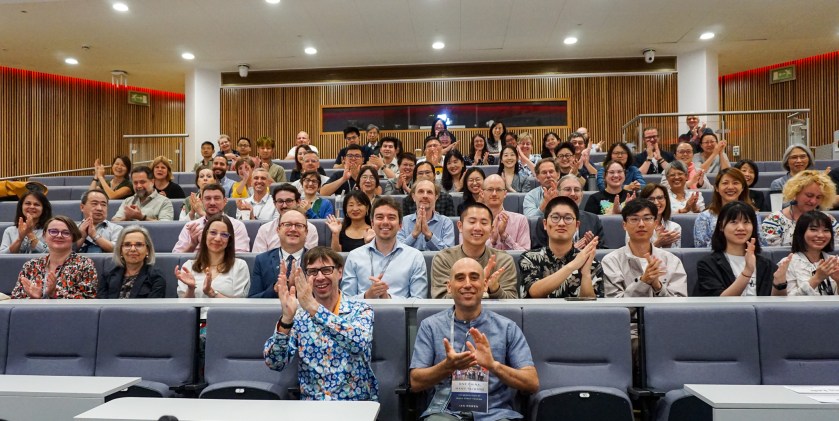
Image credit: One of the largest recent conferences we co-hosted at SOAS, the 2023 European Association of Taiwan Studies Conference by the author.
One of the distinctive features of the Taiwan Studies Programme at SOAS University of London is its teaching programme. We opened our first course on Taiwan in 2000 and have gradually expanded our teaching programme to include a wide range of both postgraduate and undergraduate Taiwan-centred modules. We established our MA in Taiwan Studies in 2006, making us the first university in Europe or America to offer a postgraduate degree focussed on Taiwan. There are a growing number of international Taiwan Studies programmes, but the majority focus on running academic events or publications. While many universities have tried opening Taiwan classes, unfortunately, in the majority of cases, these courses have been short-lived. SOAS is quite a unique university that specialises in the study of Asia and Africa. But even SOAS has also seen the closure of a number of similar niche teaching programmes that were centred on the study of smaller countries such as Armenian or Georgian Studies.
This raises the question of why the SOAS Taiwan teaching programme has been different. At the Trier University’s Mapping Taiwan Teaching Workshop last year and in a number of articles, I have discussed a range of ways we have endeavoured to make Taiwan teaching sustainable.1 One factor I would like to highlight in this essay has been our practice of connecting the Taiwan Studies teaching and events programmes.
At my university, students face a bewildering array of possible module choices. This poses a challenge for courses on relatively small countries. Why would a student take a class on the politics of Taiwan instead of one on the international relations of East Asia or the domestic politics of China? Therefore, we try to make the Taiwan classes more attractive to students by running an extensive set of events closely related to the course. In a single academic year, we often run over fifty separate Taiwan Studies events. Since we have modules on Taiwan’s politics, international relations, cinema, culture and society, these themes feature predominantly in our events programme. When looking for speakers we try to invite authors who appear on our course reading lists. This means that throughout the academic year, students will get a chance to meet many of the Taiwan Studies scholars whose work they have studied. This also tends to lead to very lively event question and answer discussions and is a reason many of our speakers love to return to SOAS.
Most modules at SOAS operate on the basis of a one-hour lecture and a second hour in an interactive tutorial. By running course-related seminars on a weekly basis, students often tell us they appreciate the extra contact time. We find events often have ripple effects afterwards, as things students picked up from the event will feature in subsequent class discussions. I recall one lecture on Taiwan’s democratisation given by the University of Toronto’s Joseph Wong, in which he discussed the argument that the ruling Kuomintang had conceded authoritarian political controls in order to thrive under a democratic system. The talk so deeply influenced one student that he would cite this theory in class discussions so often he gained the nickname ‘Conceding to Thrive Sam.’
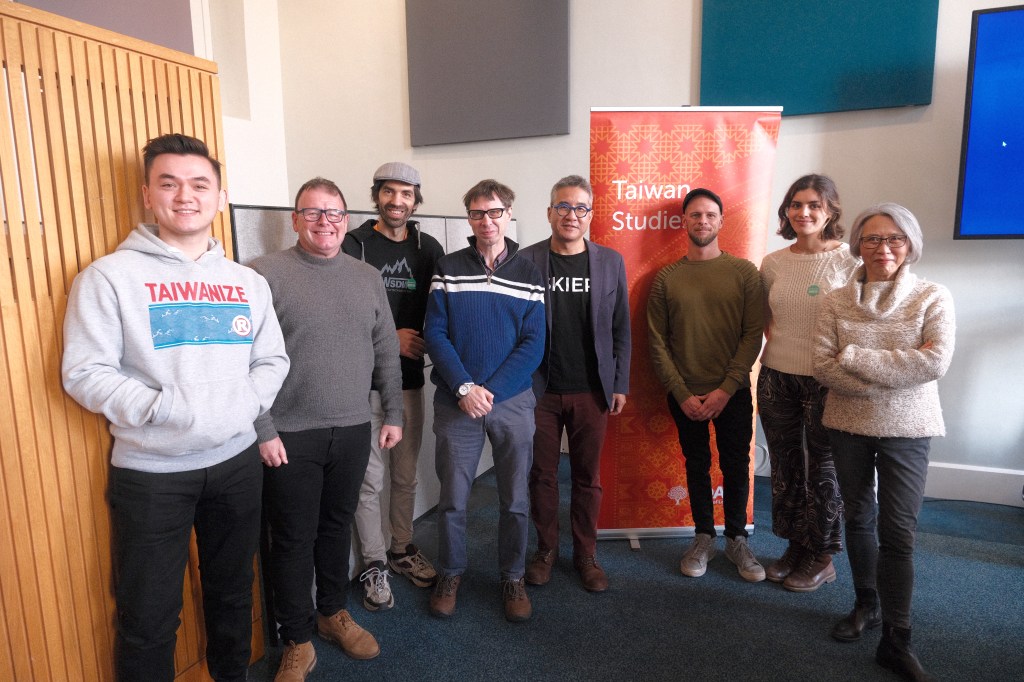
Joseph Wong, meeting our students at an event in January 2023.
Although the majority of our events are academic ones, we try to supplement these with practitioner events. Since we have a popular module on Taiwan cinema, we often hold film screenings together with Q&A sessions with film directors or scriptwriters. We also often screen documentaries related to social and political topics covered in our courses. In such cases, in addition to documentary makers, we also often invite activists to speak about their social movement experiences. For instance, we have held a range of events on the evolution of LGBTQ rights in Taiwan and these have included both academic talks as well as speakers who have been activists in promoting reforms such as same-sex marriage legislation. Since we have a number of courses on Taiwan’s politics, we also frequently host lectures or dialogues with politicians and government ministers. With such events, we also make sure students are exposed to politicians from a variety of political parties, not just the party in power. After graduating, one of my undergraduates told me that the most memorable moment in his time at SOAS was joining a dialogue with Taiwan’s former premier and presidential candidate, Frank Hsieh. Students often say they appreciate this diverse mix of academic and real-world events on topics that we study.
Students are often curious about what alumni have done after they graduated. In fact, we often have to dispel the impression that a degree in Taiwan Studies may limit their competitivity in the job market or chances of being accepted on a doctoral programme. We, therefore, will often organise events in which alumni talk about how they have built upon their SOAS studies in their careers or subsequent studies. In one such event one of our MA Taiwan Studies graduates, Ed Moon, spoke about his experiences working in Taiwan’s media sector, including at the English TV channel TaiwanPlus. We were delighted to see a number of those in the audience that day also later go on to join the channel after graduation.
Similarly, we are always delighted to run events featuring our former students returning to share their doctoral Taiwan research with our current students, especially as a significant proportion of our MA students do consider continuing their studies at the next level. One such lecture was given by Daniel Davies in 2018 on The role of Indigenous Heritage in Taiwanese Diplomacy. After graduating from the SOAS MA Taiwan Studies programme, he went on to do a Political Science PhD at Taiwan’s National Sun Yat-Sen University with a focus on voting behaviour among Taiwan’s Indigenous Peoples. The talk allowed him to not only share his research findings but also offer advice on conducting Taiwan-focused doctoral studies. It was a proud moment to see my former MA student returning to speak as a senior doctoral student, but it also marked the start of a collaborative project. After the event, we worked together to co-edit the 2021 book Taiwan’s Contemporary Indigenous Peoples, an edited volume based on revised versions of papers from a SOAS Taiwan lecture series.
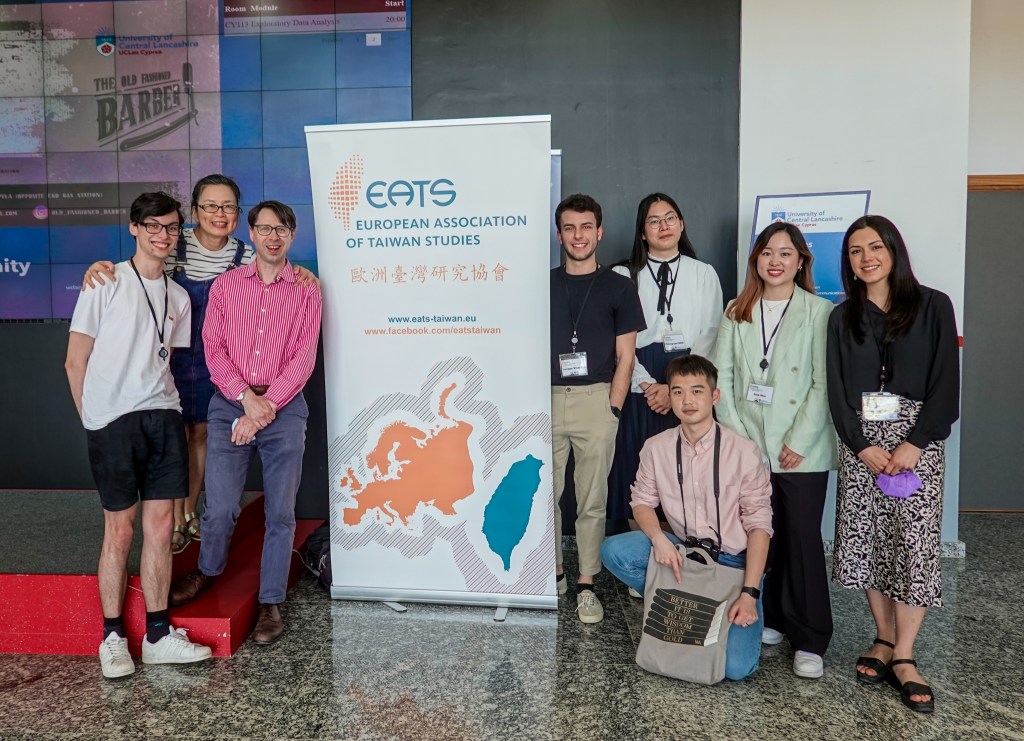
Conference in Cyprus.
Although we do not have a PhD programme in Taiwan Studies, our events programme is designed to support doctoral students working on Taiwan topics across the various disciplinary and area studies departments at SOAS. We encourage PhD students to give presentations both in their first year and after they return from fieldwork and are preparing for their graduation viva examinations. This involvement in events also allows them to interact with master’s and undergraduate students.
We try to make our students into active participants in our Taiwan Studies events programme. A key way to do this is to encourage them to present their dissertation research at public events, such as the SOAS Taiwan Summer School or the European Association of Taiwan Studies (EATS) Conference. The EATS Conference is the most important event in the European Taiwan Studies calendar and is held in a different European country each year. At such events, students are on the same agenda as the leading figures in the Taiwan Studies field, people they will have studied on their course reading lists. As these events are held in either late spring or early summer, students can receive invaluable feedback on how they can improve their dissertation projects well before the submission date in September. Conference participation can often have long-term impacts through networking, improving presentation skills and also laying the groundwork for future research. We have also been delighted to see the way many of our EATS presenters have gone on to publish condensed versions of their papers with Taiwan Insight. Students have often told us that presenting at such international events was the most unforgettable part of their SOAS experience.
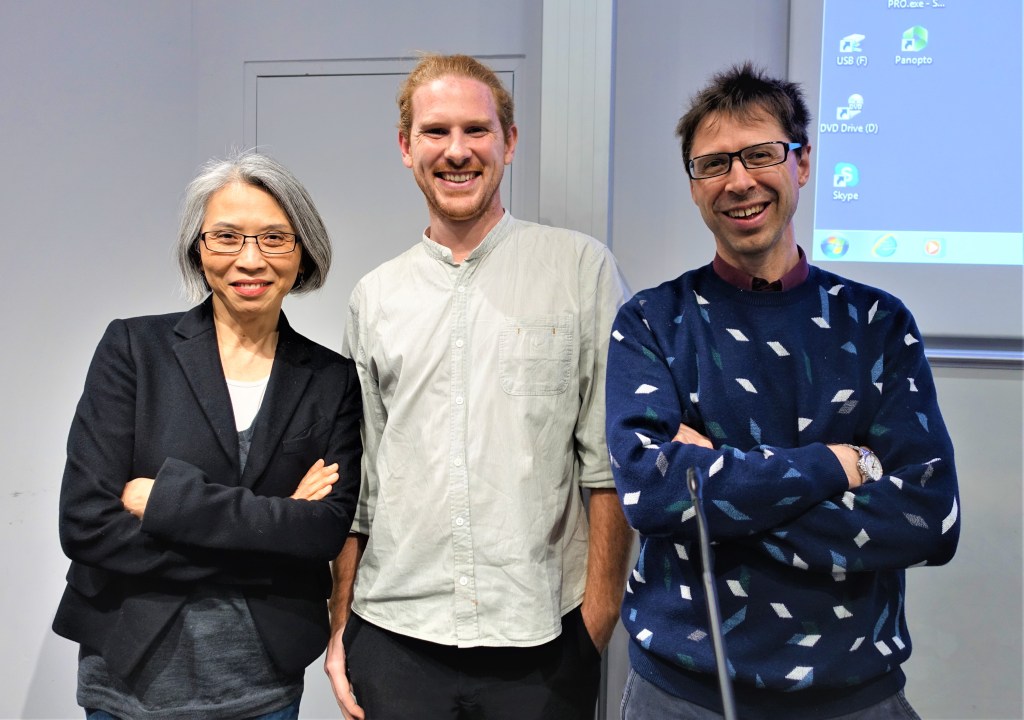
research at SOAS in January 2018.
As a small research centre with very limited administrative resources, running such an extensive events programme can be very challenging. Our students, therefore, play a critical support role by becoming event volunteers, particularly in our larger events such as the popular annual SOAS Taiwan Studies Summer School. The best example of this was when we hosted the Second World Congress of Taiwan Studies in 2015, one of the largest-ever Taiwan Studies events held in Europe. The First World Congress had been held at Taiwan’s Academia Sinica in 2012 and, unsurprisingly, had an exceptionally large professional support team. In contrast, at SOAS, apart from our two core teaching staff, we just had a single part-time administrator. Without our team of enthusiastic student volunteers, we could never have successfully run such a historic conference.
Lastly, connecting the Taiwan Studies teaching and events programme has an important social function. The events have helped to create a valuable sense of community amongst our Taiwan Studies students, doctoral researchers, staff and even alumni or public audience members, something that is often missing in many university programmes today.
The Trier University’s Mapping Taiwan Teaching Workshop revealed to me the diverse strategies colleagues throughout Europe are using to raise awareness and understanding of Taiwan. Having taught Taiwan at SOAS for over twenty-five years, I hope that by sharing our experiences of connecting teaching and events programmes we can provide some useful lessons for how to make international Taiwan Studies more sustainable.
Dafydd Fell is the Professor of Comparative Politics at the Department of Political and International Studies of the School of Oriental and African Studies (SOAS), University of London and the Director of the SOAS Centre of Taiwan Studies. His book Taiwan’s Green Parties: Alternative Politics in Taiwan was published in March 2021.
This article was published as part of a special issue on ‘Teaching Taiwan’.
 Taiwan Insight