
Written by Gita T.
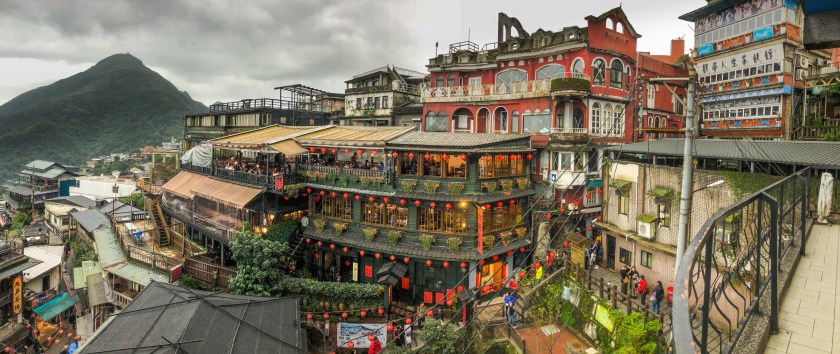
Image credit: Jiufen by Gregg Tavares/ Flickr, license: CC BY 2.0.
Overtourism, once hailed as an economic blessing, is increasingly recognised as a cultural slow death. At its core, overtourism describes the point when success turns against a destination: when visitors stop being an economic boost and start eroding the heritage and daily life that made the place attractive in the first place. From Barcelona’s water-spraying protests against foreign visitors to Rome’s struggles with Colosseum graffiti, the warning signs are everywhere.
Even Kyoto, Japan’s cultural capital, has felt the strain. In June 2024, the city introduced tourist express buses to ease congestion, while parts of Gion were closed to foreigners after repeated trespassing and harassment of geisha. If a city as seasoned as Kyoto struggles, the risks for smaller, less prepared towns are obvious.
Taiwan has not yet reached the boiling point, but the warning signs are visible. Jiufen, made famous by social media comparisons to Studio Ghibli’s Spirited Away, now struggles with bottlenecks in alleys never designed for mass tourism. On weekends, crowds overwhelm its narrow streets, and the town’s charm risks being eroded into spectacle.
In Jiufen’s case, the risk is immediate: its narrow streets and fragile cultural setting cannot absorb endless crowds without damage. Without early guardrails, what was once a living town risks being reduced to a backdrop — eroding both local life and the very heritage visitors come to see.
This perception gap is already showing: recent reviews on TripAdvisor rate Jiufen poorly, citing overcrowding and warning to manage expectations. Blogs echo the same caution, describing the town as more tourist trap than cultural encounter.
Tourism has long been economically significant for Taiwan. Pre-COVID, inbound visits surpassed 11.8 million (2019), contributing roughly 6% of GDP and employing over 800,000 people. In April 2025, Taiwan welcomed about 751,000 visitors (foreign and overseas Chinese), already sharply up year-on-year — a reminder that demand is rebounding quickly, with implications for hotspots like Jiufen.
Globally, experts note that the quality of visitors matters more than sheer volume. A 2024 McKinsey article, The Way We Travel Now, found that nearly one-third of global travellers prioritise culture, authenticity, or unique experiences over cheap access. For Taiwan, this creates a strategic opening: authenticity is still alive here, if managed wisely.
Unlike China, where many “heritage towns” have been rebuilt into polished, theme-park versions of the past, Taiwan retains living food traditions and community-rooted practices. In Tainan, Lukang, or Hualien, culture is not staged — it is practised daily, from snack stalls to seasonal rituals. This is Taiwan’s hidden advantage in the quality tourism race.
Taiwanese dining is built around snacks, small portions, and regional diversity. In Tainan, milkfish soup anchors local cuisine. In Lukang, rougeng reflects community history. In Hualien, Indigenous dishes tie food directly to land and ritual. Rather than clustering tourists in a single hotspot, Taiwan’s snack culture naturally spreads them across neighbourhoods and towns.
Food in Taiwan is not merely consumption — it is continuity. Night markets, temple festivals, and family-run stalls are all living institutions. They preserve techniques, recipes, and rituals that have never been fully commodified. Unlike China’s reconstructed ancient towns, Taiwan’s authenticity remains rooted in practice, not performance. That authenticity makes food culture a powerful policy tool for managing tourism pressure.
Taiwan’s snack-based dining offers a natural way to spread visitors beyond overcrowded sites. Unlike the “destination dining” model that funnels tourists into a handful of Michelin-starred restaurants, Taiwan’s culinary tradition thrives on variety. Snacking is a way of life, not an afterthought. That structure can be translated into three-track tourism strategies:
1. Gamified Snack Trails — dispersal through play
Most younger tourists are wired for dopamine hits: quick rewards, shareable proof, and the thrill of “discovery.” Taiwan’s deep snack culture can harness this psychology rather than resist it. Municipalities could work with local vendors to create certified snack trails, marked not by loud signs but subtle symbols only seekers know to look for. Modular “badge hunts” — breakfast trails, lunch bites, or night-market specialities — would stagger demand across times of day and neighbourhoods.
This dispersal is not only fun; it aligns with sustainability. By spreading foot traffic, trails reduce pressure on fragile hotspots like Jiufen, lower waste, and ensure revenues reach multiple family-run stalls. In policy terms, it supports environmental, social, and governance (ESG) goals — less waste, stronger communities, and more resilient governance structures.
2. Accessible Authenticity — depth without heaviness
Not every traveller seeks scavenger hunts, nor do they want deeply curated heritage sessions. Many fall in the middle: curious enough to learn but also seeking comfort and fun. Taiwan could design balanced routes that link food with light cultural framing.
In Tainan, a morning bowl of milkfish soup could be paired with a short temple visit, explaining how food rituals tie into religious calendars. In Lukang, rougeng might be paired with storytelling about Hakka migration and craft. In Hualien, indigenous millet wine could introduce travellers not just to flavours but to seasonal rhythms. Tea culture fits especially well here: playful oolong tastings for newcomers alongside demonstrations of heritage techniques for those seeking more.
These blended routes stretch visits across towns and times, reducing strain on single neighbourhoods while reinforcing identity as “living culture.” From an ESG perspective, this promotes governance through managed dispersal and social value by giving small communities a stronger role in tourism.
3. Curated Insider Routes — continuity through stewardship
The third layer should serve travellers who seek continuity, not just consumption. Taiwan is home to living culinary treasures — Indigenous chefs who present food as storytelling, or figures like “Mama Hakka,” whose home cooking has quietly drawn artists and executives. Experiences with such stewards must not be commodified, but offered as respectful collaborations, where visitors enter on the chef’s terms. Menus may not be revealed in advance, because authenticity lies in trusting seasonal rhythms and traditions.
Temple kitchens could also be part of this model, where vegetarian meals carry spiritual meaning alongside taste. For omnivores, faux-meat dishes — historically designed to ease dietary shifts during rituals — become a cultural insight into how Taiwanese Buddhism adapts without abandoning values.
Such insider routes cannot be mass-market. They require municipal or cultural bureau partnerships to manage visitor flow, cap group sizes, and ensure stewards are compensated without being overwhelmed. In ESG terms, this is about governance and social equity: protecting fragile heritage by supporting the people who embody it.
Here is where policy must act more like a shield than a megaphone. Local governments could adopt discreet certification schemes for long-standing family-run stalls, recognising them as cultural stewards without pushing them into overexposure. For living treasures — whether Indigenous chefs, temple kitchens, or Hakka matriarchs — partnerships with municipalities would allow them to share traditions on their own terms, with support to manage visitor flow and avoid burnout. Simple tools, such as capped group sizes or pre-booked heritage trails, could add further protection, ensuring that what is passed on is experience, not exhaustion. These measures also align with ESG goals: reducing waste, protecting fragile infrastructure, and ensuring communities retain both agency and benefit.
Taiwan sits in a crowded tourism market. Competing only on volume risks draining its heritage into the same exhaustion seen elsewhere. By contrast, anchoring tourism in authentic food culture allows Taiwan to stand apart — not as the cheapest destination, but as one where quality and meaning define the journey.
This is also soft power. Culinary traditions are among the safest and most persuasive ways for Taiwan to distinguish itself internationally without overt political signalling. When framed through ESG values — reducing waste, empowering small vendors, preserving heritage — a night market bowl or a temple meal becomes more than sustenance. It becomes both cultural preservation and cultural diplomacy, showing that resilience can be shared through everyday culture.
Overtourism trades long-term vitality for short-term gain. Taiwan has the chance to take a different path: scattering visitors more evenly, strengthening communities, and attracting the kinds of travellers most likely to respect and sustain what they encounter. The choice is clear. Taiwan can follow others into the cycle of overcrowding, repackaging, and resentment. Or it can chart a strategy where authenticity is both shield and advantage — where snack culture becomes not just cuisine, but policy.
Gita T. is a Taipei-based writer and researcher exploring how identity, culture, and policy intersect in East Asia.
 Taiwan Insight