
Written by Gita T.
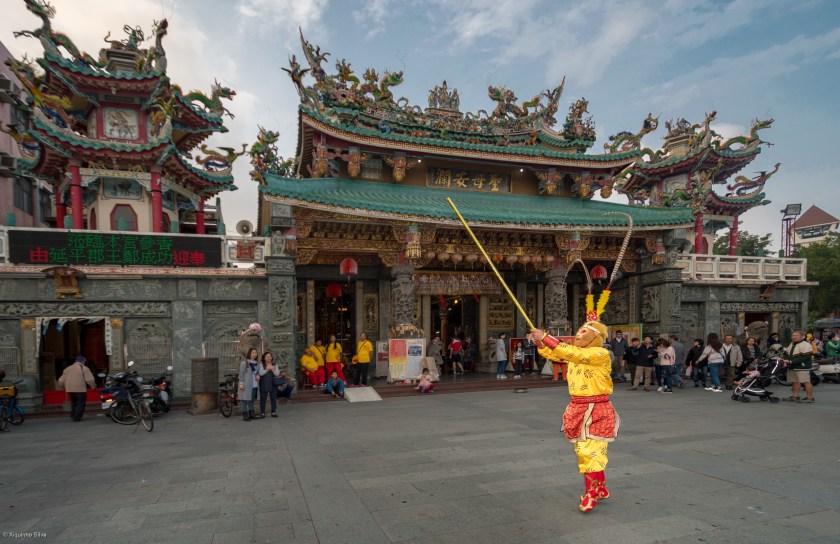
Image credit: Anping (53958044580) by xiquinhosilva/ Wikimedia Commons, license: CC BY 2.0.
As Taiwan’s tourism sector continues to recover, questions about how the island should grow as a destination are beginning to resurface. While visitor numbers at Taiwan’s most popular sites continue to rise, the island’s cities already carry distinct histories, rhythms, and cultural landscapes that shape how tourism unfolds, whether acknowledged or not. Heritage in this sense is not a branding choice or abstract concept, but an everyday condition embedded in local life. The challenge Taiwan now faces is not whether to engage with heritage, but how deliberately it does so before volume-driven models become default rather than chosen.
Cultural heritage tourism is often defined in familiar terms, from preserved UNESCO sites and living traditions to museums and culinary tours.
In practice, however, the label “cultural heritage” has become increasingly elastic. Some sites are cultural because they are carefully interpreted; others are cultural largely because they are popular. Places like Angkor Wat, for example, rely heavily on visitors’ discretion, assuming that those who arrive will know how to look, linger, and care, even when guidance is minimal or absent.
There is nothing inherently wrong with this model. But it rests on a fragile assumption: that visitors engage with cultural heritage out of curiosity rather than because it has become another item on a global checklist. In an age of compressed itineraries and social media validation, many cultural sites risk being flattened into proof of presence rather than spaces of understanding.
When cultural heritage tourism is not left to visitors’ discretion, it is often shaped by a very different logic. Instead of trusting curiosity, many tours are designed around control of time, movement, and spending. It is here that heritage begins to feel less like learning and more like processing.
Not all group tours operate under the same business model. However, a significant portion of large-scale, low-cost group tourism relies on overmanagement. Itineraries are tightly packed, time at heritage sites is rationed, and visits are frequently followed by mandatory stops at designated shops selling “local” souvenirs. These stops are rarely framed as optional. Instead, they are folded into the structure of the day itself.
From a business perspective, this model is not irrational. Affordable tour prices are often subsidised through commission-based retail partnerships. The issue is not the existence of this model, but its experiential consequences.
Once visitors sense the commission structure beneath the itinerary, curiosity turns into suspicion, and resentment often attaches itself to the heritage space being visited.
What is striking is how often this sense of coercion is treated as unavoidable, as though cultural tourism must choose between neglect and overmanagement. In reality, this binary reflects a failure of pacing rather than an absence of alternatives.
Kyoto offers a cautionary example. The city did not struggle because its culture was weak, but because mass tourism accelerated far faster than governance systems adapted. By the time restrictions were introduced, resentment had already accumulated. Heritage can afford slowness. Governments cannot.
Comparisons outside the heritage sector reveal how much of this coercion is a design choice rather than a necessity. Tokyo DisneySea, a theme park designed explicitly for profit, demonstrates that high-volume visitation need not feel coercive. Through careful pacing, time-gated access, and controlled circulation, it sustains anticipation without exhausting visitors. Visitors feel guided rather than processed.
If a fully artificial environment can monetise experience without eroding trust, it becomes difficult to argue that coercion is inevitable in places with real history.
If coercion is not inevitable, the more pressing question becomes one of timing. Cities that intervene early retain room to experiment; those that wait until resentment accumulates often act too late.
Taiwan occupies a rare position in this cycle, particularly among East Asian destinations. While visitor numbers are recovering, mass tourism has not yet fully snowballed across most of the island. With a few notable exceptions, many destinations still retain breathing room, both physically and culturally. Taiwan’s identity has never been built around instant spectacle or high intensity consumption, slowing the feedback loops that elsewhere accelerate overcrowding and backlash.
Taiwan is not starting from zero. Heritage preservation work is already underway across the island through local governments, cultural bureaus, and university-based research centres. Tainan illustrates this gap clearly. Extensive conservation exists, ranging from infrastructure that still shapes agriculture and food systems to landscape projects that keep industrial and water histories embedded in everyday environments. What is missing is not expertise, but translation.
Translation here does not mean simplification. It means converting preservation work and local identity into experiences that can sustain attention, justify their cost, and reinforce local pride simultaneously.
What this kind of translation looks like varies by place. In Keelung, where rain shapes both movement and atmosphere, small creative spaces already suggest how heritage engagement can remain intimate by design. During a visit, I encountered a tiny café run by a local artist that also functioned as a shared studio, operating by appointment and accommodating only a handful of people at a time. Visitors worked quietly on their own paintings with light guidance, creating an experience defined by attention rather than performance.
In agricultural counties such as Yunlin County, heritage is similarly embedded in daily rhythm. Here, belief systems like Mazu worship and practices such as hand puppetry are inseparable from seasonal labour and local life, making them poorly suited to mass tourism but well matched to small, interpretive encounters.
Comparable logic already underpins heritage routes in southern Taiwan, including Tainan, where sugar industry landscapes stretch across agricultural and infrastructural corridors that demand slower movement and smaller groups by design.
Scale matters more than is often acknowledged. In small groups, attention behaves differently. Visitors are more willing to ask questions, linger, or admit confusion. Guides respond to people rather than delivering scripts. Once groups grow too large, interaction collapses into performance. At that point, the tour no longer mediates between place and visitor. It simply moves bodies through space.
Heritage tours often mistake information for engagement. Faced with complex histories, guides compress meaning into dense explanations delivered in rapid succession, shutting down attention.
Effective heritage experiences, therefore, privilege pacing over coverage. Rather than attempting to explain everything, they allow a single site or landscape to open outward through observation, conversation, and carefully timed context. Information follows curiosity, not the other way around.
This logic also reframes the role of museums. Rather than serving as the starting point of a heritage tour, museums function best as optional extensions. They excel at density, concentrating information within confined spaces. That density is valuable, but only once curiosity has already been activated. When visitors enter museums by choice rather than obligation, learning deepens rather than narrows.
Once heritage experiences are designed around attention rather than throughput, local participation changes as well. Economic engagement does not need to take the form of mandatory shopping stops. It can emerge through objects that support reflection rather than consumption. A simple example might be a notebook designed by a local artist, illustrated with motifs drawn from Tainan’s sugar landscapes.
This often results in organic questions: who made this, where does it come from, and what does it represent. The object matters less than the function: it creates a pause long enough for attention to form.
The same principle applies to guiding. When tours are led by museum assistants, heritage workers, or graduate students in history or urban planning, conversation replaces lecture. Questions are entertained rather than deferred, and interpretation unfolds through exchange. Even documentation benefits from this shift. Respectful photography, cleared in advance and focused on gestures or movement, preserves atmosphere without turning visitors into props.
None of this suggests that mass tourism and heritage tourism must exist in opposition. They serve different needs and operate at different scales. Problems arise only when a single logic is applied everywhere, when speed and volume become default responses to places that demand patience and restraint.
Taiwan does not need to chase luxury tourism to justify investing in heritage. The audience for slower, experience-driven travel already exists among cultural travellers, long stay visitors, academics, and those drawn to places with legible identities rather than manufactured spectacle. When heritage is coherent, it does not need to signal upward. Visitors who value cultural depth tend to follow substance.
Heritage tourism aligns with sustainability because it operates through capacity. Price, group size, and access function as design tools, not moral signals. When pricing reflects the real cost of time, care, and expertise, it filters demand without advertising exclusion.
Small group, limited access experiences protect cultural assets by design, placing ceilings on strain rather than attempting to mitigate damage after the fact. Once group size exceeds a certain threshold, interpretation stops working. At that point, tours can only manage movement, not meaning.
Slower, experience-driven travel is not elitist by nature. It is simply incompatible with volume pricing.
Heritage tourism works best when it is designed with confidence rather than anxiety. Confidence that not every visitor must be accommodated at once, that not every place must perform, and that value can be preserved precisely by limiting access. Taiwan’s advantage lies not in perfection, but in timing. With many cities not yet overwhelmed and preservation work already underway, there is still room to design deliberately rather than reactively.
The risk for Taiwan is not that restraint will limit growth, but that waiting too long will make restraint unavoidable rather than chosen.
Gita T. is a Taipei-based writer and researcher exploring how identity, culture, and policy intersect in East Asia.
 Taiwan Insight
.jpg)