George Psalmanazar and the fake history of Taiwan

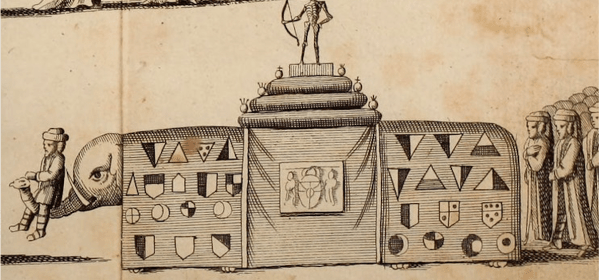
Written by Hung-yi Chien. In the spring of 1704, Psalmanazar published his book An Historical and Geographical Description of Formosa and reported many strange customs beyond people’s imagination. He claimed Formosa had a sophisticatedly organised society but was conquered by Japan in the seventeenth century. People of Formosa sacrificed thousands of boys’ hearts to worship their deities.
The Politics of Hong Kong Migration in the UK and Taiwan

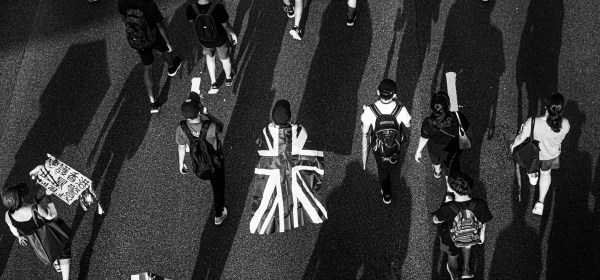
Written by Adrian Chiu. The National Security Law (NSL) in Hong Kong implemented by the Beijing government in June 2020 has triggered a new wave of emigration from Hong Kong. According to Hong Kong government’s statistics, almost 90,000 residents left the city in the 12 months since – more than four times higher than the previous year. To be fair, emigration waves in Hong Kong is not a new feature – it happened in the 1990s when the Chinese handover in Hong Kong was eminent. Indeed, Hong Kong has always been an immigrants’ city, given the many Chinese immigrants who moved to Hong Kong throughout history.

LGBTQ+ Groups Celebrate Ruling Against Surgery Requirement For Legal Gender Change

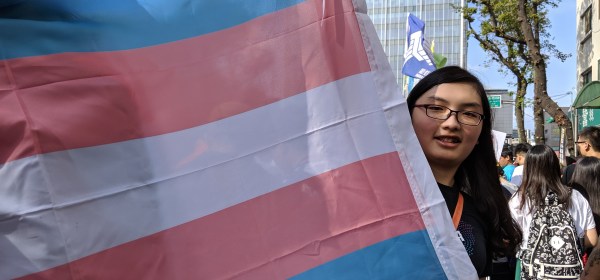
Written by Daniel Yo-Ling. The historic ruling in favour of plaintiff Xiao E found existing legal gender change regulations to be unconstitutional. Assuming that this ruling does not get appealed, Xiao E will be able to change her legal gender and become Taiwan’s first transgender woman to do so without submitting proof of surgery. TAPCPR’s press conference featured commentary on the decision from representatives of the Taiwan Adolescent Association on Sexualities, Taiwan Tongzhi Hotline Association, Taiwan Non-binary Queer Sluts, and Taiwan Gender Equity Education Association, as well as a written statement from Xiao E herself and comments by other transgender community members. 

The Western Gaze: Modern Art and Cultural Diplomacy in 1950s and 1960s Taiwan

Written by Man-hua Chen. Taiwanese modern art burgeoned in the Japanese colonial period. After World War II, along with the change in regime in Taiwan, participation in international art exhibitions as a country became an essential cultural and diplomatic means adopted by the ROC government. The original motive behind this initiative was purely political; nevertheless, it has been a key driver for promoting the development of modern art in Taiwan.

Combatting Human Trafficking during Republican China

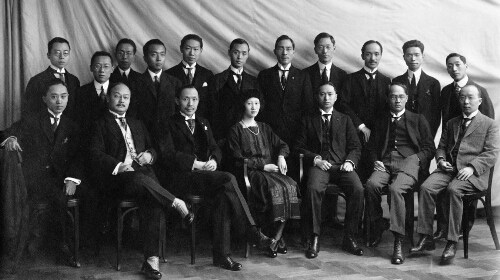
Written by Bonny Ling. One of the most interesting chapters in the history of modern China and international law is the vibrant and dynamic engagement of the Republican Chinese government with the League of Nations, the intergovernmental precursor to the United Nations, to address the exploitation of women for prostitution, known then as the “traffic in women.” It is an overlooked prologue that provides the historical context for efforts by successive governments on both sides of the Strait to combat exploitation. This issue remains just as relevant today as it did close to a century ago.

Taiwan’s Decision to Introduce a Third Gender: A Step Forward or a Step Backwards for Gender Equality? 

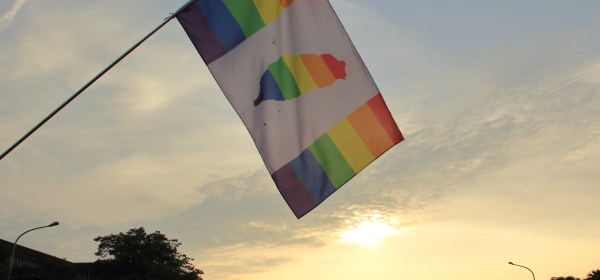
Written Caterina Di Via. In 2018, the Gender Equality Committee, a branch of the Taiwanese government, announced that there would be a third gender option for identification alongside the planned new electronic identity documents (such as eID cards, passports and other national identification documents) in late 2020. While males and females are categorised as ‘1’ and ‘2,’ the third gender option would be represented by the number ‘7’.

Chang Ya-chung’s Rise and Eric Chu’s Cross-Strait Vision

Written by Mingke Ma. Surprisingly, competition became fierce after the first Television policy debate on 4th September for the 2021 KMT Party Chairperson Election. The difference in support ratings on the opinion poll for the two leading candidates—former New Taipei City mayor Eric Chu and former KMT chairperson Hung Hsiu-chu’s policy advisor, Professor Chang Ya-chung—had been zigzagging within the error range of 3 per cent.

Does Eric Chu’s New Leadership Role Depend on the ‘China factor’?

Written by Chia-hung Tsai. On 25 September 2021, the Kuomintang (KMT), the main opposition party, voted on the chairperson. As a result, Eric Chu (朱立倫), the former KMT chairman and ex-vice premier, was elected with 85,160, or 45.8 per cent of the votes. This election draws domestic and international media attention because the result will influence the upcoming referendums, local elections, cross-Strait relations, and even US-Taiwan relations.

Now That the Race is Over, What Kind of Chair will Chu be?

Written by Nathan Batto. Eric Chu 朱立倫 was elected KMT party chair on Saturday in a surprisingly contentious race. When Chu announced his entry into the race, the former New Taipei mayor, vice premier, presidential candidate, and KMT party chair was the favourite to win. However, most people expected his primary competition to be the incumbent party chair Johnny Chiang 江啟臣 rather than Chang Ya-chung 張亞中, an intellectual from the extreme unification wing of the party.

Is the KMT’s Future Brighter under Eric Chu?

Written by Lev Nachman. The results are in: Eric Chu, a former KMT presidential candidate, will be the new KMT party chair. This race was not supposed to be dramatic, but it ended up becoming an exciting spectacle that revealed far more characteristics about the current state of the KMT than any observer could have anticipated.

What Strategy will the KMT Take Next? What Are the Odds of Reform Under Chu?

Written by Brian Hioe. Eric Chu was the winner of the KMT chair election that took place on Saturday, September 25th, triumphing over incumbent chair Johnny Chiang and Sun Yat-Sen School director Chang Ya-chung. Chu was the undisputed winner, taking in close to half the vote share. At the same time, Chang Ya-chung took in 32.59% of votes to Chu’s 45.78%, while Chiang trailed far behind with 18.86% of votes.

Hackers Facing the Ocean: g0v and East Asian Civic Tech Community

Written by Sam Robbins. Collaboration within Taiwan or transnationally has never been perfect. Like all g0v projects, international exchange is permanently a work in progress, and much more can be achieved by “rough consensus” than by looking for a particular shared interest. The boundaries of this inchoate transnational activist community are still being drawn, and the meaning of collaboration based on cultural and political similarities is still up for debate. For example, the 2020 Meet and Hack made explicit references to the “Milk Tea Alliance” in the posters on display, and I overheard many mentioning the concept.

1 3 4 5 6 7 58