Voices Lost Between the Frames: On Island in Between

Written by I-Lin Liu. This article provides a critical analysis of the Oscar-nominated short documentary Island in Between, asking who the film is for and what lies beyond the representations. The author traces the history of when and how nonfiction films became a medium for intercultural communication, which resonates with the director’s experiences and goals for the film. Despite the film’s deliberate distance from forms of government-produced propaganda, connections can still be seen, particularly that government-sponsored or produced films, in fact, dwindled from the Best Documentary Short Film category decades after its establishment. In addition, the depiction of Kinmanese in the film, in conversation with national identities and boundaries, remains contested through the director’s lens.

Island in Between: An Eternal Frontier? 

Written by Chee-Hann Wu. This article argues that the Oscar-nominated short documentary Island in Between highlights the liminality and in-betweenness of both the island of Kinmen and the director’s diasporic identity. Rather than emphasizing its geopolitical significance and constant military presence, the short documentary focuses on the director’s personal journey and narrative, growing up in both Taiwan and the US, moving back to Taiwan in 2017, and during the COVID-19 pandemic, being drawn to Kinmen where his father served in the military. Through the director, the audience sees how he re-experiences Kinmen as a way to reconnect with a part of his identity, and is also able to reimagine Kinmen’s past and present.

Invisible Nation Documentary is Making Taiwan More Visible

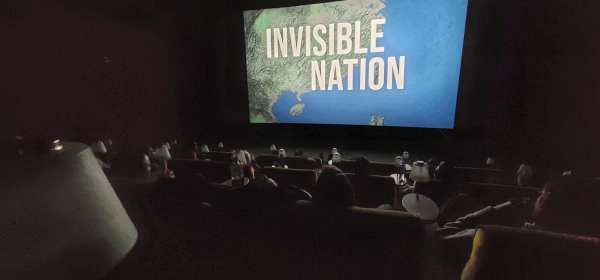
Written by Shawna Yang Ryan and Gerrit van der Wees. During the past weeks, a new documentary about Taiwan, Invisible Nation, has been making the rounds at various film festivals in the United States and Europe, including the International Documentary Film Festival Amsterdam on November 14-18, 2023.  Invisible Nation is the work of Vanessa Hope, who built up the film around the everyday life of President Tsai Ing-wen, in the process creating a fascinating picture of how the low-key President is ably leading Taiwan towards a better future.

Small Step from You, A Great Leap for Migrant Workers: Documentary, ‘Civil Society’ and ‘And Miles to Go Before I Sleep’ (2022) 

Written by Hsin-Chin Evelyn Hsieh. The award for the best documentary feature at the 59th Golden Horse Awards held in November 2022 in Taipei, Taiwan, went to And Miles to Go Before I Sleep (2022), directed by Tsung-Lung Tsai. At the ceremony, film producer Kim Hong Nguyen, dressed in the Vietnamese traditional garment áo dài, read out a message from Quoc Phi Nguyen’s family expressing their grief and hopes. It was the first time a documentary on migrant workers was presented with the Golden Horse Award, thereby creating a platform for voiceless migrants and drawing attention to the related issues in mainstream society. 

Sight and Sound: Conversations on Death Penalty between Taiwan and Southeast Asia

Written by Kar-Yen Leong. In an article by Franklin Zimring and David Johnson, we are reminded of the importance of studying the death penalty in Asia as it is the site of “…at least 85 per cent and as many as 95 per cent of the world’s execution.” The authors add that the region is a key battleground as to whether this practice will continue or become a remnant of a less civilised past. This struggle is no more intense than in East and Southeast Asian states, where the death penalty is not only an indelible part of only their legal systems but also their very societies. The decision to retain or abolish the death penalty has become a matter of intense soul-searching among states such as Taiwan, South Korea, Singapore, and Malaysia, navigating landscapes replete with ghosts of colonial and authoritarian pasts. For these countries, the state’s power over life and death is a direct extension of its sovereignty. Giving up this power is to lose that sovereignty, but it also means the loss of a weapon of last resort forged to keep the forces of chaos at bay.

Placing Relationship over the Project: Filmmaking in Oceania

Written by Cheng-Cheng Li. My filmmaking story in Oceania started with the Re/presenting Oceania course at the University of Hawai‘i. My Kumu (professor) Tarcisius Kabutaulake, who comes from the Solomon Islands, has been teaching and researching across the region for decades. His course invites me to critically engage with and discuss how the Pacific Islands have been represented in scholarly and other mediums. He brings me onto the ‘voyage’ across the ‘storyscapes’ of scholars, artists, performers, poets, and filmmakers to understand the politics of representation. This article will first discuss my filmmaking experience in Hawai‘i with the Pacific Island community. In the second section, with an increasing number of Indigenous Taiwanese wishing to connect with Oceania, I will address the interconnection story between Taiwanese Indigenous filmmakers and the Oceanic community. The theme of ‘relationship’ as ‘Priority’ will be interwoven into the stories. 

Indigenous/Islander Fanaticism Across the Pacific: A Perspective from Films

Written by Yawi Yukex; translated by Yi-Yu Lai. A type of Taiwanese is extremely fond of anything about the Indigenous peoples of Taiwan. They are captivated by all the totems and material cultures associated with Indigenous peoples, yet they frequently only believe what they already know about Indigenous cultures. Besides, they usually turn a deaf ear to Indigenous peoples’ enormous burdens and struggles. I call these individuals “Indigenous fanatics.” In the early 2000s, a series of Taiwanese films, such as “The Sage Hunter” (2005) and “Fishing Luck” (2005), portrayed Indigenous communities as shelters for those wishing to escape reality and contrasted cities with the communities. People believe that the expansion of civilisation causes problems, whereas mountains and forests represent the solution.

‘Queer’ Film and Representation at the Taiwanese Box Office: A Post-2019 Post-COVID Sinophone Dialogue 

Written by Elliott Y.N. Cheung. “Queerness is that thing that lets us feel that this world is not enough, that indeed something is missing,” says José Esteban Muñoz. So, if these resisting narratives defy the regulation of an all-encompassing narrative and seek to entice viewers to recognise what is not yet there — might we call them queer? Moreover, if a country that not only enables such views but can actively and constructively engage with them, struggling to hold them in all their difference — might we also call it queer? 

Migrants’ Voice in Taiwanese Documentaries: Narrative, Language and Space

Written by Adina Zemanek and Lara Momesso. Since the early 2000s, immigrants from mainland China and Southeast Asia have been an increasingly visible component of Taiwan’s social and public landscape. As such, they have received growing recognition both in terms of legal provisions and in the public discourse. An example of this acknowledgement is the December 2019 issue of Taiwan Panorama, a promotional magazine issued by the Ministry of Foreign Affairs. Half of this issue is dedicated to highlighting migrants’ presence in Taiwan. One of the articles calls for listening to their unique life stories, which would have the transformative effect of understanding the world from a new perspective and dismantling preconceptions about Southeast Asian cultures.

1 2 3