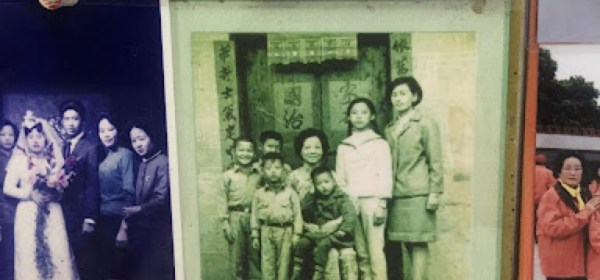
Of Swallows and Nests: The Migration Trajectories of Kinmen’s Wartime Generation and Their Return Home

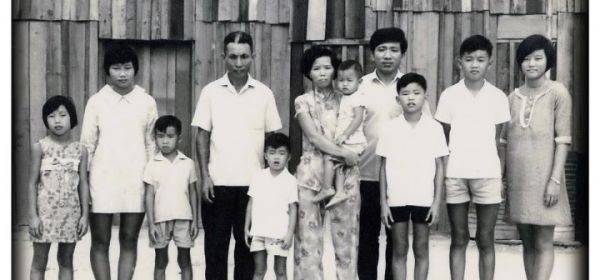
Written by Junbin Tan. This article traces the Lin family’s multigenerational migration from wartime Kinmen Island to Southeast Asia and beyond. Anchored in an ethnographic encounter with Grandma Lin and her family, the author follows the Lins’ migratory trajectories of departure, separation and eventual return, revealing how Kinmenese mobility was shaped by political restriction, economic necessity, and the moral economies of kinship.

Why Taiwan’s Family Businesses Still Rule and Why It Matters

Written by Zong-Rong Lee. As part of the Taiwan Insight–IJTS special issue on the Topical Section “Transitions and Challenges in Taiwan’s Economy and Society,” this article presents Zong-Rong Lee’s study on Taiwan’s enduring family capitalism. It traces how political patronage, kinship networks, and market reforms sustained family dominance, raising concerns about competition and long-term adaptability.

How Young Taiwanese Women’s Views on Romantic Romance Are Shaping Taiwanese Society

Written by Elspeth Lewis. Taiwan has the lowest birthrate in the world. This article explores this trend by putting women at its centre, challenging what we thought we knew. Beyond the vague idea of becoming more liberal, it explores the difference between the younger generation and their parents. Moreover, the traditional society does not condone the newly created ideas around dating, sex and relationships either.

Teenage Pregnancies, Child Marriage, and Girl Child Sexual Abuse in Malawi

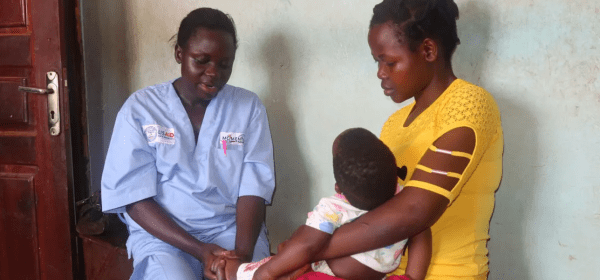
Written by Lana Chikhungu. In both Taiwan and Malawi, adolescent pregnancy is associated with an increased risk of physical and mental health issues. Also observed in both Taiwan and Malawi during the COVID-19 pandemic is the higher risk women were exposed to gender-based violence. Studies on pregnancy in Taiwan during the pandemic focused on how the disease affected pregnancy and maternal care practices and how the disease had an impact on sex life. This article provides insights into teenage pregnancies, child marriage and girl child sexual abuse in Malawi.

From Tradition to Institutionalisation: The Development of the Postnatal Care Centres Industry in Taiwan

Written by Amélie Keyser-Verreault. In Chinese culture, the tradition of yuezi (月子) or the practice of postpartum care for the mother, is a longtime established practice. In Taiwan, this practice underwent and continues to undergo the vicissitudes of social and interpersonal relationship changes. Before the 1970s, the birth rate in Taiwan was extremely high, and the idea of “more children, more grandchildren, more good fortune” (多子多孫多福氣) was widely accepted. The large family size also meant sufficient human resources for agricultural-related field labour. The practices of yuezi were already crucial at that time. Mothers in the postpartum period had some privileges like a long rest and special food, particularly meals containing meat like chicken, a precious food at that time. 

Encountering Ancestors Along the Path of Weaving

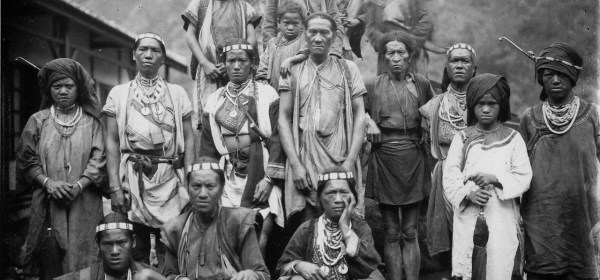
Written by Langus Lavalian. Ibu is currently the youngest weaver in Haitutuan Township. When she was learning to weave with our grandmother, she had a dream in which she met a silent elderly female who requested Ibu to watch her weaving process. Traditionally, outsiders are not allowed to watch or learn the weaving process. However, this old lady appeared to be weaving purposely for Ibu and instructing her step by step. Since taisah, which refers to dream, is vital to the Bunun, Ibu believes that this is the path guided by our ancestors. 

Taiwan Decriminalized Adultery, But Does the Public Support The Change?

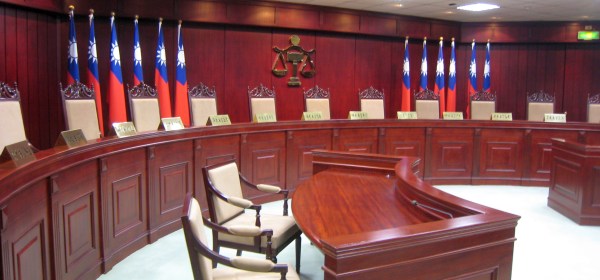
Written by Madelynn Einhorn, Josie Coyle, and Timothy S. Rich. In June 2021, the Taiwanese legislature removed a nearly 90-year law criminalizing adultery, punishable with up to 12-months in prison and fines averaging 90,000 NTD (roughly USD 3000). In May 2020, the Constitutional Court overruled Article 239 of Taiwan’s criminal code, which criminalized adultery, because it violated the Constitution. The legislature removed the article from the legal code approximately a year later. South Korea removed a similar law in 2015 and India in 2018. Taiwan was one of the last liberal democracies to keep adultery illegal and the last East Asian country aside from the Philippines.

Almost-Marriage Equality in Taiwan

Written by JhuCin Rita Jhang. There are major legal rights not covered by the Act for Implementation of J. Y. Interpretation No. 748. First, it does not allow same-sex couples to co-adopt a child unrelated to either parent by blood. Once a same-sex couple gets married, they lose the right to adopt whatsoever, and they would have to obtain a divorce to be able to adopt as a single person. Even if someone adopts first as a single and then gets married to a same-sex person, the spouse still cannot cross-adopt this child. This bizarre and counterintuitive legal conundrum sends many same-sex couples wishing to co-adopt on a long, winding legal fight. Even though one married same-sex couple had won the lawsuit and became the first-ever same-sex couple to co-adopt a genetically unrelated child in January 2022, this was ruled on a case-by-case basis.

Fat-Shaming and Beauty Related Tensions in Contemporary Taiwanese Families

Written by Amélie Keyser-Verreault. One of the most important criterion determining whether a woman is considered beautiful is thinness in Taiwan and elsewhere. Under the influence of an increasing cult of beauty, my field works reveal the existence of various forms and causes of multiplying and exacerbating fat-shaming and beauty-related conflicts within the contemporary Taiwanese family. Although the idea that a close linkage between physical appearance and womanhood is certainly not new, recent research on women’s experiences of body transformation underscores that the degree of beauty pressure is unprecedented in contemporary societies. 

What is ‘Home’ and Who are the ‘Overseas Chinese’?

Written by Yun Seh Lee. This year marks the 100th anniversary of that first KMT-CCP coalition, and the competition across the Taiwan Strait is still going strong. Focusing on the Overseas Chinese communities across the globe – a term populated by the prominent scholar Wang Gungwu – both players have been enthusiastically trying to win the hearts and minds of this diaspora. The label ‘Overseas Chinese’ itself hints at an ongoing link to China, but the PRC and Taiwan dispute the nature of that link and its contemporary manifestation.

Not obedience but Dignity: A message from a former migrant worker

Written by Iweng Karsiwen and Ratih Kabinawa. Edited by Isabelle Cheng. A former domestic worker in Hong Kong for over ten years, Iweng Karsiwen is currently the Chair of Families of Indonesian Migrant Workers (Kabar Bumi). Initially she was recruited to work in Taiwan when the door opened for Indonesian women seeking domestic work there. However, instead of going to Taiwan, Iweng found herself arriving at a Hong Kong MTR station late one evening a year later. Knowing how the brokering industry functioned at home and abroad, after returning to Indonesia, Iweng was determined to help those who worked abroad and who faced similar challenges at various stage of their migration. She has particularly campaigned to outlaw salary reduction. This, as well as other practices mentioned by Iweng, are commonly adopted by brokers in Taiwan, Hong Kong, Malaysia and Singapore.

1 2