Tracing Disaster Injustice: Indigenous Peoples’ Vulnerability and Resilience in Taiwan 

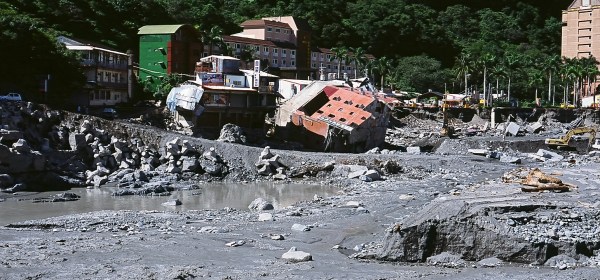
Written by Yu-Chen Chuang. In August 2023, Typhoon Khanun swept across Taiwan, particularly impacting the mountainous regions of central Taiwan. The resultant severe floods and landslides caused significant damage to infrastructure and disrupted the livelihood of local residents. One of the most severely affected areas was Renai Township in Nantou County, which is home to several Indigenous communities. The damages caused by Typhoon Khanun demanded significant labour and financial resources from Indigenous communities to manage the lengthy post-disaster reconstruction. This special issue, titled ‘Indigenous Peoples and Disaster Justice,’ will feature contributions from scholars and practitioners deeply involved in Indigenous-centered disaster management in Taiwan. We hope to foster discussions about the past, present, and future of disaster management, with a particular focus on addressing colonial injustice. 

Indigenous Taiwan through Critical Lenses: Comparative and Place-Based Perspectives 

Written by Yi-Yang Cheng, Ssu-Chieh Jessica Fan and Susan Hou. Centring on Indigeneity in Taiwan, the interdisciplinary roundtable “Indigenous Taiwan through Critical Lenses: Comparative and Place-Based Perspectives” conceptualized Taiwan as a grounding point for multiple geographical perspectives. Instead of positioning Taiwan as a boundary object between the East and the West, it prompted a fresh envisioning and repositioning of Taiwan as a liminal space of unbounded and interconnected possibilities. Put differently, the roundtable discussions explored alternative ways of positioning Taiwan in/and the world, including perspectives which might have previously been marginalized or eluded consideration.

Reflections on the Identity at Indigenous Popular Music Training Camp in Taiwan 

Written by Kuing, Guo-Ting Lin. In recent years, there have been various Indigenous popular music creation and cultivation programmes in Taiwan. For example, the music training camp “Psiwali School” at the Pasiwali Music Festival in Taiwan with the purpose of discovering Indigenous musicians. Another example is the “MINETJUS Electronic Music Production” Programme, which is held by Dark Paradise Records (派樂黛唱片), an independent record label based in Taipei. This initiative blends electronic music and Indigenous culture to help younger musicians turn cultural marginality into unique cultural assets. Most training camps in Taiwan still rely on government support, aiming to strengthen the unique cultural identity of contemporary Indigenous youth and regard this as a catalyst for promoting ethnic diversity. This article examines the meaning of Taiwan’s Indigenous popular music creation and cultivation programmes.

Indigenous popular music and language revitalisation in Taiwan 

Written by Karen Huang. In 2020, Paiwan singer Abao (阿爆) became an overnight sensation at the 31st Golden Melody Awards (GMA) when her Paiwan album ‘Kinakaian MOTHER TONGUE’ brought home multiple major awards, including the ‘Album of the Year’ and ‘Song of the Year’. The awards surprised many, as Mandarin popular music usually dominates these two cross-language categories. It was the first time an Indigenous-language singer had won both categories simultaneously.

The Director-Sensei of Shadow Puppetry: An Interview with an Artist-Teacher Yun-Hsuan Kao

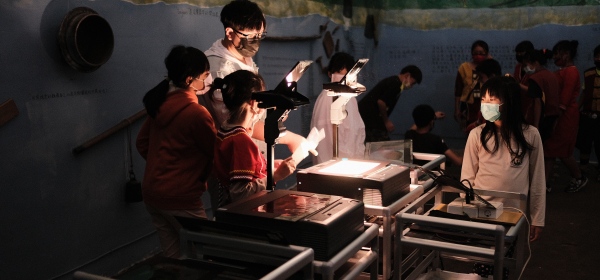
Written by Yi-Cheng Sun; translated by Yi-Yu Lai. The night following the conclusion of the 2022 National Creative Drama Competition, residents of the Ciwidiyan community (Shuilian village) learned that their representative troupe had won the Modern Shadow Puppetry Excellence Award of the Elementary School Division. The community members prepared drinks and delicacies to celebrate, eagerly awaiting the return of the students and teachers from Shuilian Elementary School. The fried chicken cutlets cooked long ago turned cold, and the elders holding congratulatory red envelopes were also a bit weary. Only when the firecrackers along the way burst into loud noises did the delight in the air, with flying paper scraps both inside and outside the houses, seem to repeatedly congratulate: “Finally, it’s here!”

Is Going Green Hurting Indigenous Communities? Reflection from Participating in the United Nations Permanent Forum on Indigenous Issues 

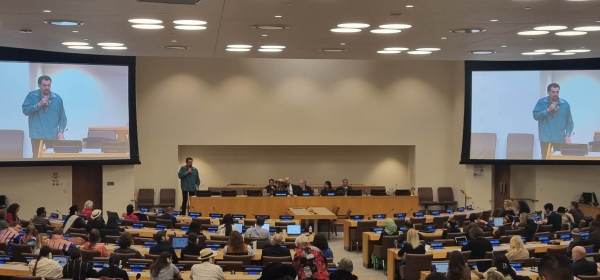
Written by Wasiq Silan. Is going green hurting Indigenous communities? Not necessarily. However, exclusionary conservation measures create a lose-lose outcome for non-Indigenous and Indigenous communities. Indeed, Indigenous peoples’ full and substantial participation is a prerequisite to achieving a sustainable future and halting the rapid loss of global biodiversity. This is true for the Indigenous communities in Taiwan, such as in the case of the solar panel controversy on the Katratripulr Pinuyumayan (Beinan in Mandarin Chinese) people’s traditional territory. Drawing from the experience of the Sámi, my recent participation in the United Nations Permanent Forum on Indigenous Issues (UNPFII) may shed light on this issue.

Touring Indigenous music from Taiwan in Canada—the lessons of Kanatal

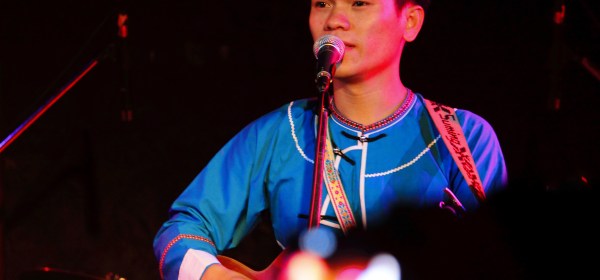
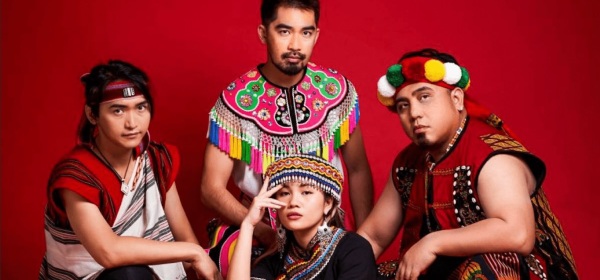
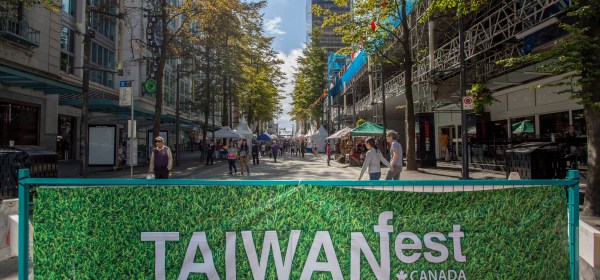
Written by Charlie Smith. Last September, when the band Kanatal walked onto the stage in front of the Vancouver Art Gallery, it marked a milestone. This was the culmination of the first Canadian tour by a group of Indigenous musicians from Taiwan. After performing in several Canadian cities, the four members—guitarist Masaw Ali, keyboard player Suana Emuy Cilangasay, singer Abus Tanapima, and drummer Vangacu Kalevuwan—were eager to impress a crowd that had gathered for the signature event of TAIWANfest Vancouver. 

A Dialogue between Taiwan and Canada

Written by Chee-Hann Wu. The world is filled with diverse cultures and histories, each with its unique narratives and connections. This special issue explores Taiwan and Canada’s fascinating cultural and historical ties. Despite their geographical distance, these two nations share surprising parallels that have shaped their identities and fostered mutual understanding. From immigration patterns to artistic influences, this special issue demonstrates how the cultural and historical connection between Taiwan and Canada is a testament to the power of shared experiences and the ability of diverse nations to forge meaningful bonds.   

Indigenous Storytelling in and Beyond the Classroom

Written by Yi-Yu Lai. One afternoon in 2011, Hong-sui Lim visited a Kaxabu village due to his participation in an anthropological camp. This marked his first encounter with the Kaxabu people, one of the Plain Indigenous groups inhabiting the Puli Basins in central Taiwan. Lim was astonished by the small number of Kaxabu elders who still speak their mother tongue, as it is commonly believed that Plain Indigenous peoples have been assimilated by Han Chinese culture and have lost their own languages and traditions. As a result, Lim returned to the Kaxabu communities as an undergraduate student to learn more about their endangered cultural heritage and began collaborating with the Kaxabu people. 

Beyond Maps: Indigenous 3D Mapmaking as a Path to Indigenous Resurgence

Written by Sra Manpo Ciwidian. To assert Indigenous sovereignty over our land, especially the traditional territories, the Indigenous peoples of Taiwan have employed various approaches to demonstrate our rights. Making a three-dimensional map model of Indigenous communities is the most prevalent among these approaches. Since the late 1990s, when the Kucapungane community of Rukai people produced the first Indigenous 3D map model in Taiwan, contemporary Indigenous communities in Taiwan have been developing this community-based mapping method for over three decades. 

Storytelling Behind the Overseas Taiwan Indigenous Collections: Material Cultures as a Means to Connect with International Indigenous Communities

Written by Nikal Kabalan’an (Margaret Yun-Pu Tu). Taiwan’s Indigenous artefacts were taken, bought, brought, or even got stolen and ended up miles away from the Indigenous communities where they were made by the hands of Indigenous ancestors. Some of these Taiwan Indigenous collections were already kept in a foreign museum overseas for almost a hundred years. Some of these museums are devoted to reflecting the devastating colonial history and decolonising the space by, for example, rewriting the narratives, displaying their collections in more inclusive ways, and collaborating with the cultural communities from which these cultural holdings originated. The Burke Museum of Natural History and Culture in Seattle, Washington States, United States, where I am currently leading the review and engagement plan for the Indigenous Taiwan holdings with my colleagues, is one example of decolonising the museums.

Indigenous Youth Actions in Taiwan: Connecting Our Voices to the Global Stage 

Written by Sra (Bo-Jun Chen). Taiwan’s Indigenous peoples are becoming increasingly concerned with various global issues that are also highly pertinent to our own situation in Taiwan, such as environmental, human rights, and cultural heritage issues. In recent years, for instance, Indigenous youth in Taiwan have realised the significance of language and identity revitalisation, which may assist us in combating oppression. Moreover, we have found that the insensitivity of our lands and ignorance of our history pose a far greater threat to us than the plundering of our resources and hazards to our lives. Some Indigenous youth are thus committed to overcoming obstacles influenced by colonialism and strive to bring our voices and agendas to the global stage. Through our participation on the international stage, we aspire to be heard and have more conversations about similar difficulties. 

1 2 3 4 5 6 10