The Best-Laid Plans of Rice and Men (And Ducks): Organic Farming in Yuanli Township

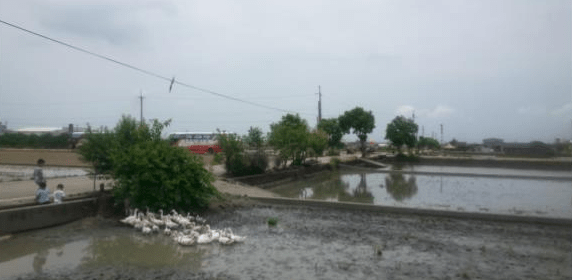
Written by Li Ching Chen, Translated by Sam Robbins. Hae works on a rice-duck farming cooperative in Yuanli. He wanted to take advantage of the fact that ducks eat rice pests and raise the ducks in the rice paddies. Although the idea was good in theory, there were many difficulties in practice. For example, he told me many of the dogs from the township started hunting the ducks. As ducks slowly waddled through the rice paddies, the dogs would start salivating.
The Homecoming of Indigenous Tea Farmers

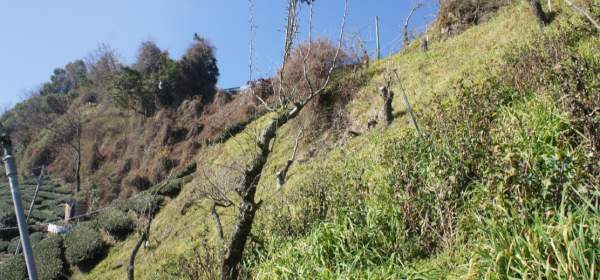
Written by Szu-yu Lai, translated by Sam Robbins. When people in Taiwan think of indigenous communities, they think of millet, traditional clothing, and other stereotypical markers. However, from the story of Atayal tea farmers in Li Mountain, we can see that such static imaginings don’t bind indigenous peoples. Admitting to Taiwan’s rapidly changing culture and economy, cultivating tea became a way for Atayal people to reflect on their own culture and relationship with mainstream society. Although tea is not a part of the Atayal people’s traditional culture, it has slowly become a crucial part of how Atayal tribes market themselves through legal and economic changes. 

Shared but Particular: A Proposal to Pitch Taiwan Research in Sinology and beyond

Written by Josie-Marie Perkuhn and Hung-yi Chien. Therefore, we call for a more comprehensive cross-perspective and interdisciplinary academic dialogue to encounter the current segregations and broaden the community by strengthening the interconnectivity. Although some topics, such as identity politics and the cross-strait tension, have caught particular attention in recent years, Taiwan studies still lack some ‘infrastructure’ that helps new students of Taiwan to grow upon it. With this sort of infrastructure, even if Taiwan lose its existence as an independent entity in the future, the shared discipline of sinology researching Taiwan, in particular, will last, and Sinitic knowledge will become the common heritage of human beings.

Fat-Shaming and Beauty Related Tensions in Contemporary Taiwanese Families

Written by Amélie Keyser-Verreault. One of the most important criterion determining whether a woman is considered beautiful is thinness in Taiwan and elsewhere. Under the influence of an increasing cult of beauty, my field works reveal the existence of various forms and causes of multiplying and exacerbating fat-shaming and beauty-related conflicts within the contemporary Taiwanese family. Although the idea that a close linkage between physical appearance and womanhood is certainly not new, recent research on women’s experiences of body transformation underscores that the degree of beauty pressure is unprecedented in contemporary societies. 

At the Consumer’s Convenience – What the Convenience Store in Taiwan Offers

Written by En-chi Chang. The convenience store in Taiwan has been part of daily life in Taiwan. To stay competitive, convenience store retailers remain focused on providing customers with convenient offerings. The current trend echoing the international retail development is the digitalisation of products and customer services. Nevertheless, development such as unmanned stores and metaverse is still in the infant stage. It is exciting to observe whether Taiwanese consumers will well receive services such as 7-Eleven’s X-Store and FamilyMart’s O2 Meta and whether other convenience store retailers will follow this development.

Bridging Islands of/beyond Borders: Dongyin and Yonaguni

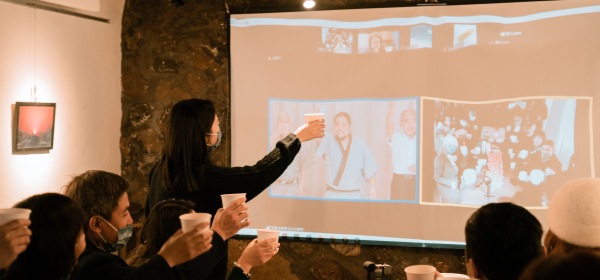
Written by Yi-Yu Lai. While the COVID-19 has stopped many individuals from travelling and interacting over the last two years, some cultural exchanges that we never expected to see have emerged during the pandemic. For example, on February 18th, 2022, people in Dongyin, an insular township in Taiwan’s Matsu Islands, had their first online workshop with those from Yonaguni, an island that belongs to Okinawa. Both islands are considered frontiers in their respective countries, and they had many comparable fates throughout history. Therefore, such a cultural exchange between the islands was particularly impressive because it was an activity with the islands as the focal point.

Matsu Language: A Language Too Unique To Forget

Written by Kai-Yang Huang. In 2019, President Tsai Ing-wen signed the National Language Development Act and announced its implementation. For a long time, pragmatism has had a significant impact on Taiwan. People believe that by promoting the use of English to become a “bilingual country,” Taiwan will be able to keep up with the rest of the world. Little do they know that what distinguishes Taiwan in the international community is the very distinctiveness of Taiwanese cultures. As a result, the primary principle of promoting natural language as a national language is to re-inherit a local worldview that has been around for a long time. This will strengthen the worldwide competitiveness of Taiwanese college students. 

Serendipity: Matsu Islands, Taiwan & Me

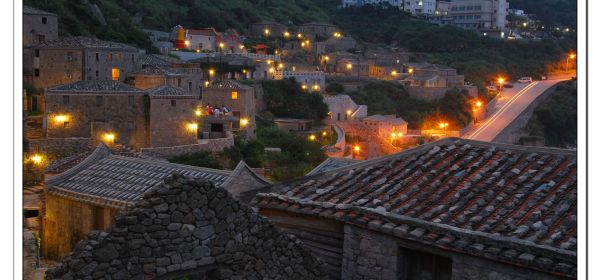
Written by Tammy Yu-Ting Hsieh. It was not until 1949 that the concept of “Matsu” was first established. Before the civil war in China, this group of islands were mostly the seasonal resting stops of fishermen from the south-east shore of China. Residents on the archipelago can clearly see the outline of Fujian, whereas “Taiwan” was an island they hardly knew nor had any relationship with. But suddenly, in 1949, Kuomintang armies arrived at Matsu Islands, and in no time, Matsu became the frontline of the Republic of China, aiming cannons at the opposite bank, a place they used to call “home.” To put it romantically, serendipity is how the “Taiwan-Penghu-Kinmen-Matsu Community” came to be today. And I tend to think that serendipity also guided me, a descendant of Minnan and Hakka from Taoyuan City, to embark on this back-and-forth journey to Matsu since 2020. 

Matsu Migrants in Bade, Taoyuan City

Written by Cheng-Chung Wang. In Taiwan, we rarely see Matsu in the textbooks, maps, or other materials we’ve been exposed to since childhood, let alone how much we know about Matsu people. Some of us may be unaware that there are many descendants of Matsu migrants living around us. Their moving and settling experiences are very attractive stories that deserve to be told. 

Two Hong Konger Projects on Taiwanese Soil: A Personal Encounter

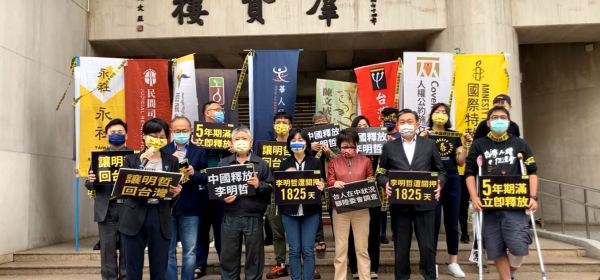
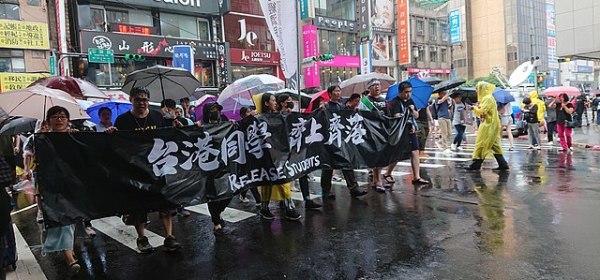
Written by Judy Lee. I very well understand why he considers Taiwan a promising base for the initiative—a general acceptance of Hong Kong and Hong Kongers as an individual entity in its own right, favourable geographical location for necessary shipments and visits, highly-educated Traditional Chinese users ready to provide assistance…; but most importantly, just as in my own case, it is the generosity and amicability that Taiwan people offer that encourages continuous work and cooperation towards a more comprehensive narrative for the Greater China area.

Are We “Post-Sunflower” in Taiwanese Politics?

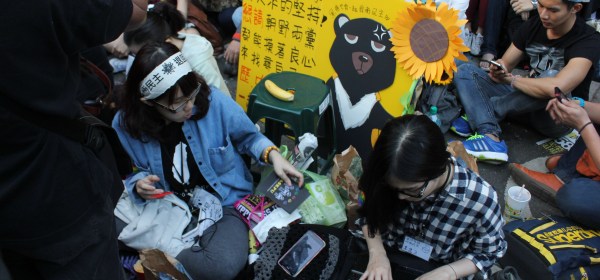
Written by Brian Hioe. Certainly, some of the discursive effects of the Sunflower Movement have faded, even if they were always hard to quantify. However, it is a harder question as to whether the direct influence of the movement has faded to the extent that the present would be seen as post-Sunflower. This perhaps will only become clearer after future anniversaries.

1 27 28 29 30 31 56