Gender Politics: Public Views of Women in Politics

Written by Timothy S. Rich, Madelynn Einhorn, and Isabel Eliassen. Taiwan’s efforts at gender parity for electoral offices have resulted in a legislature where women currently hold 41.6% of seats. This leaves Taiwan ranked 12th globally, with only one Asian country (Timor-Leste) with similar rates. However, despite the success of President Tsai Ing-wen, the vast majority of executive offices (mayors and magistrates) are still held by men. Gender equality and the rise of women in national politics are common narratives when discussing Taiwanese politics.

Zenly, Dumplings, and Bad Girls: surveillance and social work in Wanhua

Written by Peijun Guo, translated by Sam Robbins. When Amber had asked Hsiao-hao what he had been doing since dropping out of high school, Hsiao-hao said he had been looking for a job but couldn’t find one, and now has nothing to do. Amber then went to talk to Mei-mei, asking her, “Hsiao-hao isn’t going to school, he’s not looking for a job, he’s not doing anything, what do you think? Do you think this is good? I’m not trying to take sides; I wanna know what you think.” Mei-mei gave Amber a thumb’s up and said, “I think it’s great; if my dad didn’t try to stop me, I’d want to do exactly what Hsiao-hao is doing”

The Entangled Histories of Taiwan’s Women’s Movements: A look at Two Pioneering Groups

Written by Elizabeth Frost. Much of Taiwan’s impresive progress towards gender equality is thanks to the Taiwanese island’s women’s movement. Two groups that have been instrumental in the post-martial law era Taiwanese women’s movement are Awakening and the Homemakers United Foundation (HUF). The early stages of both groups were similar – Awakening began as a magazine in 1982, and HUF was initially established as the women’s auxiliary of the New Environment magazine in 1987. After the lifting of martial law, the groups were incorporated into independent foundations – Awakening in 1987 and HUF in 1989. Awakening is one of the most influential feminist groups in Taiwan, and HUF is now one of Taiwan’s largest environmental NGOs. 

Retaining Vietnamese Talents in Taiwan

Written by Huynh Tam Sang and Tran Hoang Nhung. In her 2020 inaugural speech, President Tsai Ing-wen (蔡英文) raised the issue of talent retention, underlined the need for “a diverse talent pool” with her commitment to attract “technical, R&D, and management talents to help globalize Taiwan’s workforce.” Furthermore, when attending the release of the Talent Circulation Alliance white paper in June, she said the government would be committed to “[developing] more innovative talent” to meet the shifting of supply change to Taiwan and navigate challenges caused by the COVID-19 pandemic.

The Good, the Bad and the Adaptive: Resilient Local Solutions to Tourism-Related System Shifts in Eastern Rural Taiwan

Written by Paulina G. Karimova and Kuang-Chung Lee. Discussion of resilience and adaptive capacity of Taiwan’s scenic rural areas has never been more pertinent than at the times of COVID-19. Over 2020-2021, these two seemingly academic terms have promptly secured their spot in local vocabulary (as 韌性 and 調適能力) and became an intrinsic part of hands-on local solutions.

How to Reduce Your Environmental Footprint as a Tourist in Taiwan

Written by Viola van Onselen. Tourism can significantly burden the natural environment, such as developing hotels or campsites in fragile ecosystems, pollution, or noise disturbance. The fact that tourism leads to environmental degradation has led to sustainable or eco-tourism, a concept that aims to minimise the impact on the natural environment and maintain tourism over a long period in one area while educating tourists and benefitting the social, economic and natural environment.

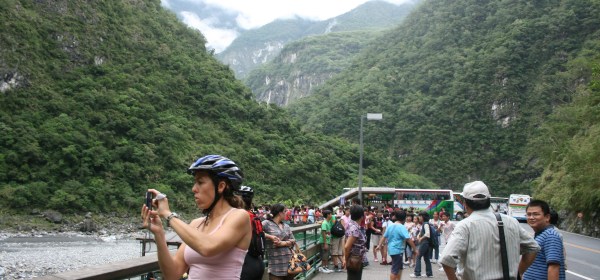
Mountain Hiking as Taiwan’s New National Pastime

Written by Ming-sho Ho. Sitting right at the fracture zone between Eurasian Plate and Philippine Sea Plate, Taiwan is an outgrowth of their incessant continental collision, thus making this island mountainous and ecologically rich. The Japanese archipelago shares a similar geological location. Still, Taiwan has ten times more peaks over 3,000 meters above sea level (268) than Japan, although the land size is only the latter’s one-tenth. From the tropical fluvial plain, one can drive through the temperate-zone mountain and reach the highest point of Taiwan’s highway (3,275 meters) in few hours, where flora and fauna are analogous to that in the frigid zone. Yet, until recently, most of the island residents did not have the opportunity to enjoy this natural heritage.

Intergenerational Bonds in Indigenous Communities: Lessons From My Grandparents

Written by Ljius Rakuljivu (徐嘉榮). During my schooling time away from my grandparents and hometown, I received many questions about my culture and mother tongue, and I answered them. Thankfully, because of my grandparents, I was deeply immersed in the Paiwan culture and language. So, I have an easier time later in life in dealing with my identity. Also, I learn English better than my Han-Taiwanese contemporaries since Paiwan and English share phonetical similarities.

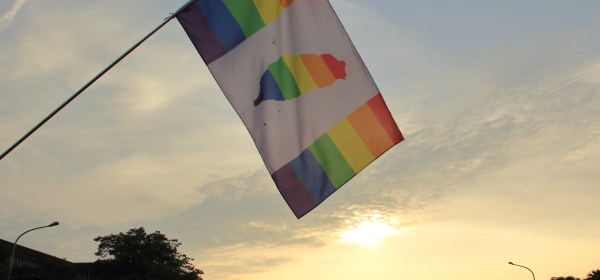
Queer Passion Between Generations: The view from Martial Law-era Literature

Written by Ta-wei Chi. It is rewarding to revisit history. I am motivated to reread the martial-law-period queer literature often, for it reminds me that the members of sexual minorities back then were imagined leveraging their survival despite their minimalised resources. Maybe it is precisely because of their precarious lives that they had to empower themselves with intergenerational articulations, in which queer seniors were indispensable.  

Do Young People Actually Matter in Taiwanese Politics?

Written by Brian Hioe. It is not out of the question that such young people will eventually take the reins of power. Indeed, they will once older politicians depart the political scene. But all appearances to the contrary, this may be a premature assessment. It may not be, in fact, that young people have come of age in Taiwanese politics, and instead of that, they remain subject to the larger established forces that have remained dominant for decades in politics. Whether this changes is to be seen.

Eggplantegg: Taiyu Language Proliferation and Linguistic Diversity in Taiwan’s Popular Music Scene

Written by Max Lembke-Soh. EggPlantEgg 茄子蛋 has fast become a significant player. Rocketing to popularity in 2017, EggPlantEgg received multiple Golden Melody Awards and nominations recognising their distinctly Taiwanese vibes, making full use of Taiyu’s broad intonation range to melodise lyrics across a variety of sounds. The band has no shortage of commentators lauding their style, highlighting their passionate use of Taiyu to express everything from love and yearning to relationships and loss.

The Fear Factor: [Chinese] Censorship on Taiwanese Popular Music

Written by Chen-Yu Lin, Yun-Siou Chen and Yan-Shouh Chen. Music is a powerful symbolic good, and it is not uncommon that this symbolic good can be shipped into opposing – or different – ideological systems, influencing other societies. However, sometimes musicians fear the consequences of singing or expressing what they want. As South African musician John Clegg once said, “censorship is based on fear”. Regardless of forms, music censorship requires an agent capable of negatively affecting a musician, whether that means imprisonment, loss of income or receiving negative comments online.

1 31 32 33 34 35 55