Intergenerational Bonds in Indigenous Communities: Lessons From My Grandparents

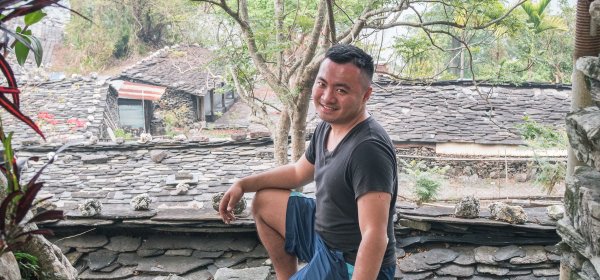
Written by Ljius Rakuljivu (徐嘉榮). During my schooling time away from my grandparents and hometown, I received many questions about my culture and mother tongue, and I answered them. Thankfully, because of my grandparents, I was deeply immersed in the Paiwan culture and language. So, I have an easier time later in life in dealing with my identity. Also, I learn English better than my Han-Taiwanese contemporaries since Paiwan and English share phonetical similarities.
Queer Passion Between Generations: The view from Martial Law-era Literature

Written by Ta-wei Chi. It is rewarding to revisit history. I am motivated to reread the martial-law-period queer literature often, for it reminds me that the members of sexual minorities back then were imagined leveraging their survival despite their minimalised resources. Maybe it is precisely because of their precarious lives that they had to empower themselves with intergenerational articulations, in which queer seniors were indispensable.  

Do Young People Actually Matter in Taiwanese Politics?

Written by Brian Hioe. It is not out of the question that such young people will eventually take the reins of power. Indeed, they will once older politicians depart the political scene. But all appearances to the contrary, this may be a premature assessment. It may not be, in fact, that young people have come of age in Taiwanese politics, and instead of that, they remain subject to the larger established forces that have remained dominant for decades in politics. Whether this changes is to be seen.

A Wake-Up Call to Improve Factory Working Procedures in a Time of Crisis

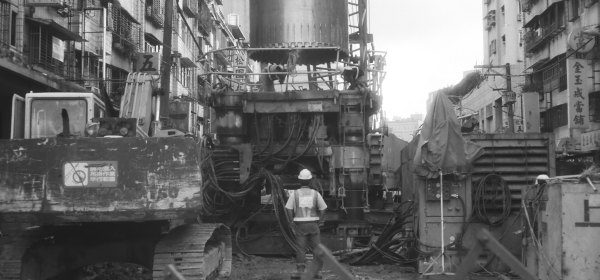
Written by Chan-Yuan Wong, Ker-Hsuan Chien, and Mei-Chih Hu. As the world enters the second year of the Covid-19 pandemic crisis, Taiwan – previously acknowledged as a Covid-free nation – encountered a new outbreak in mid-May 2021. This wave of infection has been deemed critical, as the number of infection cases has surpassed 700, and the infectivity rate is as contagious as measles. To date, Taiwan encountered 635 death cases related to Covid-19 – of which 98% are attributed to the recent outbreak since 15 May 2021.

Landlords, Subsidies, and Policy Failures: Renting in Taipei and New Taipei City

Written by Natalie Dai(戴淨妍), Jessica Hsu(徐卉馨), Sophia Lee(李昕儒), Dennis He(何正生); Translated by Sam Robbins. In August 2020, Lin Nuo-ning signed a half-year contract with her landlord and planned to stay in this apartment during her career move. However, when Nuo-ning applied for the subsidy for a second time, she received a call from her landlord whilst at work, criticising her for applying for the subsidy without telling her landlord first. As a result, her landlord asked her to move immediately. In applying for the subsidy, Nuo-ning had unintentionally caused the national tax bureau to contact her landlord to expect her tax records.

Location, Location, Location: Renting in Taipei and New Taipei City

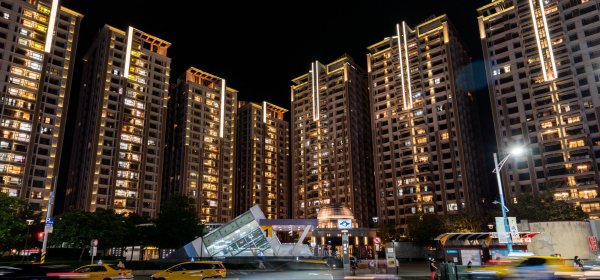
Written by Natalie Dai(戴淨妍), Jessica Hsu(徐卉馨), Sophia Lee(李昕儒), Dennis He(何正生); Translated by Sam Robbins. For recent graduates like Yi-ting, mostly all renters, rent typically takes up between one quarter and one-third of their monthly income. According to the Ministry of Labour, the average monthly salary for recent graduates in 2019 was 28,231NTD (£724; $1021). Judging by mean rental prices per region, if they are willing to move out to the suburbs of New Taipei City, they can expect to pay around 8,000NTD (£205; $289) a month for an eight ping (26 square meters; 285 square feet) apartment.

The Public Nature of Civil Disobedience: Lessons from the Sunflower and Umbrella Movement

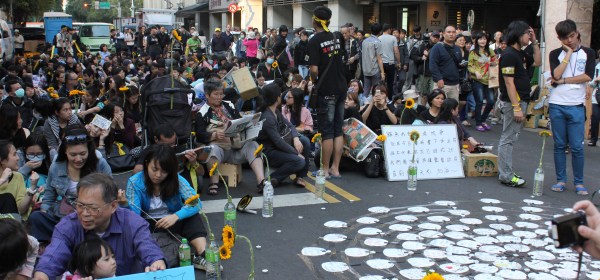
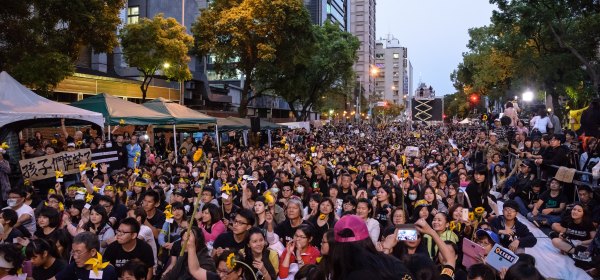
Written by Leon N. Kunz. In March 2014, participants in the Sunflower Movement peacefully occupied the main chamber of Taiwan’s parliament to block the ratification of a controversial trade agreement with the PRC that they viewed as a threat to Taiwanese democracy. In September of the same year, protesters involved in Hong Kong’s Umbrella Movement created street occupations to push for genuine democratic reform. In both cases, participants not merely occupied public space but claimed to engage in civil disobedience. According to the often-cited definition by liberal theorist John Rawls, civil disobedience is “a public, nonviolent, conscientious yet political act contrary to law usually done to bring about a change in the law or policies of the government.” To what extent did the occupations in Taiwan and Hong Kong conform to the dominant liberal civil disobedience script?

Not obedience but Dignity: A message from a former migrant worker

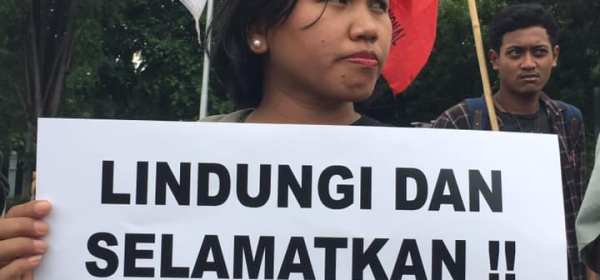
Written by Iweng Karsiwen and Ratih Kabinawa. Edited by Isabelle Cheng. A former domestic worker in Hong Kong for over ten years, Iweng Karsiwen is currently the Chair of Families of Indonesian Migrant Workers (Kabar Bumi). Initially she was recruited to work in Taiwan when the door opened for Indonesian women seeking domestic work there. However, instead of going to Taiwan, Iweng found herself arriving at a Hong Kong MTR station late one evening a year later. Knowing how the brokering industry functioned at home and abroad, after returning to Indonesia, Iweng was determined to help those who worked abroad and who faced similar challenges at various stage of their migration. She has particularly campaigned to outlaw salary reduction. This, as well as other practices mentioned by Iweng, are commonly adopted by brokers in Taiwan, Hong Kong, Malaysia and Singapore.

Migrants’ Voice in Taiwanese Documentaries: Narrative, Language and Space

Written by Adina Zemanek and Lara Momesso. Since the early 2000s, immigrants from mainland China and Southeast Asia have been an increasingly visible component of Taiwan’s social and public landscape. As such, they have received growing recognition both in terms of legal provisions and in the public discourse. An example of this acknowledgement is the December 2019 issue of Taiwan Panorama, a promotional magazine issued by the Ministry of Foreign Affairs. Half of this issue is dedicated to highlighting migrants’ presence in Taiwan. One of the articles calls for listening to their unique life stories, which would have the transformative effect of understanding the world from a new perspective and dismantling preconceptions about Southeast Asian cultures.

Changing Circumstances Call for Taipei to Lift Its Effort in Promoting Democracy on China and beyond

Written by Chen Jie (陈杰). There are remaining concerns urging the government of democratised Taiwan to support democratic causes and human rights in China. In fact, for the Tsai Ing-wen administration, these issues have strengthened. Despite their disdain for the one China project, politicians of the Democratic Progressive Party (DPP) share the sentiment that Taiwan’s own democratisation inspires China. This is echoed internationally. The former US Vice President Mike Pence spoke positively about Taiwan’s “embrace of democracy” and the example it had set for “all the Chinese people.”

The Fashioning of Filipino Community in Taiwan: OFW Beauty Pageants in the Era of Social Media

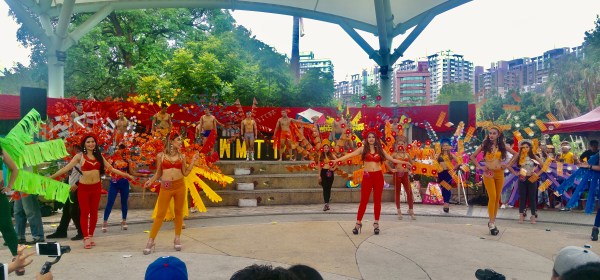
Written by Yi-Yu Lai. As an anthropologist who studies Indigenous movements in the Philippine highlands, my experiences of beauty pageants’ are not rare. The beauty pageant has been culturally entrenched in the Philippines and its diasporic communities for many decades. Because these contests are very popular with Filipinos, some Indigenous youth advocates use them as an instrument for cultural activism, empowering participants and attracting those who were previously indifferent to political issues. Nevertheless, the Filipino beauty pageants of Taiwan are quite different from those I previously experienced.

1 2 3 4 5 6 9