Why Taiwan’s Family Businesses Still Rule and Why It Matters

Written by Zong-Rong Lee. As part of the Taiwan Insight–IJTS special issue on the Topical Section “Transitions and Challenges in Taiwan’s Economy and Society,” this article presents Zong-Rong Lee’s study on Taiwan’s enduring family capitalism. It traces how political patronage, kinship networks, and market reforms sustained family dominance, raising concerns about competition and long-term adaptability.


Professional Sports in Taiwan: Business Structure and Co-governance Mismatch in Technology 

Written by Yi-Yen Lim, Jui-Jan Chan and Chan-Yuan Wong. This article analyses the challenges and opportunities facing professional sports in Taiwan. Unlike Western models, Taiwanese teams heavily rely on corporate sponsorships and government support, leading to a mismatch between technology push and industry demand. The authors argue that granting more autonomy to teams and fans in technology adoption could foster a more independent and vibrant sports culture. The article focuses on the case of the Uni-Lions baseball team, highlighting its unique business structure and sustainability challenges.

Global Britain Goes to Southeast Asia: Investment Flows in an Era of Great Power Competition

Written by Guanie Lim and Xu Chengwei. In March 2021, the UK government published the ‘Global Britain in a Competitive Age’ report. Amongst other things, it sets out the UK’s four key objectives: upholding an international order supportive of liberal democratic values; contributing to the security of this order; building greater global resilience to the impacts of climate change, health insecurity, and related challenges; and pursuing an international economic agenda that strengthens the UK’s global competitiveness and supports the welfare of its citizens. One of the most practical measures to achieve such goals is to channel foreign direct investment (FDI) to outward-oriented economies, not least those with potentially enormous upside. Boasting the fifth-largest economic output in the world and a very favourable demography, the Association of Southeast Asian Nations (ASEAN) must figure prominently in the calculus of UK policymakers.

Gatekeeper’s Dilemma: Japan Facing CPTPP Applications from China and Taiwan

Written by Saori N. Katada. For more than a decade, the Transpacific Partnership (TPP) trade agreement has been vital to the Japanese government’s economic agenda. This mega free trade agreement encompassing the Asia Pacific, originally negotiated among twelve members, has aimed not only at creating a large free trade area among the members but also installing the most advanced trade and investment rules in the region. After joining its negotiation in 2013 and especially since the 2017 US exit from the agreement, Japan has been taking a leading role in shaping and protecting this scheme. Finally, in December 2018, the Comprehensive Progressive Agreement of the TPP (CPTPP) came into effect with the remaining eleven members. Despite the US absence, it began to attract interest among others to join.

CPTPP Membership for Taiwan: Rationales, Challenges, and Outlook

Written by Roy Lee. Taiwan has been preparing for CPTPP accession for the last eight years. The economic importance of CPTPP for Taiwan is critical, as it is perhaps one of the limited options available for Taiwan to avoid being marginalised from the Asia Pacific regional integration process. This article starts with a review of key policy rationales for Taiwan’s CPTPP accession, then analyses major challenges and impediments, and offers thoughts on future prospects.

Semiconductor Competition: Opportunities for Taiwan

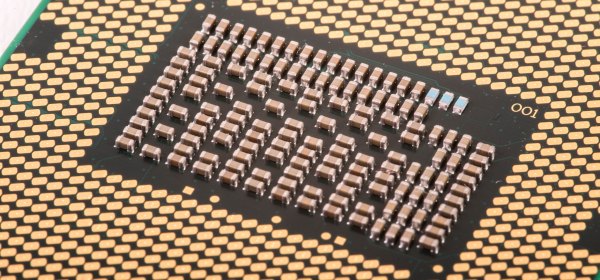
Written by Adhiraaj Anand. The Biden administration has put aside billions of dollars to improve semiconductor manufacturing capabilities in the US, whose global output fell from 37% in 1990 to 12% in 2020. Additionally, the EU Chips Act, proposed in 2022, seeks to make Europe a leader in semiconductor technology and maintain a secure supply of chips by increasing the continent’s market share in the semiconductor industry to 20% by 2030. Japan has similarly unveiled a strategy to promote indigenous semiconductor manufacturing to achieve a 40% global market share in next-generation power semiconductors, which are to be used in emerging technologies such as electric vehicles, by the end of the decade.

Taiwan’s Prowess in the ICT Industry  

Min-Hua Chiang examines the growth of Taiwan’s robust ICT industry. China was considered a potentially important competitor to Taiwan’s ICT firms a few years ago. However, China’s effort to reduce its reliance on importing key components was unsuccessful. In July 2021, Tsinghua Unigroup, a state-backed semiconductor manufacturer, filed a bankruptcy request. Chinese chip industry only took 7.6% of total global semiconductor sales. Its equipment and materials for production are still limited to older technologies. The American government has been encouraging manufacturing production at home to reduce imports of key components from overseas. Nevertheless, the high labour cost and lack of qualified workers in the semiconductor industry will make it difficult to reduce its reliance on Taiwan. The greater US-China competition in the high technology industry is only likely to increase the superpowers’ dependence on Taiwan’s semiconductor industry.

Every Journey Begins with a Single Step: Taiwan’s National Action Plan on Business and Human Rights

Written by Bonny Ling. Last year, on Human Rights Day marking the adoption of the 1948 Universal Declaration of Human Rights on 10 December by the UN General Assembly, Taiwan’s executive branch of the government (Executive Yuan 行政院) released the Taiwan National Action Plan on Business and Human Rights (NAP) (臺灣企業與人權國家行動計畫). The Action Plan was celebrated, with Premier Su Tseng-chang (蘇貞昌) enthusiastically describing it as “aid[ing] Taiwan’s efforts to become integrated in international trade and supply chains.”

Taiwan and the Pandemic: Impact on Businesses and the Economy

Written by Lotta Danielsson. For the first year of the COVID-19 pandemic, Taiwan served as a brilliant example of how best to handle the crisis. Leaning on its experiences during the 2003 SARS epidemic, Taiwan received glowing reviews for its protective measures. Stories about long stays in quarantine hotels and the vigilant surveillance of arriving travellers spread widely online. Donations of high-quality protective gear served as public relations opportunities, culminating with “Made in Taiwan” facemasks worn at the White House. Photos from a crowded live concert in Taipei elicited envy from those still in semi-lockdown elsewhere.

Taiwan’s Boosting Economy Amid the Prolonged Global Pandemic Crisis

Written by Min-hua Chiang. Taiwan government revised up economic growth forecast in 2021 to 5.5% in June despite the sudden surge of covid-19 cases since mid-May. This is the fastest growth path since and second only to the post-crisis rebound in 2010 (see Figure 1). The economy is bolstered by thriving exports outlook. Growing domestic investment is another anchor of Taiwan’s economy thanks to the continuous investment repatriation. The greater government consumption is expected to offset the potential fall in private consumption following the constraints on outdoor activities. Taiwan Centres for Disease Control (CDC)’s capability to put the domestic outbreak under control in a month further gives confidence that moderate economic growth this year could be expected.

Capitalising on Taiwan’s Advantages to Attract New Investments

Written by Lotta Danielsson. The Taiwan economy fared well in 2020 and continues to do so into early 2021. This is primarily due to strong domestic demand, robust technology exports driven by the global shift to remote work, and a rebound in export orders for industrial goods. According to recent figures released by its national statistics bureau, Taiwan’s economic growth in 2020 was 2.98%, outperforming China’s same-year growth of 2.3% for the first time in 30 years.

1 2