From WTO to CPTPP: What Makes the Consideration of China and Taiwan’s Accessions Different?

Written by Jacques deLise. In 2000-2001, China and Taiwan entered the World Trade Organization (WTO). Their admittance to the central institution of the international economic order was, in effect, a package deal that became possible with the assent of the United States, which had been a last principal obstacle to Beijing’s long-sought membership. Two decades later, China and Taiwan have applied to join the Comprehensive and Progressive Agreement for a Trans-Pacific Partnership (CPTPP). This arrangement emerged from the larger Trans-Pacific Partnership after the US opted out. The two bids face major challenges, including those born of changes in the international stature and posture of each of Taiwan, China, and the United States.

How Vital is the CPTPP Membership to Taiwan?

Written by Yun-Chieh Wang. On September 22, 2021, six days after the Chinese government submitted its application to the Comprehensive and Progressive Agreement for Trans-Pacific Partnership (CPTPP), the Taiwanese government handed in its application to the depository in New Zealand. According to World Trade Organisation (WTO) data, Taiwan ranks as the top 15 goods export and the top 18 goods import economy in 2020. However, Taiwan has only signed a few trade agreements with its trading partners and cannot join critical regional trade agreements such as Regional Comprehensive Economic Partnership (RCEP). Therefore, participating in CPTPP is expected to promote Taiwan’s trade ties with the trade partners effectively.

A Comprehensive and Progressive Agreement for Trans-Pacific Partnership (CPTPP): A Game of Go? Or Three-dimensional Chess?

Written by Chun-Yi Lee and Michael Reilly. The CPTPP is an ambitious, wide-ranging free trade agreement (FTA) signed between Australia, Brunei Darussalam, Canada, Chile, Japan, Malaysia, Mexico, Peru, New Zealand, Singapore, and Vietnam in March 2018. The CPTPP was originally named as the Trans-Pacific Partnership and comprised twelve members. However, after the Trump administration withdrew the USA from it in 2017, the remaining eleven countries reorganised and renamed it. After leaving the EU, the UK applied to join in February 2021, followed by China and Taiwan in September. South Korea has been considering joining but has yet to do so. Countries seeking to join the bloc must negotiate tariffs and other market access conditions with each of the eleven original members. 

USA, China, and Taiwan: Post-Endemic Strategies for a New Global Economy

Written by Ian Inkster. Joe Biden’s recent scooping up of the fog of ‘strategic ambiguity,’ the seldom re-specified policy of the USA towards China in the case of an overt attack on Taiwan, was made in haste but has set the tail of the cat alight and its very colour in doubt. In Japan, Biden warned that China was ‘flirting with danger’ and then admitted that the US would defend Taiwan against invasion by China as contra to the Ukraine case. He was then asked directly if the US would defend Taiwan militarily if China invaded, when it has not done so in the invasion of Russia against Ukraine.

What’s Exactly Wrong with Taiwanese Media?

Written by Ti Wei. To solve the Taiwanese media problem, the first step is to recognise that the problem is unique and not like any other case in the world. Moreover, this problem could not be explained by any Western theories. Therefore, we need to carefully clarify and re-examine the nature of the problem and study society and the audiences thoroughly. Then, based on the re-acquainted knowledge, we may draw a new and reflective plan for rebuilding the media system. The only thing for sure is that it is neither commercial nor public in the Western sense. In addition, the latest development of media platformatisation and the new audience generation should be considered. The task is tough, but any endeavour to pay should be worthy when we think of how much hardship Taiwanese media have been through.

Hard Cash or Soft Values? Assessing the ‘Lithuanian Model’ of Eastern European Relations with China and Taiwan

Written by Dominika Remžová. Over the last year and a half, Lithuania has been at the forefront of the EU’s improving relations with Taiwan and worsening relations with China. This culminated with Lithuania leaving the 17+1 framework of cooperation between China and 17 (now 16) eastern European countries on the one hand and the opening of the Taiwanese Representative Office in Vilnius on the other. The two events occurred in May and November 2021, respectively, with the latter being particularly controversial, as China argued that the denomination ‘Taiwanese’ breached the EU’s One China policy, which led to the imposition of Chinese economic sanctions on Lithuanian products. However, as Lithuania’s economic relations with China are negligible, at least when compared to western European countries, Beijing made the unprecedented move of targeting EU-wide supply chains that contain Lithuanian products. This effectively escalated the bilateral disagreement to the EU level, with the bloc filing a WTO case against China.

What Does the Ukraine Crisis Tell Us About the Fate of Taiwan?

Written by Raian Hossain. The Russian invasion of Ukraine raises a serious concern over international peace, security, and stability. This led to numerous debates among analysts, academics, and journalists over the possibility of Beijing’s aggregation toward Taipei. There are good reasons why such concerns are in discussion. Chinese fighters’ incursion of Taiwan’s Air Defence Zone has become a regular practice in recent times. Hence, these lead toward analysing the possibility of the Peoples Republic of China (PRC) invasion of the Republic of China (ROC), often known as Taiwan, using the lens of security, political economy, and diplomacy.

A Reflection on the UK’s Parliamentary Reaffirmation to Bolster Economic, Security & Develop Strategic Ties with Taiwan

Written by Raian Hossain. Most importantly, the debate at the House of Commons has highlighted a strong unity among different political parties’ parliamentarians in bolstering ties with Taiwan in all possible ways, be it economic, helping the island in international recognition, along with ensuring peace, security, and stability across the Taiwan Strait region. The cross-party unity approach ensures much more robust ties between UK-Taiwan in the upcoming days despite which party forms government in London in future.

Comparing space industry interventions in Taiwan and elsewhere

Written by Nicholas Borroz. Taiwan’s government intervenes to develop its space industry. It is one of several political economies characterised by solid government intervention approaches to guide market actor behaviour. This robust interventionist approach has different strengths and weaknesses. In terms of strengths, Taiwan’s approach can help establish local dominance in niches in global value chains. In addition, it can incentivise the growth of certain business areas that will benefit the economy and coordinate the development of complementary business areas.

A Tale of Two Cities: Taiwan’s Social Housing Policy Practice in Taipei and Taoyuan City, 2014-2018

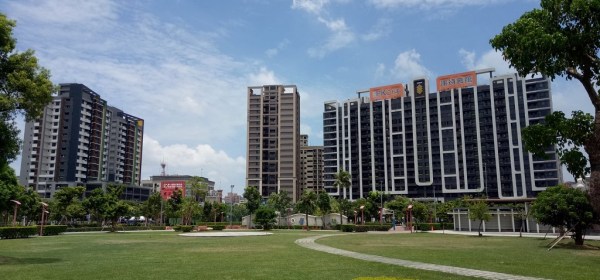
Written by Chris Chih-Hua Tseng. Taipei has spawned some policy innovations. Meanwhile, in Taoyuan, an adjacent developing city that has built massive amounts of social housing, none of the above happened. Instead, the city government proudly announced it had built social housing the fastest. Why has social housing developped much more sluggishly in the capital than it has in Taoyuan? To answer the differences between these two cities, we need to expand our scope to broader urban politics and urban developmental processes.

How to Promote the Long-Term Success of Semiconductor Industry in Taiwan and Other Economies

Written by Bo-Yi Lee. Taiwan’s semiconductor industry has recently attracted attention from foreign governments and media due to the shortage of chips essential for carmakers. Besides, with the growing demand for advanced technologies, including artificial intelligence (AI), fifth-generation (5G) communication, electric vehicles, etc., Taiwan’s semiconductor industry’s strategic importance cannot be over-emphasized. For these Taiwanese firms in this critical supply chain, it is necessary to prioritize and strategize attracting, retaining, and developing talents, since this is a capital and a knowledge-intensive industry.

Keynote speech at the Yushan Forum (part II)

Written by Malcolm Turnbull. Countries that displease China have been threatened with economic consequences. It might be boycotting Japanese retailers; or stopping tourism to South Korea. Or as we have seen in Australia, holding up beef exports and slapping tariffs on wine. On the other hand, and especially in the developing world, billions are being offered for infrastructure development through the Belt and Road initiative.

1 2 3 4 5