A Comprehensive and Progressive Agreement for Trans-Pacific Partnership (CPTPP): A Game of Go? Or Three-dimensional Chess?

Written by Chun-Yi Lee and Michael Reilly. The CPTPP is an ambitious, wide-ranging free trade agreement (FTA) signed between Australia, Brunei Darussalam, Canada, Chile, Japan, Malaysia, Mexico, Peru, New Zealand, Singapore, and Vietnam in March 2018. The CPTPP was originally named as the Trans-Pacific Partnership and comprised twelve members. However, after the Trump administration withdrew the USA from it in 2017, the remaining eleven countries reorganised and renamed it. After leaving the EU, the UK applied to join in February 2021, followed by China and Taiwan in September. South Korea has been considering joining but has yet to do so. Countries seeking to join the bloc must negotiate tariffs and other market access conditions with each of the eleven original members. 

Semiconductor Competition: Opportunities for Taiwan

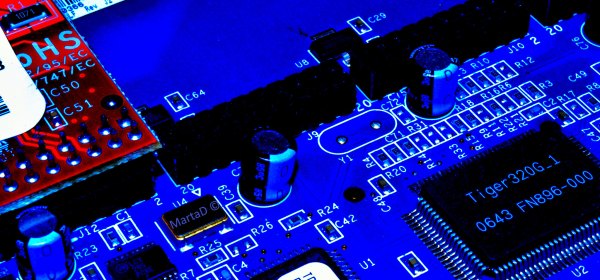
Written by Adhiraaj Anand. The Biden administration has put aside billions of dollars to improve semiconductor manufacturing capabilities in the US, whose global output fell from 37% in 1990 to 12% in 2020. Additionally, the EU Chips Act, proposed in 2022, seeks to make Europe a leader in semiconductor technology and maintain a secure supply of chips by increasing the continent’s market share in the semiconductor industry to 20% by 2030. Japan has similarly unveiled a strategy to promote indigenous semiconductor manufacturing to achieve a 40% global market share in next-generation power semiconductors, which are to be used in emerging technologies such as electric vehicles, by the end of the decade.

Salivating Sales: Ethnic Chinese Malaysians and the Edible Bird’s Nest Industry.

Written by Yu-an Kuo 郭育安, translated by Sam Robbins. Despite being a common food in Taiwan, Taiwan’s climate makes it unsuitable for cultivating edible birds nest. Consumption of edible birds nest in Taiwan can be traced back over 200 years, but this consumption has always relied on imports. The product’s history in Taiwan is tied to the history of Dihua street in Taipei, which developed towards the end of the Qing dynasty. This street became a main sight for the selling of exported “Chinese goods” (華貨)in Taiwan, including Ginseng, Jujubees, louts seeds and shark fins. Official statistics suggest that Taiwan currently imports over 10 tonnes over birds nest each year, with over 90% being imported from Indonesia. However, this number is likely unreliable since the illegal smuggling of birds nest remains a constant problem in Taiwan.

Taiwan and the Pandemic: Impact on Businesses and the Economy

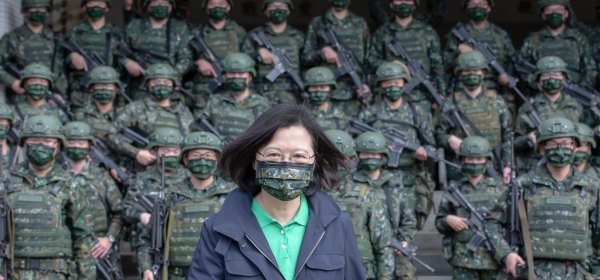
Written by Lotta Danielsson. For the first year of the COVID-19 pandemic, Taiwan served as a brilliant example of how best to handle the crisis. Leaning on its experiences during the 2003 SARS epidemic, Taiwan received glowing reviews for its protective measures. Stories about long stays in quarantine hotels and the vigilant surveillance of arriving travellers spread widely online. Donations of high-quality protective gear served as public relations opportunities, culminating with “Made in Taiwan” facemasks worn at the White House. Photos from a crowded live concert in Taipei elicited envy from those still in semi-lockdown elsewhere.

Taiwan’s Economy: GDP Growth is a Bright Spot for Now

Written by John F. Copper. The recent economic news emanating from Taiwan is the impressive growth in its gross domestic product (GDP)—one of the basic indicators of economic vitality. This is certainly good to hear. After experiencing negative growth throughout most of 2020, conditions changed in the last quarter of the year. As a result, Taiwan even bested China’s GDP growth. Furthermore, the upward trend accelerated this year, with GDP expansion the highest in two decades. If this growth is sustained, 2021 will end with a welcomed 5 per cent or better rise.

The Future of Taiwanese industries’ Supply Chain Reallocations Under Covid-19

Written by Chun-Chien Kuo. By adding fire to the existing US-China Trade War, Covid-19 has accelerated the current economic adjustment pace, along with the need for supply chain reallocation in industries. Thus, industries and firms in Taiwan have responded to adjust their production of diverse parts and components. They have also attempted to establish their own sufficient domestic supply chains. New trends in supply chain reallocation have also emerged, such as localised supply chains, shorten supply chains and digitalisation under the Covid-19 threat.

Capitalising on Taiwan’s Advantages to Attract New Investments

Written by Lotta Danielsson. The Taiwan economy fared well in 2020 and continues to do so into early 2021. This is primarily due to strong domestic demand, robust technology exports driven by the global shift to remote work, and a rebound in export orders for industrial goods. According to recent figures released by its national statistics bureau, Taiwan’s economic growth in 2020 was 2.98%, outperforming China’s same-year growth of 2.3% for the first time in 30 years.

The Biden Administration and Taiwan’s Post-Covid Economic Prospect

Written by Min-hua Chiang. With 2.98% of growth rate in 2020, Taiwan’s economy has outperformed many countries in the world. The moderate economic expansion was attributed to the surging external demand for information and communications technology (ICT) goods and the growing investment repatriation. The domestic consumption remained resilient thanks to the growth in domestic tourism and economic stimulus measures. After all, Taiwan’s success in containing the COVID-19 underpinned the whole economy well amid the ongoing global pandemic crisis.

Post-COVID-19 Taiwan in the Global Semiconductor Industry: The Context of the New U.S. Administration

Written by Yu-Ching Kuo and Robyn Klingler-Vidra. Early into the global pandemic — and amidst ongoing U.S.-China trade tensions — the International Monetary Fund’s (IMF) World Economic Outlook in April 2020 forecast that Taiwan’s GDP would shrink by 4% in 2020. However, by October 2020, Taiwan’s exports unexpectedly grew by 3.4% and GDP increased by 2%. The outperformance was partly due to Taiwan’s capacity to fight COVID-19, which contributed to the export growth rate of semiconductors and electronics and information technology industries, which was as high as 20%. #Taiwan #economy #industry #covid #Trump @RobynVidra

The Last Trump: Or, Taiwan as a Potential Pawn on a New Chess Board

Written by Ian Inkster. As Joseph Cummings has summarised recently for Redaction Politics, ‘experts believe that Mr Biden’s policy will fall short of provocation of mainland China and Mr Trump’s open empowerment of Taiwanese militarisation,’ and there is little reason yet to discount that view. The fact that the US has approved recent arms purchase deals with Taiwan may mean no real change in the long history of less-than-best military techniques being sold off to Taiwan as part of the old cold-war alliance.

The Risky Business of Importing Pigs: The Story Of Taiwan’s First Insurance Company

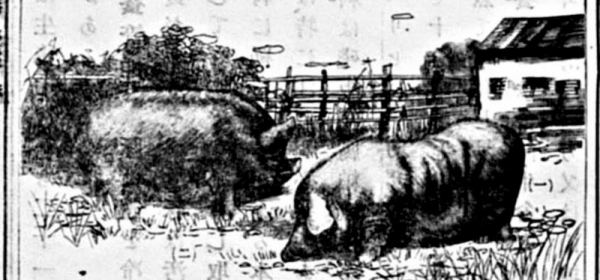
Written by Ko Lien. The demand for pig and pork products increased, but businessmen had begun to import pigs from across the strait since supplies have dwindled. As refrigeration technology was still in its infancy at this point, live pigs were imported. However, many overdue would die on the journey to disease or ship wreckage. In response to this, Taiwan’s first-ever insurance company was founded for protecting against pig loss.

Semiconductor Industry Strategies in Taiwan

Written by Guo-Huei Chen, Ming-En Hsiao and Li-Ke Chang. The semiconductor industry is strategic to national security and critical to international connections in the high tech and techno-geopolitics era. In regard to tech, along with strategic competitions between America and China, Taiwan is at the frontline for its supply chains and geopolitics.

1 2 3 4 5