Sustainable Traditional Knowledge: Land Ethics and Disaster Resilience in Cinsbu 

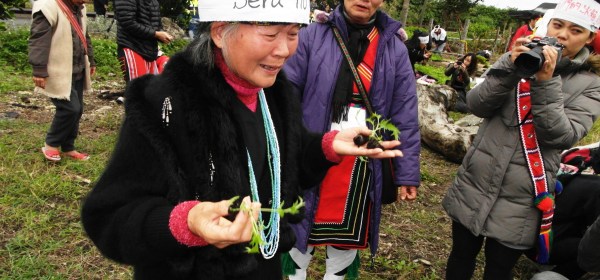
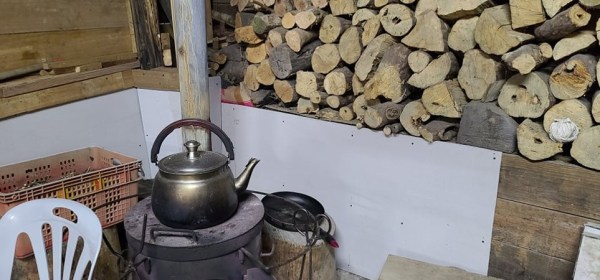
Written by Bayis Atung; translated by Yu-Chen Chuang. In recent years, due to climate change, community members have begun to think more about how to minimise the impact of disasters before they occur. When engaging in farming, we have started to think and take action to incorporate traditional land use knowledge from the past. We continuously experiment and face challenges, ultimately returning to traditional land use and cultivation ethics. We have discovered that this approach can be used to adapt to and address climate change, as it helps Cinsbu adapt to the ever-changing challenges posed by disasters. In this article, I share our land ethics and explain how sustainable land use relates to disaster prevention. Even though the intensity of climate change has increased, the Tayal people have not given up on using the land. Instead, there have been even more changes in how we use the land.
Indigenous Disaster Justice: Reflecting on Typhoon Morakot Recovery 

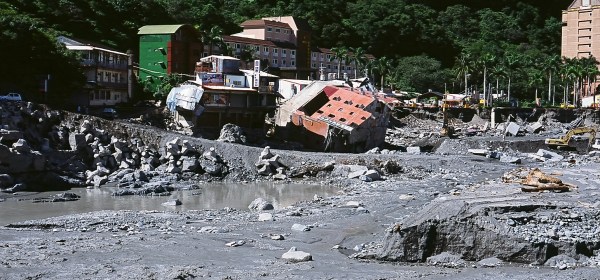
Written by Yi-Te Yu. In the past two decades, Taiwan has endured two major disasters: the 921 Earthquake in 1999 and Typhoon Morakot in 2009. Both events resulted in immense loss of life and property. The Indigenous regions of Taiwan, in particular, have borne the enduring impact that is yet to see a complete recovery. Taking Typhoon Morakot in 2009 as an example, during its onslaught in Taiwan, it unleashed a record-breaking deluge of rain. This led to a large-scale landslide in Mt. Xiandu(獻肚) in Jiaxian District, Kaohsiung, burying the village Xiaolin beneath a deluge of soil and debris. Moreover, this catastrophe also inflicted the mountainous Indigenous communities in the central and southern regions of Taiwan, including Chiayi, Kaohsiung, Pingtung, and Taitung counties, with the onslaught of floods, landslides, and debris flows. In total, it resulted in 678 fatalities and 33 injuries. 

Tracing Disaster Injustice: Indigenous Peoples’ Vulnerability and Resilience in Taiwan 

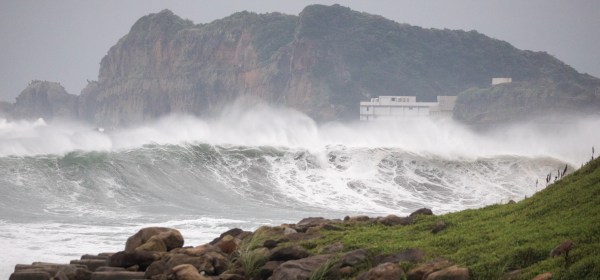
Written by Yu-Chen Chuang. In August 2023, Typhoon Khanun swept across Taiwan, particularly impacting the mountainous regions of central Taiwan. The resultant severe floods and landslides caused significant damage to infrastructure and disrupted the livelihood of local residents. One of the most severely affected areas was Renai Township in Nantou County, which is home to several Indigenous communities. The damages caused by Typhoon Khanun demanded significant labour and financial resources from Indigenous communities to manage the lengthy post-disaster reconstruction. This special issue, titled ‘Indigenous Peoples and Disaster Justice,’ will feature contributions from scholars and practitioners deeply involved in Indigenous-centered disaster management in Taiwan. We hope to foster discussions about the past, present, and future of disaster management, with a particular focus on addressing colonial injustice. 

Energy transition in Taiwan: Generating electricity with love, or inclusive public engagement?

Written by Anthony H. F. Li. A stable electricity supply is vital for national security, economic development as well as the everyday lives of citizens in Taiwan. Since the Democratic Progressive Party (DPP) pursued an ambitious policy to decarbonise the electricity sector with renewable energies and to phase out nuclear energy by 2025, the discussion on whether Taiwan is facing a shortage of electricity amidst the process of energy transition emerges on the social agenda from time to time.

Is Going Green Hurting Indigenous Communities? Reflection from Participating in the United Nations Permanent Forum on Indigenous Issues 

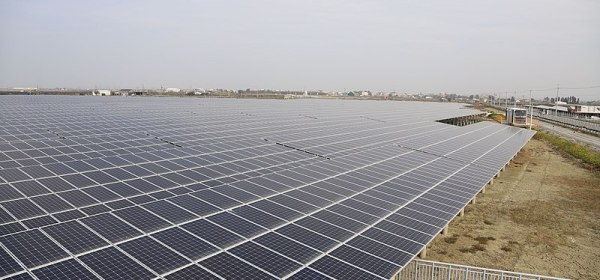
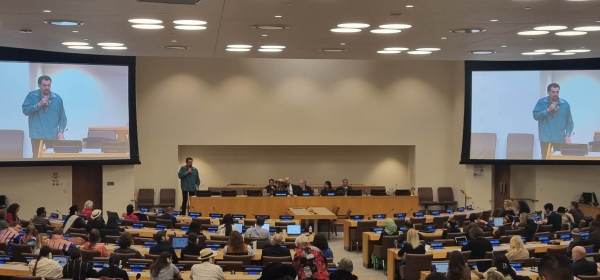
Written by Wasiq Silan. Is going green hurting Indigenous communities? Not necessarily. However, exclusionary conservation measures create a lose-lose outcome for non-Indigenous and Indigenous communities. Indeed, Indigenous peoples’ full and substantial participation is a prerequisite to achieving a sustainable future and halting the rapid loss of global biodiversity. This is true for the Indigenous communities in Taiwan, such as in the case of the solar panel controversy on the Katratripulr Pinuyumayan (Beinan in Mandarin Chinese) people’s traditional territory. Drawing from the experience of the Sámi, my recent participation in the United Nations Permanent Forum on Indigenous Issues (UNPFII) may shed light on this issue.

Excavating Ancient Knowledge: Climate Action and the Practice of Sustainability

Written by Chung-chun Wang. Since museums are highly and closely related to society and the public with their transformation, the new definition demonstrates that accessibility, inclusiveness, diversity and sustainability are the key aspects that echo the contemporary trends. Therefore, museums usually aim to include these notions in their plans, research, and exhibitions. For example, the emphasis on “environmental education” is widely seen in museums, as it is directly linked with sustainability associated with the current energy and food crises. In this regard, how does archaeology, a discipline considered an old, ancient, and mysterious field with studying prehistories and peoples, respond to the vision of sustainability?

Fighting from the Grassroots: Indigenous Health Justice is All About Life

Written by Yunaw Sili and Besu Piyas. The story began in 2006. That year, the Council of Indigenous Peoples in Taiwan issued a guideline stating that if Indigenous students need preferential treatment for college admission, they must pass the national Indigenous language certification test. As a result, many parents were worried that their children’s access to higher education would become more difficult. Because of this issue, we started our grassroots organising work in Hanxi Village, Datong Township of Yilan County. That was the first time we engaged and coordinated with the community people on local concerns. On April 19th, 2006, we demonstrated in front of the Council of Indigenous Peoples, fighting for our youth’s college rights. 

Taiwan’s Green Efforts

Written by Chien Te Fan. Taiwan, also known in Europe as Formosa in the mid-16th century, is an island country with rich biodiversity. However, in the Pacific Rim seismic zone and the main path of typhoons in the Northwest Pacific region, Taiwan has been one of the most vulnerable countries threatened by the current climate crisis. Therefore, since the late 19th century, Taiwan has been striving to maintain its precious natural resources and resilience to survive the effects of industrialisation and adapt to climate change.

Taiwan’s status at the science-policy interface for global climate change: why getting it right matters

Written by Leslie Mabon. The United Nations Framework Convention on Climate Change (UNFCCC) arguably represents an unprecedented level of international cooperation on a global problem. Therefore, the 2021 meeting of the Conference of the Parties to the UNFCCC – COP26 in Glasgow – is especially significant. COP26 marks five years (including a one-year pause due to COVID) since the Paris Agreement and is the first point at which countries must update their pledges for action to limit global warming to as close to 1.5 degrees Celsius as possible. Yet despite the importance of COP26 and the UNFCCC to find ways of avoiding harmful climate change, one high-emitting country of 23 million people will be absent from the negotiations – Taiwan.

Taiwan-UK Offshore Wind Cooperation Successes Should be Big News at COP26

Written by Col. Bob Stewart and Lord Rogan. With the COP26 Conference in Glasgow fast approaching, the UK Government has made the challenge of addressing climate change a priority for post-Brexit Britain. It is one of the platforms being used to launch ‘Global Britain’ back onto the world stage, and there is a great deal riding on COP26 delivering tangible results that can make a real difference in the years ahead.

Climate Change, COP26, and Challenges for Taiwan

Written by Huang-Hsiung Hsu. The year 2021 is undoubtedly the Year of Climate Change: The Intergovernmental Panel for Climate Change (IPCC) released the Sixth Assessment Report (AR6) on 9 August. Furthermore, the Nobel Physics Prize was awarded to two climate change scientists on 5 October, and the UNFCCC COP26 is taking place in Glasgow on 1-12 November. e AR6 Working Group I report warned that a 1.5°C warming relative to 1850–1900 will occur in the next two decades regardless of what emission scenario might be taken, including the one that would limit warming below 1.5°C by the end of the century.

1 2 3 4