
Written by Timothy S. Rich and Kole Ingram. To what extent does the Taiwanese public trust the Tsai Ing-wen administration? Furthermore, does trust in the administration’s COVID policy fare better than generalized trust?
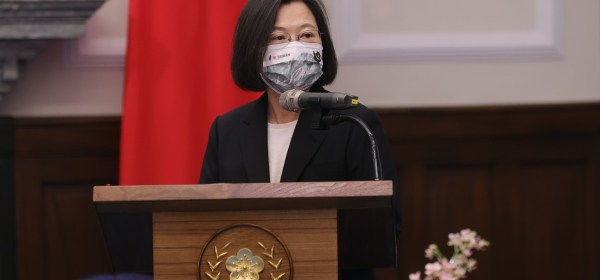
Written by Timothy S. Rich and Kole Ingram. To what extent does the Taiwanese public trust the Tsai Ing-wen administration? Furthermore, does trust in the administration’s COVID policy fare better than generalized trust?

From a Lacanian perspective, Hsiang-Yuan Yu writes about the possibility of breaking through the market orientated, sedimented, evidence based pedagogy In Taiwanese psychological practice to allow space for the subject to emerge.

In our second psychoanalysis and Taiwan special issue Hao Po-Wei reflects on how Taiwan’s authoritarian past haunts its citizens and how psychoanalytic practice offers a path toward exorcising these ‘ghosts.’

Ping-Yuan Wu describes the pedagogical challenges of psychoanalytic training and its promotion outside the university setting.

Here we introduce our special issue on psychotherapy, psychoanalysis, and mental-health in Taiwan. Our authors discuss the stigma of mental health and the challenges of ‘talking cures’ in Taiwanese culture.
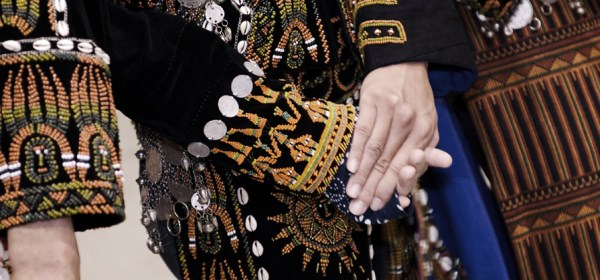
Written by Kalesekes Kaciljaan (Yu-Chi Huang). In 2019, I was awarded a Taiwanese scholarship of government sponsorship for overseas study from the Ministry of Education of Taiwan to support my pursuit of doctoral study in public health at the University of Hawai’i. The reason I did so was that the financial status of neither myself nor my family could provide me with the funds for studying overseas. Unfortunately, many other Indigenous scholars from Taiwan, like myself, also went through the same path I did, owing to our people’s averagely lower financial status. I am grateful that I could have the scholarship to support my dream to study abroad and be a researcher devoted to Indigenous health. Unfortunately, however, certain scholarship regulations are outdated and greatly hinder the path of students whose research interests relate to Taiwan. As a result, we are forced to choose between our ideals and our promised benefits. Therefore, I would like to elaborate on my own experience to provide a deeper insight into the problems we recipients face when returning to Taiwan to conduct our research.
Written by Jackson Teh. In crux, we should note the link between the general public’s health, both physically and mentally, with that of the migrant workers: only when local community cases are stable, and their sentiments positive, are migrant workerss allowed to move around and go to work; only when migrant workerss move around and go to work, can they feel better and hopeful about themselves and the future. Therefore, the mental well-being of both groups in a country must not be seen as isolated variables.

Written by Jens Damm. With the outbreak and global spread of COVID-19, reports of the stigmatisation of Asian-looking people have been accumulating in Germany and worldwide. Therefore, for a small research project, I chose to conduct qualitative semi-structured interviews with Taiwanese who spent the time of the pandemic in Berlin. I focused on their personal experiences as transnational actors. I asked in particular about personal experiences of discrimination and economic hardships during the pandemic and their evaluation of the different COVID-19 measures in Germany and in Taiwan.

Written by Yu-Chuan “Daniel” Lin. Although PrEP medication solves the HIV epidemic, research has found an inadequate number of MSM receiving it. For example, a 2015 U.S. CDC report has indicated that at least one of four gay men should be taking PrEP daily to effectively avoid more extensive HIV transmission, requiring the participation of roughly 1,200,000 MSM nationwide. However, its data showed that no more than 50,000 MSM are doing so, which translates into a poor execution rate (around 3%) of the government’s PrEP project designated to combat the HIV epidemic.
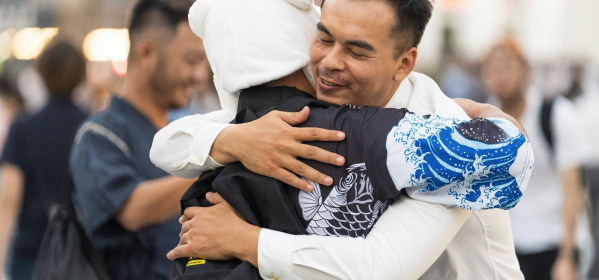
Written by Geng-Hui Lin. Compared to HIV risk, which is assessed through responses to a CDC survey, age is a relatively inflexible criterion for MSM’s who want to obtain PrEP through Taiwan’s PrEP program. There are ways to be categorised as an elevated risk for HIV infection depending on your answers to the CDC’s HIV risk assessment. As a result of these criteria, although some MSM’s over thirty-five have been enrolled in the program, access and availability remain mostly limited to those under this age. This leaves older MSM’s as outsiders to the program, unable to enter.

Written by Ian Inkster. Joe Biden’s recent scooping up of the fog of ‘strategic ambiguity,’ the seldom re-specified policy of the USA towards China in the case of an overt attack on Taiwan, was made in haste but has set the tail of the cat alight and its very colour in doubt. In Japan, Biden warned that China was ‘flirting with danger’ and then admitted that the US would defend Taiwan against invasion by China as contra to the Ukraine case. He was then asked directly if the US would defend Taiwan militarily if China invaded, when it has not done so in the invasion of Russia against Ukraine.
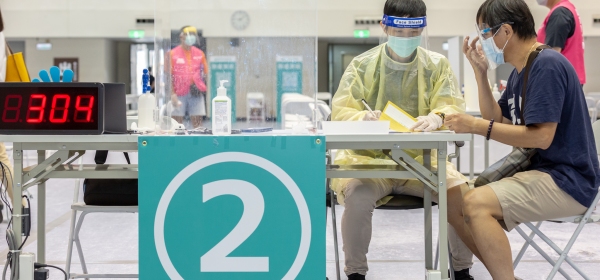
Written by Tsung-Mei Cheng. Time will tell how quickly Taiwan can bring the Covid surge under control. However, the fundamentals that worked so well for Taiwan before the surge—preparedness (a national plan), universal health coverage, advanced IT and communications infrastructure, and a cooperating public—should continue to serve Taiwan well in the fight against the current surge. Moreover, it will hopefully also defend us against future variants of the Covid-19 coronavirus to come.
 Taiwan Insight