
Written by Leo Chang and Alan H. Yang. Taiwan’s effective response to the COVID-19 pandemic has prompted a growing number of countries to support Taiwan’s membership in the World Health Organization (WHO).
Written by Leo Chang and Alan H. Yang. Taiwan’s effective response to the COVID-19 pandemic has prompted a growing number of countries to support Taiwan’s membership in the World Health Organization (WHO).
Written by Malcolm Turnbull. Countries that displease China have been threatened with economic consequences. It might be boycotting Japanese retailers; or stopping tourism to South Korea. Or as we have seen in Australia, holding up beef exports and slapping tariffs on wine. On the other hand, and especially in the developing world, billions are being offered for infrastructure development through the Belt and Road initiative.
By Malcolm Turnbull. The Covid 19 pandemic, of course as the President has just observed, has disrupted the world and inflicted enormous suffering around the world. But as Taiwan has demonstrated, with ingenuity, with innovation, it can be grappled with and successfully.
Written by Kyoung M. Shin and Chan-Yuan Wong. As the initial shockwave ushered in by the COVID-19 pandemic is beginning to subsiding, it is imperative to start a more nuanced discussion about pertinent public policies. Even in countries such as Taiwan, who have thus far proven to be relatively more successful in stemming the tide, the government is still emphasising economic re-opening. It is often touted across the globe that Taiwan has been one of the more, if not the most, successful countries in combating COVID-19—and rightfully so. As of October 1, 2020, there has been a total of only 514 documented cases in Taiwan, most of which have been “imported.” While most countries around the world are still struggling to cope with the coronavirus, there has been no report of domestically contracted case in Taiwan since mid-April.
Written by Karl Chee-Leong Lee. Organized by the Taiwan-Asia Exchange Foundation (TAEF), the recent Yushan Forum (October 18) in Taipei was the fourth forum since the event’s inauguration in 2017. While the previous themes of the forums were on social and economic connectivity, regional prosperity as well as innovation of progress, this year it was resilience that took the theme of the distinguished forum. This is difficult to understand as the current COVID-19 pandemic has undoubtedly demonstrated how vulnerable countries and societies in the world are when responding to the unprecedented crisis individually or in a group.

Written by Wei (Azim) Hung. Economic interdependence under rapid globalization has brought about unprecedented economic prosperity. However, it has to some degree failed to promote the establishment of mechanisms for inclusive regional cooperation in Asia. Globalization has not promoted the types of positive diffusion that has been anticipated, in the sense that growing cooperation on technical and economic issues have not been able to stimulate a much greater sense of solidarity around common values.

Written by Corey Lee Bell. The annual Yushan Forum was inaugurated in 2017, yet has quickly come to assume the mantle of one of Taiwan’s leading non-governmental platforms for international dialogue. Its 2020 incarnation was no different, and featured keynote speeches from influential political figures including President Tsai Ing-Wen, Australia’s former Prime Minister Malcolm Turnbull, and Sweden’s former Prime Minister Carl Bildt. While the impact of the COVID19 pandemic meant that this year’s forum was relatively low key, its impressive register of foreign dignitaries, and the profound security, economic and health crises that formed its backdrop, arguably made it the most significant to date.
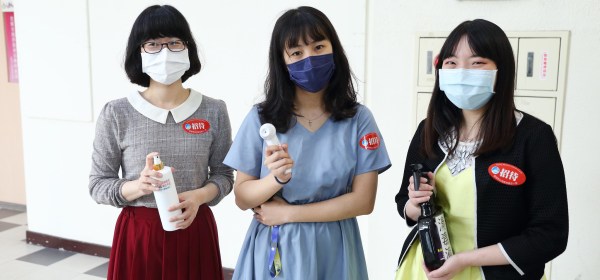
Written by Cheng-Chia Tung. COVID-19 has cost thousands of lives outside of its place of origin and has put 20% of the global population under lockdown. It is hard to envision it not having a long-lasting impact. Many influential commentators have focused on how it has exacerbated the decline of globalization and intensified political tension and strategic competition among great powers. While many may crave a “return to normalcy,” if we are to address the challenges created by the pandemic more effectively and holistically, we need to do more than simply ask “whether we’re going back to where we were.”
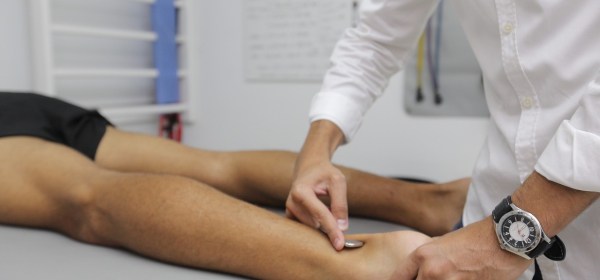
Written by Wei-hong Chen. According to the 2019 survey from the World Confederation of Physical Therapy, in 79% of its member countries, (as Australia and Canada, and the UK,) PTs can provide services without supervision from a doctor. Taiwan falls into the minority of countries in which PTs can only operate under a Doctor’s orders. This restricted referral model is enforced in legal and medical systems, and as a result, the quality of physical therapy in Taiwan has been seriously hindered.
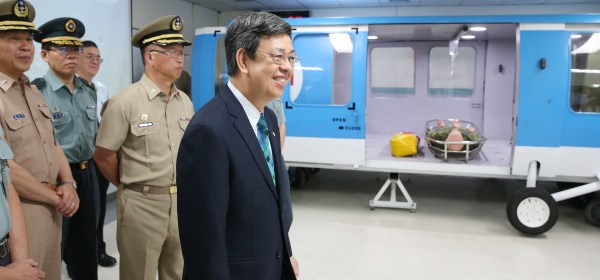
Written By Tsung-Mei Cheng. As recent as the end of 2019, Taiwan’s public gave the NHI a 90% satisfaction rating. The questions at hand are: how will Taiwan’s public and their representatives in parliament respond to the urgent need to balance NHI’s budget in the near-immediate term? Moreover, how will they help build a health system of greater efficiency and quality in the longer term by agreeing to pay more for the health care they have come to expect?

Written by Elsa Sichrovsky. A mixed-reality approach to anatomy courses may be an ideal approach to combining the efficiency of VR technology–and its enhancement of the acquisition of knowledge–with the psychological enrichment and tactile experience of learning from the Silent Teacher. A former medical student brought up an intriguing idea on an online discussion forum: perhaps students could practice anatomy with VR technology before dissecting the Silent Teacher. By doing this, students would approach cadaver dissection already possessing a higher level of anatomical knowledge, and thus fewer unnecessary cuts would be made.

Written by Hsu Hung Bin.The history of doctor outflow in Taiwan tells us that doctors of all eras are continually reflecting on what it means to be in the medical profession and what the “good life” of a doctor is. The unique history of Taiwan’s medical system is an essential resource as we come to reflect on the issues of today. This history reminds about the diverse sets of values (not all of which have been good) that have existed within the system. It also provides clues of what a new system might look like.
 Taiwan Insight