Safety in Numbers: Taiwan in a Post-Trump World

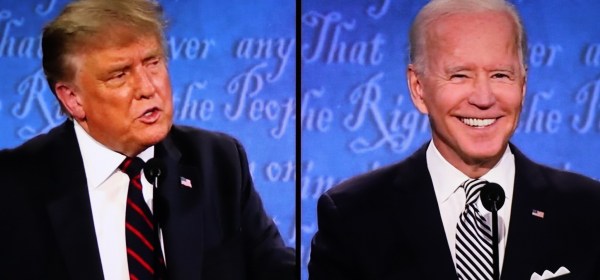
Written by Alexander C. Tan. Even before the official start of the Trump presidency in January 2017, Taiwan has received attention from the then US President-elect Trump as he received a congratulatory telephone call from President Tsai Ing-Wen. That phone call was heard around the world as it broke ranks with the usual quiet approaches of the past. The next four years showed the Trump administration ‘talking up’ and actively engaging with Taiwan while ‘talking down’ and confrontational to China, e.g., the trade war, South China Seas, etc. Taiwan finally felt that a US president is willing to take their side. Indeed, Taipei Times on October 19 reported that a YouGov survey showing Taiwan is alone in Asia-Pacific where the majority of the respondents are favourable to Republican Donald Trump than to Democrat Joe Biden.

In the Wake of Taiwan’s January 2020 Election, how are Cross-Strait Relations?

Written by John F. Copper. In January this year, Taiwan held a key national election. The Democratic Progressive Party’s (DPP) president, Tsai Ing-wen, won reelection while the DPP kept its majority in the national legislature. It was an across-the-board victory for the pro-independence party. Fast forward to autumn, nine months later. How does Taiwan look politically? Not much different! Reassessing campaign policies and reality-checking that usually follow a big election have been mostly missing.

Does the DPP Victory in Kaohsiung Mark a Return To Normal?

Written by Hiro Fu. Few observers were surprised to see Chen Chi-mai of the Democratic Progressive Party (DPP) win Kaohsiung’s mayoral by-election. In his victory speech, Chen called his win “Democracy’s victory, Kaohsiung’s victory.” This is an image that the DPP hopes to cast upon its return to power after Chen’s defeat in the 2018 mayoral elections. However, the DPP’s victory should not be confused with a victory for democracy, or necessarily as a victory for Kaohsiung.

The legacy of Taiwan’s “Mr. Democracy”

Written by Frédéric Krumbein. President Lee Teng-hui’s most enduring legacy is his crucial role in the process of Taiwan’s democratisation. His predecessor, Chiang Ching-kuo, had already started the process of liberalisation. Yet despite his having lifted martial law in July 1987, Chiang died a few months later with the KMT dictatorship still intact. Lee Teng-hui then gradually implemented democratic reforms during his presidency (1988-2000).

In Memoriam, Lee Teng-hui

Written by Jerome F. Keating. Lee Teng-hui, the first president of Taiwan to be elected by the people, passed away on July 30, 2020. He was a statesman among statesmen and perhaps the greatest statesman Taiwan, aka the Republic of China (ROC), has ever known. Presidents and leaders are often judged not by the totality of their lives but by how, at a critical and crucial time, they did the right thing.

“Always in my Heart”: Lee Teng-hui’s Life in 10 Quotes

Written by Denis Li, translated by Corey Lee Bell. Lee Teng-hui, Taiwan’s first democratically elected president, played a key role in the country’s journey from authoritarianism to democracy. In 12 years as president, he made six amendments to the constitution, earning him an indelible place in the history of Taiwan. The News Lens has compiled 10 of Lee’s quotes from lectures and interviews, which reflect his perspective on Taiwanese politics and cross-strait relations, as well as the expectations he harbored for himself as a political figure.

Taiwan’s Post-Election Economic Woes

Written by John F. Copper. Had the economic numbers not been in their favour, would they have lost the election? Hardly. The fact the U.S. supported President Tsai and her party was an overwhelming advantage, as was China alienating Taiwan’s voters with its harsh statements and actions, which were further exacerbated with anti-China protests in Hong Kong. Both were critical factors. Finally, the KMT was very divided with its top leaders fighting among themselves.

Why Do Taiwan’s Environmentalists Oppose Renewable Energy Facilities?

Written by Ming-sho Ho. Upon winning the re-election in January 2020, Tsai Ing-wen’s Democratic Progressive Party government is set to realise the goal of abolishing nuclear energy by 2025. At the same time, they wish to raise the proportion of green energy in the electricity mix to twenty per cent. While the dream of “nuclear-free homeland” has been championed by Taiwan’s environmentalists for more than three decades, the top-down push for renewable energy has unexpectedly met some opposition from the same camp.

Can Tsai Ing-wen Avoid the Second Term Curse?

Written by Kharis Templeman. If Tsai Ing-wen is superstitious, she should be worried: second term presidents in Taiwan appear to be cursed. Much like President Tsai, her predecessor Ma Ying-jeou started his second term on a confident and triumphant note. But over the next four years, he faced a relentless series of political crises, including an intraparty power struggle with Legislative Yuan Speaker Wang Jin-pyng, massive protests against the death of a military conscript and construction of a nuclear power plant, and of course the Sunflower Movement occupation of the legislature, which effectively halted cross-Strait rapprochement with Beijing.

Is Taiwan Becoming a One-party Dominant System?

Written by Yu-tzung Chang. Many people have begun to worry that as with the Liberal Democratic Party in Japan, the DPP will hold power for a long time in the future, and Taiwan will become a dominant one-party system. There are three reasons why I think this is unlikely. First, although the national identification cleavage has waned, new controversies are continually emerging, including same-sex marriage, health insurance premiums, and environmental protection, making Taiwan a typical pluralistic society. Politicians must find ways to bring together various “minority views” and assemble a “majority force” to win elections.

1 7 8 9 10 11 17