Taiwan’s Green Diplomacy and the 1996 Taiwan Strait Crisis: The Legacy of Penny Kemp’s Taiwan Visit

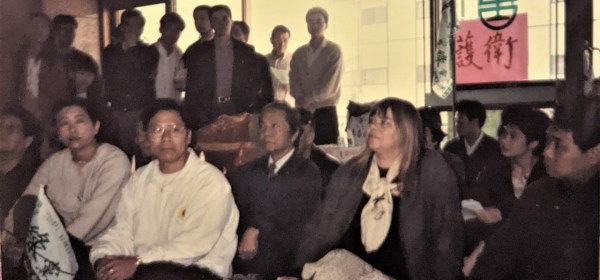
Written by Dafydd Fell. Twenty-five years ago, Taiwan was amid the 1995-1996 Taiwan Strait Crisis and its first direct presidential campaign. It was not only the closest China and Taiwan had come to military conflict since the late 1950s but also the moment that Taiwan was first internationally recognised as a full democracy. At this crucial moment in Taiwan’s modern history, the Green Party of England and Wales issued a press release with the headline ‘Penny Helps Taiwan Greens Win Seat.’
Cross-Strait Politics and the International Spectre of Climate Change in Taiwan

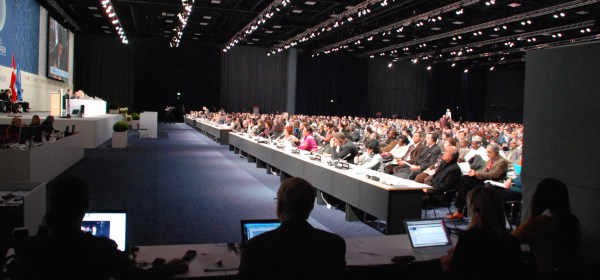
Written by Brian Hioe. Taiwan’s international climate conference participation has been subject to the same dynamics applicable to other international organisations. However, Taiwan has often been pushed out because of Chinese pressure. Namely, when the Ma administration held power, Taiwan could participate as an observer in climate change summits that it was later excluded from when the Tsai administration took office.

As Sea Levels Rise and Chinese Pressure Mounts, Taiwan Must Extend NSP to the South-Pacific

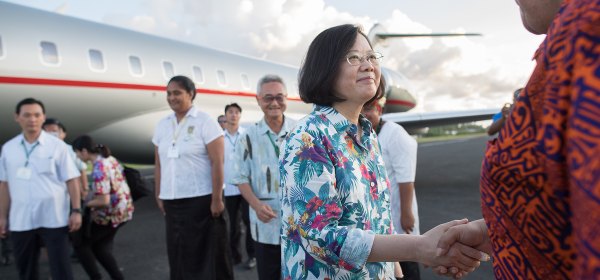
Written by Ma’ili Yee. A year after losing two of its Pacific Island allies, Taiwan continues to feel the mounting pressure of Chinese influence in the South-Pacific ocean. Within recent years, China has pointedly increased its presence in the Pacific through financial aid, commercial trade, and high-level diplomatic engagement. The four Pacific states of Tuvalu, the Marshall Islands, Nauru and Palau now compose nearly a third of the remaining countries that officially recognize the ROC. Despite their small geographic and economic size, Taiwan would be wise to recognize these Pacific island nations’ immense political weight and properly address their top concerns—sustainable development and climate change—through concerted foreign policy.

Military Diplomacy: Another Way to Support the Defense of Taiwan

Written by John W. Tai. The United States has long relied on weapons sales to demonstrate its support for the defense of Taiwan. This practice has incurred cost for both Taiwan and the United States due to its high visibility and significant financial resources for Taiwan. In addition, the growth of the Chinese military makes it increasingly unlikely for Taiwan to be successful in defending itself by relying simply on traditional military means.

Taiwan’s Hope of Continuing the US-Taiwan Relations Improvement in Biden Presidency

Written by Christine Penninga-Lin. After a heated election campaign and long vote counting, Joe Biden is going to swear in as the 46th President of the United States. The interest for the 2020 US election is shared among the Taiwanese, and many found themselves preferring Trump over Biden for his administration’s Taiwan policy in the past four-year. An almost unimaginable development had these people been asked in 2016. After four years of Trump’s presidency, the US-Taiwan relation already looks significantly different than that before 2016. And so are the Sino-American relations.

How Taiwan is Helping the World by Forging Resilient Cooperation with ASEAN

Written by Karl Chee-Leong Lee. Organized by the Taiwan-Asia Exchange Foundation (TAEF), the recent Yushan Forum (October 18) in Taipei was the fourth forum since the event’s inauguration in 2017. While the previous themes of the forums were on social and economic connectivity, regional prosperity as well as innovation of progress, this year it was resilience that took the theme of the distinguished forum. This is difficult to understand as the current COVID-19 pandemic has undoubtedly demonstrated how vulnerable countries and societies in the world are when responding to the unprecedented crisis individually or in a group.

Forging a Resilient Future: New Southbound Policy and Beyond

Written by Wei (Azim) Hung. Economic interdependence under rapid globalization has brought about unprecedented economic prosperity. However, it has to some degree failed to promote the establishment of mechanisms for inclusive regional cooperation in Asia. Globalization has not promoted the types of positive diffusion that has been anticipated, in the sense that growing cooperation on technical and economic issues have not been able to stimulate a much greater sense of solidarity around common values.

Taiwan’s Contribution to a More Resilient Global Society

Written by Cheng-Chia Tung. COVID-19 has cost thousands of lives outside of its place of origin and has put 20% of the global population under lockdown. It is hard to envision it not having a long-lasting impact. Many influential commentators have focused on how it has exacerbated the decline of globalization and intensified political tension and strategic competition among great powers. While many may crave a “return to normalcy,” if we are to address the challenges created by the pandemic more effectively and holistically, we need to do more than simply ask “whether we’re going back to where we were.”

The Limits of Taiwan’s Bet for the Quad

Written by Joshua Bernard B. Espeña. China’s aggressive rise for regional dominance continues to upset the rules-based order. The United States, together with Japan, Australia, and India are seeking to balance the power through the Quadrilateral Security Dialogue (Quad). The Quad met in a face-to-face meeting this October in Tokyo and discussed their common interest to uphold a free and open Indo-Pacific.

In the Wake of Taiwan’s January 2020 Election, how are Cross-Strait Relations?

Written by John F. Copper. In January this year, Taiwan held a key national election. The Democratic Progressive Party’s (DPP) president, Tsai Ing-wen, won reelection while the DPP kept its majority in the national legislature. It was an across-the-board victory for the pro-independence party. Fast forward to autumn, nine months later. How does Taiwan look politically? Not much different! Reassessing campaign policies and reality-checking that usually follow a big election have been mostly missing.

The implication of U.S. Strategic Ambiguity and China’s growing military capabilities for Taiwan

Written by Joseph Bosco. Tsai Ing-wen, Taiwan’s brave and calmly inspirational president recently addressed the rising military threat from Communist China. She noted that Beijing’s crackdown on Hong Kong now puts Taiwan “on the front lines of freedom and democracy.” Recognizing that what is at stake is not only Taiwan’s own political independence and security, but a major front in China’s existential challenge to the rules-based, Western values-oriented international order, Tsai pledged that Taiwan would carry its share of the democratic burden.

The Implication of Tsai’s Diplomatic Breakthrough for Cross-Strait Relations

Written by Chieh-chi Hsieh. Since the outbreak of COVID-19, President Tsai Ing-wen has been able to obtain and continue to sustain high supporting rates mainly due to the many successful policy measures put forward to contain the negative impacts of the pandemic. The first opinion poll conducted after Tsai commenced her second-term of presidency in May showed her reaching a record-high of 71.2 per cent of supporting rate. Although there have been changes to Tsai’s support rate in following months, including a 10.5 per cent drop to 61 per cent in June, she is still able to sustain a high popularity rate of 65.8 per cent according to an August survey.

1 3 4 5 6 7 8