Introduction to the NATSA Special Issue: Overview of the North American Taiwan Studies Association (NATSA)

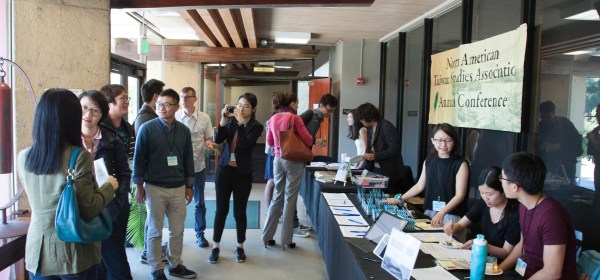
Written by Diane Hsieh. The North American Taiwan Studies Association (NATSA) is an academic organisation and registered American 501(c)(3) nonprofit established in 1994. The NATSA annual conferences are the largest academic events on Taiwan Studies in North America, which not only provide scholars and students of Taiwan Studies a regular forum to meet and exchange intellectual ideas, but also allow researchers on East-Asia and beyond to receive dynamic feedback and broaden their academic horizons.
Documenting Taiwanese Modernism: Le Moulin’s Untimely Historical Project

Written by Tim Shao-Hung Teng. In 2015 Taiwanese filmmaker Huang Ya-li (黃亞歷) released his documentary Le Moulin (Riyaori shi sanbuzhe/ 日曜式散步者) to critical acclaim. The film recounts the major life events of four core members of Taiwan’s prewar surrealist poetry society, Le Moulin (fengche shishe/風車詩社). Known for its experimental style that does away with interviews and voice-over narrations, the nearly-three-hour film cites, extracts, pastes, and freely associates materials such as literature, paintings, photography, sounds, film footage, diary entries, and newspaper clippings. These sources are not always readily recognisable and nor are they all directly related to the poets’ works.

The Critical Functions of Taiwanese Education Agents During the Era of Commercialisation in Global Higher Education

Written by Kenneth H. Chen. My fieldwork uncovered the critical functions played by Taiwanese education agents in sending international students abroad. These education agents served as mediators of students and parents’ feelings, emotions, and relationship with others. Studies show that middle-class parents and children are calculative and anxious about seeking college education abroad.

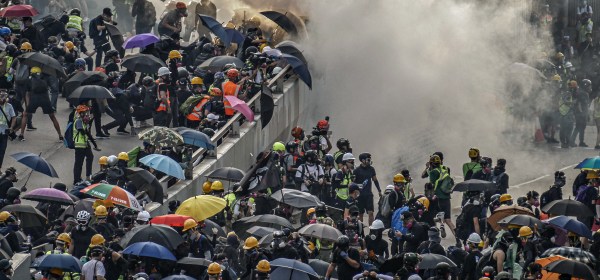
“Today’s Taiwan, Tomorrow’s Hong Kong”: Linkages between Hong Kong’s Protests and Taiwan’s Democracy

Written by Gerrit van der Wees. The Hong Kong protests also constituted a wake-up call for the people in Taiwan along the lines of “Today’s Hong Kong, Tomorrow’s Taiwan.” The erosion of freedoms in Hong Kong today is a clear example of what could happen in Taiwan tomorrow if Chinese pressure, intimidation and influence operations are allowed to run their course.

CASE STUDY: English-Language Media Reaction To The End of China’s FIT Policy

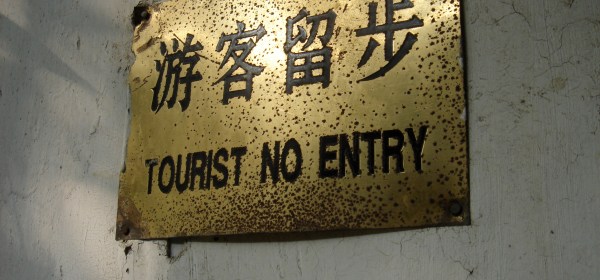
Written by Ben Goren. On Wednesday 31st July, China’s Ministry of Culture and Tourism announced that it would stop issuing individual travel permits to residents in 47 Chinese cities. The announcement was a single sentence issued by the Ministry stating such trips would be suspended “due to current cross-Strait relations” and did not further elaborate. This lack of detail created space for speculation in media commentary on the change in policy. Searching for “China ban solo tourists Taiwan”, I found 21 English language media reports issued within a week of the policy announcement from outlets regarded as ‘international’ or those with a globally recognised brand.

Why China’s solo tourist ban is not a big deal for Taiwan

Written by Min-Hua Chiang. Businesses and entertainers have been forced to adhere to the “One-China Policy”, and from 1st August 2019 Chinese nationals from 47 cities in China were prohibited to visit Taiwan on an individual basis. China’s new tourism restraint is another attempt to intimidate Taiwan.

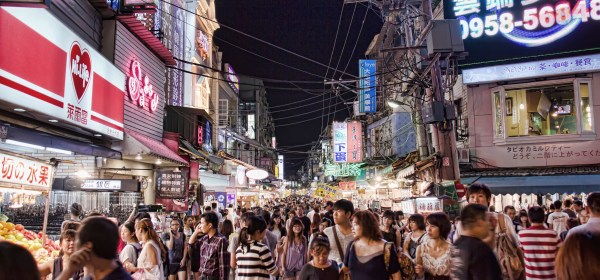
Taiwanese officials estimated a reduction of NT$18,000 million (US$574 million) in tourism revenue and a fall of 0.1% GDP following China’s new tourism policy. Looking at the statistics in detail, the impact on Taiwan’s economy is limited.

Trouble in the Blue Camp

Written by J. Michael Cole. More and more, there are signs that the mainstream KMT is trying to reassert control over its destiny. And that core KMT, as history has shown, can be ruthless. Within a matter of months, Han the savior has turned into a liability, and a bit of an embarrassment, for the party. What happens in the next weeks and months is anyone’s guess, but it is easy to conclude that Han and his supporters might not like what the blue camp has in store for them. 

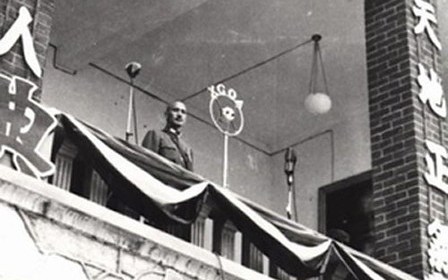
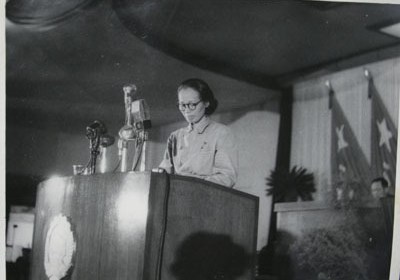
Hidden women of history: Hsieh Hsüeh-hung, communist champion of Taiwanese self-determination

Written by Antonia Finnane. Every so often a woman takes up arms to lead a spirited struggle against invaders and occupiers of her homeland. Such women usually wind up dead at an early age, but they capture the imagination. The Taiwanese revolutionary Hsieh Hsüeh-hung (1901-1970) is such a figure, although like most aspects of Taiwan’s history her significance is contested.

The Youth Ambassadors and Taiwan’s Performative Cultural Diplomacy: “Some of the dancing, yeah, I don’t really understand [it]”

Written by Jess Marinaccio. Attention to cultural representation is critical to creating a more equitable Taiwan, especially given Taiwan’s settler-colony status. However, problems of cultural (mis)representation focus the Taiwan’s Youth Ambassadors project on the domestic sphere, suggesting that culture is an ineffective tool in Taiwan’s foreign affairs.

1 46 47 48 49 50 61