Taipei’s New Expectations on UNited Nations membership – analysing the impact of new dynamics in the Beijing-Washington Relationship

Written by Jinpeng Ma. Since the end of the Chinese Civil War in 1949, the US has exerted considerable influence on bilateral relations between Taipei and Beijing. A result of this is that the Taiwan issue (and in particular recognition of the One China Principle) has become a prominent dimension of the Beijing-Washington relationship. Looking back at the evolution of the relationship over the past three decades, it is clear that the Beijing-Washington relationship is entering into a new stage. From 1949 to 1971, the US’s commitment to protect the regime of the Republic Of China (ROC) in Taiwan became a source of hostility in its relationship with the People’s Republic of China (PRC). However, this was mitigated by the impact of a radical geopolitical shift.
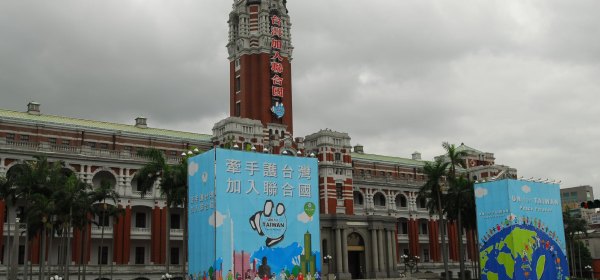
Taiwan and the United Nations: Is the Tide Turning?

Written by Chieh-chi Hsieh. Recent international developments have prompted some to speculate that we are in the midst of a critical juncture for Taiwan’s bid for admission to the United Nations (UN). On the plus side, Taiwan has received considerable international recognition for its successful policy responses toward the COVID-19 pandemic. However, it is arguable that this in itself will increase the odds for its campaign to join the UN.

An Open Letter: 「23.5 million Taiwanese people should be included into the United Nations (UN)」

FROM The Taiwan United Nations Alliance (TAIUNA), The Citizens of Taiwan TO the Honorable Dr. António Guterres, Secretary-General of the UN: For many years since 1972, Taiwan has been and is, once again, knocking on UN’s door seeking membership in this global inter-governmental organization. As part of the greater world population, the 23.5 million people of Taiwan are without representation and have been unjustly excluded since 1971.

The 1992 Consensus and the Future of the Cross-Strait Relationship: Examining the Stakes for Taiwan’s Application for UN Membership

Written by Joshua Bernard B. Espeña and Chelsea Anne A. Uy Bomping. The 1992 Consensus has framed the status quo of the Cross-Strait relationship for decades. However, more recently, rising nationalisms and geopolitical developments have expedited the erosion of the consensus. Moreover, the United States’ (US) commitment to Taiwan is ambiguous, despite the Trump administration adopting a more hardline stance against China. These factors complicate Taiwan’s quest for membership in the United Nations (UN), and add to doubts as to whether the consensus is still a source of stability in the Cross-Strait relationship.

A 2020 Vision for Strategic Clarity on Taiwan

Written by Gerrit van der Wees. As the United Nations General Assembly is preparing to meet in New York for its annual gathering, the international community is facing multiple issues in all parts of the world that need to be resolved. Among all of those issues, there is one burning question: why is a free and democratic Taiwan not part of the gathering? Why is a vibrant democracy being excluded from the international family of nations?

China Impact, Income Inequality and Its Discontents in Taiwan

Written by Thung-Hong Lin. In March 2014, the Sunflower Movement, a student-led protest to oppose the Cross-Strait Service Trade Agreement (CSSTA), shocked the Taiwanese public. For 24 days (March 18–April 10, 2014), Taiwan’s legislature was paralysed by protesters occupying the chamber, nearby roads and surrounding alleys, which prevented their eviction by police. The protesters claimed that the CSSTA would favour large companies investing in China, damage local small and medium-scale enterprises’ (SMEs) business and have a devaluing effect on local labour’s wages.

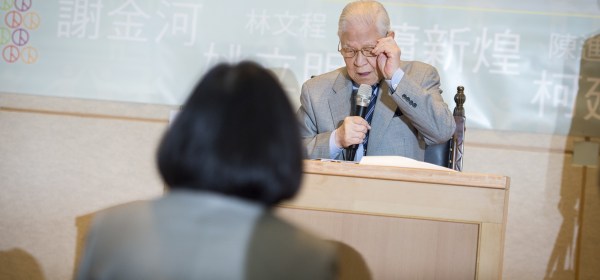
“Always in my Heart”: Lee Teng-hui’s Life in 10 Quotes

Written by Denis Li, translated by Corey Lee Bell. Lee Teng-hui, Taiwan’s first democratically elected president, played a key role in the country’s journey from authoritarianism to democracy. In 12 years as president, he made six amendments to the constitution, earning him an indelible place in the history of Taiwan. The News Lens has compiled 10 of Lee’s quotes from lectures and interviews, which reflect his perspective on Taiwanese politics and cross-strait relations, as well as the expectations he harbored for himself as a political figure.

Taiwan and 21st Century Chinese Realpolitik

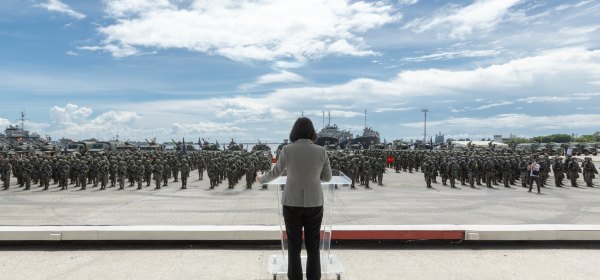
Written by Aidan Hall. The existence of China’s impressive military and economic strength is nothing new. It seems long ago that Beijing abandoned Deng Xiao Ping’s “hide your strength and bide your time” principle. To be sure, China is now more comfortable than ever being placed alongside the US and Russia as one of the world’s major powers. Awareness of China’s geopolitical significance is also nothing new (…) What is new, however, is China’s use of its military and economic muscle to improve its geopolitical position in profoundly aggressive ways.

The KMT’s Shifting Attitudes on Tsai’s Mask Diplomacy

Written by Najee Woods (葉正忠). While Taiwan’s current mask diplomacy has been perceived as successful, the question arises: why doesn’t the KMT want the central government aiding those nations in dire need for masks? The party flip-flopping sends a mixed message to the international community that Taiwanese are not willing to lend a helping hand to combat COVID-19, which hurts the interest of all Taiwanese people, not just the ruling party. While the PRC health diplomacy is faltering, the international community has now begun to seek out Taiwan, allowing the island nation to lead the world in combating COVID-19.

Tsai’s Second Term and the Taiwan Strait: Greater Clarity, Same Challenges

Written by J. Michael Cole. The first four years under the Tsai Ing-wen administration have brought greater clarity regarding Beijing’s attitude toward Taiwan and its democracy. Although in the months prior to her inauguration on May 20, 2016, it was still possible to imagine that the two sides could find a modus vivendi despite Beijing’s longstanding antipathy toward the Democratic Progressive Party, Beijing almost immediately adopted an unforgiving course of action which soon poisoned the relationship.

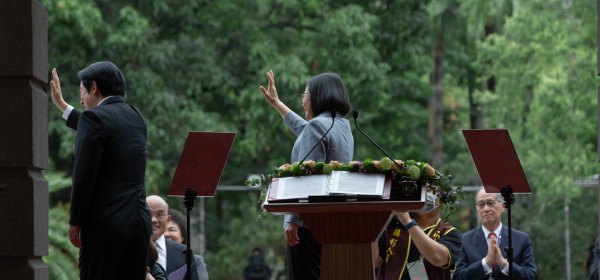
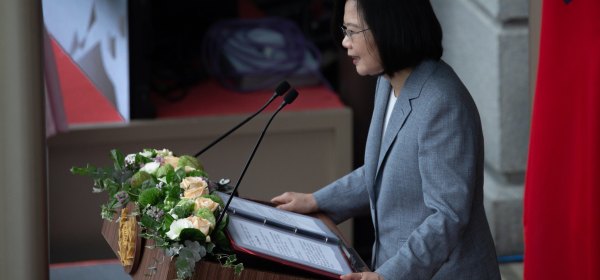
Tsai Ing-Wen’s Inaugural Address for the Second Term: “Unprecedented Challenges and Unparalleled Opportunities”

Written by Qi Dongtao. As usual, Tsai Ing-wen’s inaugural speech on May 20 maintained her low-key, down-to-earth style without much surprise. From Beijing’s perspective, since she did not explicitly accept the “one-China principle” in the speech, she failed Beijing’s so-called “exam” again and therefore was severely criticised by Beijing. But since Beijing had already concluded that she would never openly accept the “one-China principle,” her speech did not surprise Beijing.

1 12 13 14 15 16 28