Taiwan’s Role in Bolstering Democracy and Civil Society in Asia

Written by Robert S. Wang. As I see it, the United States and EU governments need to respond urgently and strongly at this time if they are to show that they truly intend to defend the values of the liberal international order. They should start by working with human rights NGOs to document and publicise even more widely China’s gross human rights violations. The aim here is to raise public awareness and highlight deteriorating human rights conditions under China’s increasingly repressive authoritarian regime for the world, including Chinese people at home and abroad, to see.

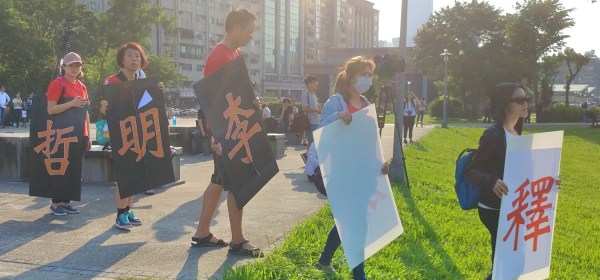
DETENTION OF TAIWANESE PRO-UNIFICATION ADVOCATE IN CHINA FOR OVER 420 DAYS RAISES WORRYING POSSIBILITIES

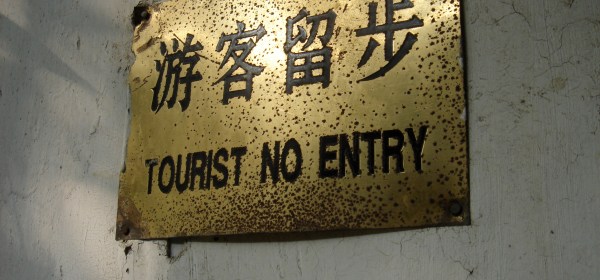
Written by Brian Hoie. Caution seems necessary for Taiwanese traveling to China going forward, then. There are at least three cases of Taiwanese held in China—if not more—on charges of endangering the state security of the Chinese government. At this point, whether pro-independence or pro-unification, it seems that simply being Taiwanese could possibly be sufficient cause for arbitrary detention by the Chinese government.

The Median Line in the Taiwan Strait: A Dangerous Loophole

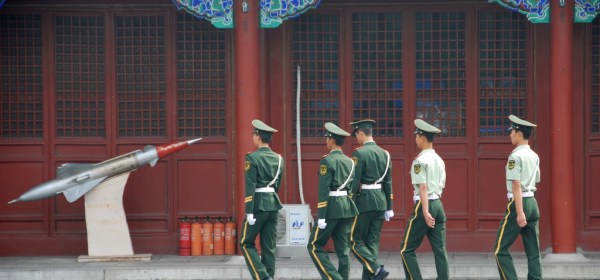
Written by R. D. Cheng. On March 31, People’s Liberation Army Air Force (PLAAF) warplanes flew across the “median line” in the Taiwan Strait that has long served as an unofficial airspace boundary between Taiwan and China. This behaviour was unusual and provocative move on China’s part — the first time in 20 years that such a deliberate incursion took place.

Ivan Karamazov with a Maoist Face: Guo Songfen’s Book Collections and Third World Existential Marxism

Written by Po-hsi Chen. Guo’s concern resembled the philosophical rendition of the post-war Czechoslovakian ‘socialism with a human face’, which emphasised individual freedom and personal choice under the Soviet regime. Indeed, Guo passingly referred to ‘Second World’ Eastern European communist theorists’ re-reading of Sartre in the post-Stalin context.

Cold War Border Politics: Chinese Maritime Captives in Korea during the 1950s

Written by Yu-Cheng Shih. The fishing and sailing communities during the Cold War is a long-neglected subject in current Cold War scholarship. For fishers and sailors whose livelihood requires frequent border-crossing, legal documentation became necessary, lest they be arrested as undocumented immigrants or smugglers. In other words, the new Cold War border illegalised a considerable part of these people’s livelihoods.

CASE STUDY: English-Language Media Reaction To The End of China’s FIT Policy

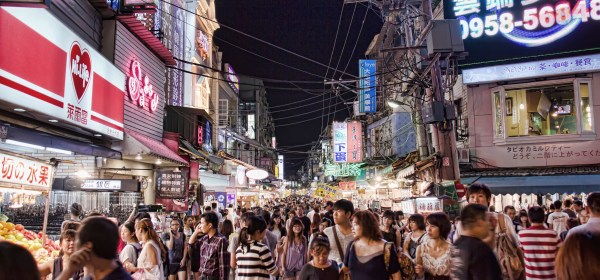
Written by Ben Goren. On Wednesday 31st July, China’s Ministry of Culture and Tourism announced that it would stop issuing individual travel permits to residents in 47 Chinese cities. The announcement was a single sentence issued by the Ministry stating such trips would be suspended “due to current cross-Strait relations” and did not further elaborate. This lack of detail created space for speculation in media commentary on the change in policy. Searching for “China ban solo tourists Taiwan”, I found 21 English language media reports issued within a week of the policy announcement from outlets regarded as ‘international’ or those with a globally recognised brand.

Why China’s solo tourist ban is not a big deal for Taiwan

Written by Min-Hua Chiang. Businesses and entertainers have been forced to adhere to the “One-China Policy”, and from 1st August 2019 Chinese nationals from 47 cities in China were prohibited to visit Taiwan on an individual basis. China’s new tourism restraint is another attempt to intimidate Taiwan.

Taiwanese officials estimated a reduction of NT$18,000 million (US$574 million) in tourism revenue and a fall of 0.1% GDP following China’s new tourism policy. Looking at the statistics in detail, the impact on Taiwan’s economy is limited.

Trouble in the Blue Camp

Written by J. Michael Cole. More and more, there are signs that the mainstream KMT is trying to reassert control over its destiny. And that core KMT, as history has shown, can be ruthless. Within a matter of months, Han the savior has turned into a liability, and a bit of an embarrassment, for the party. What happens in the next weeks and months is anyone’s guess, but it is easy to conclude that Han and his supporters might not like what the blue camp has in store for them. 

Hidden women of history: Hsieh Hsüeh-hung, communist champion of Taiwanese self-determination

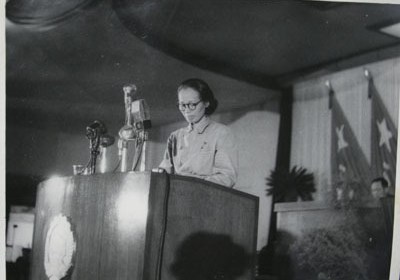
Written by Antonia Finnane. Every so often a woman takes up arms to lead a spirited struggle against invaders and occupiers of her homeland. Such women usually wind up dead at an early age, but they capture the imagination. The Taiwanese revolutionary Hsieh Hsüeh-hung (1901-1970) is such a figure, although like most aspects of Taiwan’s history her significance is contested.

1 16 17 18 19 20 28