The China Factor in Taiwan’s 2020 Election and Beyond

Written by T.Y. Wang. Taiwan’s citizens will go to the polls on 11 January 2020 to elect their next president and members of parliament. Like previous elections, the shadow of China looms over the island’s politics. History, however, may have repeated itself as Beijing has revived the electoral prospects of a candidate it disapproves. The implications go beyond the island country’s upcoming presidential election.

Slowly Stepping out from China’s Economic Shadow: Taiwan’s New Southbound Policy

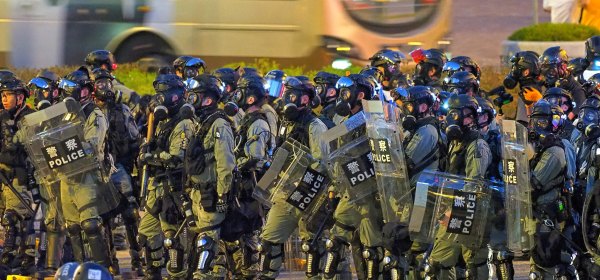
Written by Winnie King. As recent polls suggest that Tsai will retain her role of president, many commentators point to the six month long (and counting) protests in Hong Kong, the 18-month long (and counting) trade war between the United States and Mainland China. We cannot however, ignore successful policies adopted during Tsai’s tenure as leader—most significantly her iteration of the New Southbound Policy (NSP)—and the contribution this has made towards diversifying Taiwan’s economy beyond that of cross-Strait relations.

Distraction Capitalism: Why We Might Hope that the Presidential Elections are not Based on China-Hong Kong Regional and Global issues

Written by  Hsin Hsin Chang and Ian Inkster. More globally and problematically, if the Hong Kong element should indeed serve to determine outcomes, then it may be seen as the leading non-western component of a general global trend to distraction capitalism, where democratic processes that should revolve around general and fundamental social and economic policies are squeezed out by rhetorical clamour focusing on personalities, external events and one overwhelming internalised but badly digested issue.

China’s Interference in Taiwan’s Elections: Responses from Taiwan and the US

Written by Yu-Hua Chen. In January 2020 Taiwan will elect its president for the next four years. Incumbent president Tsai Ing-wen warned in an interview that “China’s attempt to meddle in this upcoming presidential election…is very obvious. We can see the shadow of Chinese meddling in every important election of Taiwan.” Although China denied the allegation, respectable research and reports provide evidence of how Beijing sways Taiwan’s elections and political processes.

Hong Kong and Taiwan Reflecting Mutual Connectivity

Written by Abbas Faiz. At a time when democracy is being battered by populist leaders in Western countries and demonised by authoritarian states around the globe, seeing democratic aspirations held dearly in Taiwan and Hong Kong is greatly reassuring. Taiwanese have stood fast in their resolve to protect their hard-earned democracy. Despite the real threat of annexation by China, they have not fallen into the trap of authoritarianism that characterises the spectrum of post-liberation states elsewhere.

TAIWAN CAN PLAY AN IMPORTANT ROLE IN ASIA’S NEW MIDDLE POWER DIPLOMACY

Written by Hunter Marston. As great power rivalry between the US and China intensifies, Taiwan finds itself exposed to a growing number of security and economic risks. Nonetheless, current trends in middle power diplomacy present Taipei with new opportunities to mitigate these external pressures. If the Tsai Ing-wen administration can better leverage Taiwan’s unique assets and advantages, and broaden the scope of its non-traditional cooperation with other regional players, it can bolstering the island’s strategic position.

WHY TAIWAN’S NEW SOUTHBOUND POLICY SHOULD STEER CLEAR OF AMERICAN GEOPOLITIK

Written by Corey Bell.
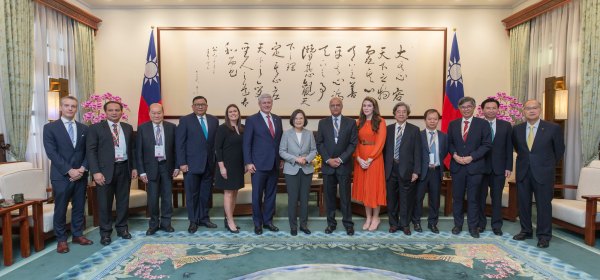
The 2019 Yushan Forum, hosted earlier this month by the Taiwan-Asia Exchange Foundation, lived up to its hype as a major forum on Asian trade and security. In a major coup, this year’s programme succeeded in attracting a number of prominent speakers, including Taiwan’s President Tsai Ing-wen, who delivered the event’s opening address, her Vice President Chen Chien-jen, India’s former foreign secretary Shivshankar Menon, and Sandra Oudkirk, the U.S. State Department’s Deputy Assistant Secretary for Australia, New Zealand and the Pacific Islands.

Carrie Lam is Failing Hong Kong

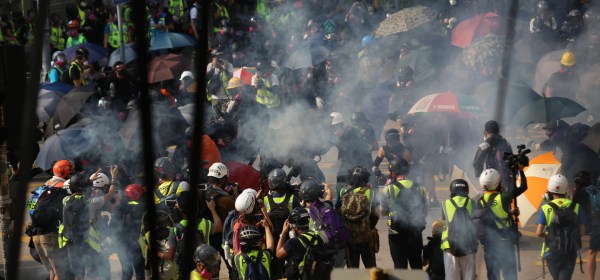
Written by Gerrit van der Wees. I just finished watching a powerful video of a street singer standing on a street corner in Hong Kong, singing pro-democracy songs. Some policemen moved in to stop him from singing, but despite the menacing position of the police, the presence of a surrounding crowd prevented them from acting. In the end, the singer wins, and the police lose.

Taiwan as a Symbol of Resistance and Democratic Aspiration for Protesters in Hong Kong

Written by Michael Chan. The months-long protests have generated much interest and sympathy from Taiwan’s citizens. Prominent pro-democracy activists in Hong Kong have gone to Taiwan to appeal for assistance and support, and commentators have noted that the protests may have altered the dynamics of Taiwan’s 2020 election. This essay, however, looks at Taiwan from a Hong Kong perspective and how the ‘idea’ of Taiwan has been appropriated as symbols of resistance against the Hong Kong and Chinese governments.

Understanding and Fostering Hong Kong-Taiwanese Solidarity

Written by Milo Hsieh. As the protests in Hong Kong continue, Hong Kongers and Taiwanese around the world have demonstrated a surprising level of solidarity. Taiwanese have mobilised to send protest gear to Hong Kong, and coordinate activists to speak at events, organise protest support rallies and create “Lennon Walls” to raise awareness. But just what explains such spontaneous, global demonstrations of Hong Konger-Taiwanese solidarity?

1 25 26 27 28 29 40