Salivating Sales: Ethnic Chinese Malaysians and the Edible Bird’s Nest Industry.

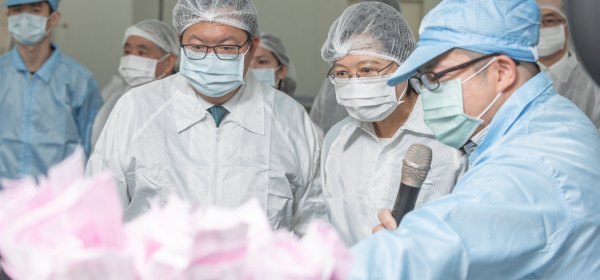
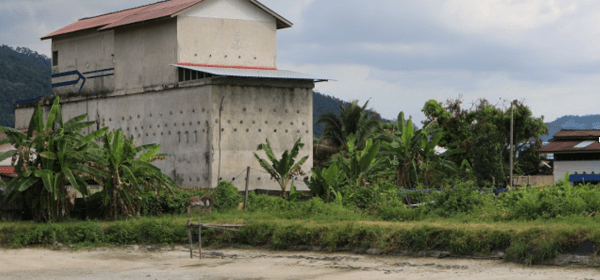
Written by Yu-an Kuo 郭育安, translated by Sam Robbins. Despite being a common food in Taiwan, Taiwan’s climate makes it unsuitable for cultivating edible birds nest. Consumption of edible birds nest in Taiwan can be traced back over 200 years, but this consumption has always relied on imports. The product’s history in Taiwan is tied to the history of Dihua street in Taipei, which developed towards the end of the Qing dynasty. This street became a main sight for the selling of exported “Chinese goods” (華貨)in Taiwan, including Ginseng, Jujubees, louts seeds and shark fins. Official statistics suggest that Taiwan currently imports over 10 tonnes over birds nest each year, with over 90% being imported from Indonesia. However, this number is likely unreliable since the illegal smuggling of birds nest remains a constant problem in Taiwan.

Taiwan’s New South Bound Policy 2.0: Fine-Tuning in 2022

Written by Raian Hossain. Apart from South Asia, the role of cultural exchange between ROC and all New Southbound countries needs to be emphasised further. Exchange of cultural activities such as film or food (cuisine) festivals would be good to create bondage among the people of Taiwan and New Southbound countries. Also, environmental and climate change are pressing non-traditional security aspects that might create further cooperation ground between ROC and New Southbound countries. Like how the Tsai government is committed to domestic green energy, ROC should share such ideas and efforts among New Southbound countries

How did Malaysia and Taiwan respond to Covid-19? Part II: Pandemic’s Impact on Economy

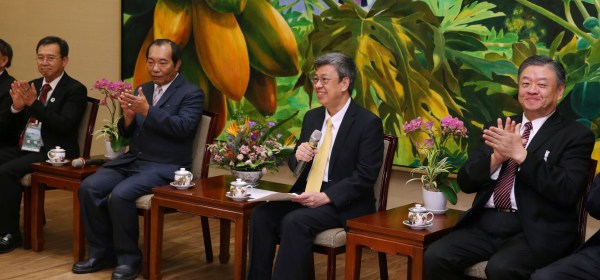
Written by K. Thiruchelvam. Our earlier article described how governments in Malaysia and Taiwan have responded to the challenges of the COVID-19 pandemic on their health systems. We identified common themes from both countries’ responses to the pandemic and acknowledged the importance of public sector capacities and capabilities in shaping and steering them. This second part of the article will describe how governments in Malaysia and Taiwan have responded to the challenges of the pandemic in their economic sector. 

How did Malaysia and Taiwan respond to Covid-19? Part I: Healthcare Infrastructure

Written by K. Thiruchelvam. Why have some countries responded to the COVID-19 pandemic more decisively than others? How have seemingly under-resourced countries performed better—in terms of the number of cases and fatalities—than their richer counterparts? These and other vexing questions have continued to confound many of us as we enter the third year of a pandemic that has brought governments all over the world to their knees. 

A Bilingual Nation? What are the Efforts from Southern Taiwan Stakeholders?

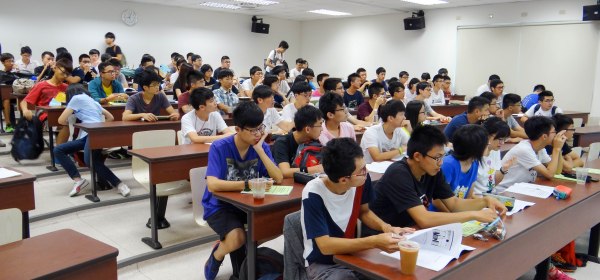
Written by Brian Doce. In 2018, Taiwan President Tsai Ing-wen announced the government’s objective to transform Taiwanese society into a bilingual nation to elevate the English fluency of the Taiwanese people and upgrade the country’s national competitiveness. Looking at the current blueprint published by the National Development Council, the plan’s enumerated key performance indicators (KPI) show a government-centric outlook by emphasising the simultaneous use of Mandarin and English by government agencies for respective services.

From Meteor Garden to BL? 20 Years of Taiwanese Pop Culture in The Philippines

Written by Yi-Yu Lai. “Have you ever watched Meteor Garden (流星花園) before? I was so crazy about Dao Ming Si and his gang before!” Many Taiwanese might be familiar with the similar conversation when they first met their Filipino friends. Since my friends know I am from Taiwan, they sometimes asked me to sing its theme song Qing Fei De Yi (情非得已) for them. They also love to hum the tune to me, though they cannot speak Mandarin at all.

Remembering Chiang Kai-shek in Japanese Media

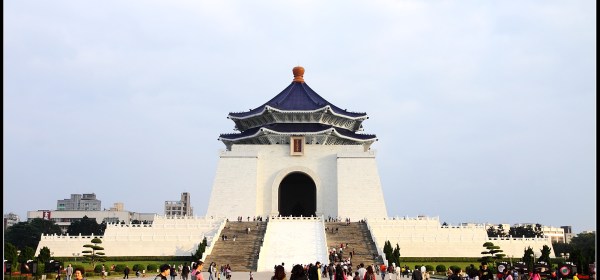
Written by Robert Hoppens. Just before midnight on April 5, 1975, Chiang Kai-shek (b. 1887), long-time leader of the Chinese Nationalist Party (KMT) and president of the Republic of China (ROC), died at his home in Taipei at the age of 87. Around the world, Chiang’s death occasioned media retrospectives on his long career and speculation about the future of Taiwan, where his government had spent the last quarter-century in exile.

Embracing Taiwan in Vietnamese Media

Written by Huynh Tam Sang and Tran Hoang Nhung. Taiwan’s popular culture—actors, idols, music, and dramas, usually known as the “Taiwanese Waves,” has gained popularity on Vietnamese media sites. The 2004—2008 period saw a boom of Taiwanese idol dramas, e.g. “It Started with a Kiss, 2005” (惡作劇之吻), “The Prince Who Turns into a Frog, 2005” (王子變青蛙), “The Tricks of Boys and Girls, 2006” (花樣少年少女), “My Lucky Star, 2007” (放羊的星星), screened on Vietnam’s TV channels. Taiwan’s singers and bands, e.g., F4, 183 Club, 7 Flowers, S.H.E, Jay Chou, were once familiar among Vietnamese youths.

Colonial Racial Science and Taiwan: How Indigenous Peoples Became Anatomy Data Points. Part I

Written by Ko-yu Chiang, Under the beating sun in Taiwan’s most southern tip, Mudan Township, an indigenous Paiwanese district with a current population of 5,000, opened a public committee in May 2020. Despite being in a small township in Taiwan’s far south, this committee was an international affair. In attendance was the council of Indigenous Affairs, Bureau of Cultural Heritage of the Ministry of Culture, the Pintung County government. The committee also extended to the other side of the world: Edinburgh University in the United Kingdom and the spirits of sixteen Paiwanese Mudan soldiers who have only recently returned home after 146 years abroad.

Synergies Between Taiwan’s New Southbound Policy and Biden’s Free and Open Indio-Pacific Strategy

Written by Grace Faerber. The Biden administration is strengthening its recognition of the strategic importance of Taiwan to the FOIP, the greatest indicator being the appointment of Sandra Oudkirk as Director of the American Institute in Taiwan (AIT), the de-facto U.S. embassy in Taipei. Director Oudkirk previously served as a Senior Official for APEC at the Bureau of East Asian and Pacific Affairs (APEC’s member countries include the nations of Australasia and ASEAN).

Why Is the Revitalisation of Taiwan’s New Southbound Policy So Pressing?

Written by Huynh Tam Sang. Adopted by President Tsai Ing-wen in 2016, the New Southbound Policy (NSP) has helped fortify Taiwan’s international standing and promoted the spirit of “Taiwan helps Asia, and Asia helps Taiwan.” In recent years, the NSP has facilitated Taiwan’s participation in the Indo-Pacific society. At the same time, they ensure that Taiwan could get on board with other regional and middle powers, like China, Japan, South Korea, India, and Australia, which have been forging their ties with Southeast Asian countries. 

1 5 6 7 8 9 14