Fisheries as a Means of Outward Mobility During Taiwan’s Martial Law Period 

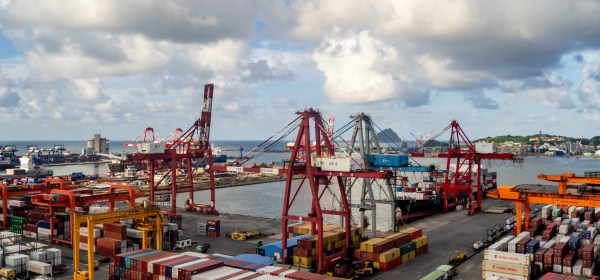
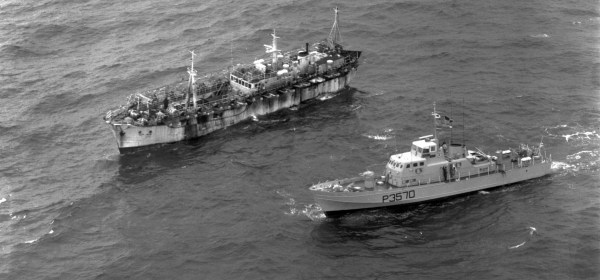
Written by Jess Marinaccio. This article examines Taiwan’s fisheries during martial law, with a focus on the 1976 Jinnan No. 1 incident in New Zealand. Illegal fishing both strained Pacific diplomacy and yet revealed how fishing boats enabled individual mobility. For workers like Zhang Songhuo on Jinnan No. 1, fisheries were not solely a means of livelihood, but also a possible escape route from the authoritarian ROC during the martial law period.

Grandmother Islands: Oral Memory, Mother Tongues, and Literary Kinship between Taiwan and Scotland

Written by Elissa Hunter-Dorans. This article reflects on how maternal and grandmaternal figures embody the preservation of Taiwanese and Gaelic. Through Tâigael, the author explores oral traditions, familial intimacy, and the “mother tongue” as both metaphor and surrogate caregiver, showing how literature sustains endangered languages and fosters cross-cultural kinship.

Tâigael: Orchids, Maternal Care, and a New Rosetta Stone

Written by Hannah Stevens and Will Buckingham. The article introduces Tâigael: Stories from Taiwanese & Gaelic, a translation project linking two minoritised languages through English and Mandarin as bridges. Writers reflect on linguistic solidarity, maternal legacies in “mother tongues,” risks of reinforcing hierarchies, and ecological fidelity in translation. Together, their essays highlight translation’s generative, resistant, and collaborative potential.

The Island Is Our Canoe: Taiwan–Guam Exchange Finds Connection Beyond the Stage

Written by Eloise Phillips. This article examines the 2025 Taiwan–Guam cultural exchange, led by Taiwan’s National Museum of Prehistory, which wove song, canoe building, and shared practices into island diplomacy. Through workshops, performances, and informal encounters, the program connected Austronesian communities across the Pacific, highlighting resilience, mutual reclamation, and living traditions of cultural practice, language, and art.

Distant Allies? Explaining U.S. Allies’ (In)action Over the Prospect of a Taiwan Strait Contingency

Written by Carlos Francisco Torres Morales. Using an alliance framework, this commentary argues that Tokyo and Seoul’s reluctance to convey support to Taipei publicly stems from strategic caution, since this could provoke the undesired effects they would seek to deter by extending clear security assurances, but also to retain flexibility in their redefining their stances vis-à-vis Taiwan (and China).

A New Era for UK-Taiwan Relations: Explaining the UK’s New Interests in the Indo-Pacific and Taiwan

Written by Peter (Hung-Yao) Chu. This article explores the development of UK-Taiwan relations since the Tsai Ing-wen administration until the current William Lai administration. It suggests that Brexit and China’s increasing assertiveness serve as two of the most important factors that contribute to the UK’s reassessment of its approach toward the Indo-Pacific and Taiwan.

How Tsai Ing-Wen’s fashion sense can provide explanations for gender inequality within Taiwanese politics

Written by Carlotta Rose Busetto. This article examines Tsai Ing-wen’s fashion in her two successful presidential campaigns and how posting certain outfits online increased her electability. It finds that clothes matter in Taiwan and Tsai was not free to wear what she wanted. Moreover, clothes matter more than gender because Tsai also utilised them to promote her own political agenda.

Indigenous Identity in Taiwan’s Contemporary Cinema: From Screen to Self

Written by Ana Paloma Martínez Gómez. This article explores how Indigenous identity is portrayed on screen and how film supports cultural revitalisation and self-representation through a decolonial and gendered lens. As a new Taiwanese national identity emerges, the gap between official recognition and ongoing cultural marginalisation reveals the complex space Indigenous communities occupy.

Divided Not Doomed: Domestic Challenges for the Lai Administration’s Foreign Policy

Written by Nils Peterson. This article analyses the domestic challenge for the Lai administration’s foreign policy under a KMT-aligned Legislative Yuan. The divided government poses two potential hurdles: the risk of domestic gridlock and fights over defence appropriation funding. These challenges will require some degree of compromise between the KMT and the DPP, reinforced by the recent recall campaigns.

The Strategic Defence Review 2025: Is The United Kingdom Finally Sticking Up For Taiwan?

Written by Alexandra Whitehead. This article assesses the importance of Taiwan in the UK’s Strategic Defence Review (SDR) published in June 2025. It argues that the SDR recognises Taiwan’s global significance in the context of countering China, both in security and economic terms. However, it lacks explicit contingency planning to support Taiwan and remains ambiguous towards China.

1 2 3 4 5 6 93