Health for Whom, from Where, and by What? Story(ies) About a Medical Mission from Taiwan to Africa

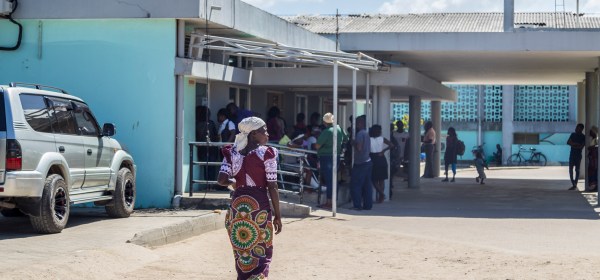
Written by Chia-Shuo Tang. This article is a story about Taiwan’s multi-million US dollars health aid in an African country and its aftermath. It involves two hospitals, some doctors, several aid agencies, and a global pandemic intersecting at the dawn of the 21st century. In addition, this story is about how a Taiwanese hospital turned a bilateral medical aid mission into a non-governmental endeavour after severing diplomatic ties between the two countries. 
A Dialogue about Situating Taiwan Research within Academia

Written by T.Y. Wang and Christopher H. Achen. We believe, however, that Taiwan’s distinctness requires focused scholarly attention from those who study it. The academic infrastructure that will make real progress and productivity possible is one in which the study of Taiwan is its own academic specialisation, equal in standing to the study of China, Japan, Korea, Singapore, Vietnam, or any other part of Asia with a distinct identity. In our opinion, the distinct institutional structures for Taiwan studies that have developed should be continued and strengthened. Journals dedicated to research on Taiwan should also be encouraged and strengthened to make them visible and widely cited as flagship publications like China Quarterly.

Resilience, State Capacity and Public Trust in Combating Pandemics, Case of Taiwan (Part I)

Written by Chun-Yi Lee. When it comes to combating pandemics, the public’s trust is crucial to the government’s response. The experience of COVID-19 demonstrates how well a government led its citizens through the pandemic depends on how citizens trust and comply with government regulations. As a result, COVID-19 has challenged not only health management but also governance issues more generally. As Fukuyama indicated, the Covid-19 pandemic was like ‘a bright light shone on existing institutions everywhere’ – the way a government and society reacted to the pandemic exposed the strengths and/or inadequacies within the existing institutions. 

Hard Cash or Soft Values? Assessing the ‘Lithuanian Model’ of Eastern European Relations with China and Taiwan

Written by Dominika Remžová. Over the last year and a half, Lithuania has been at the forefront of the EU’s improving relations with Taiwan and worsening relations with China. This culminated with Lithuania leaving the 17+1 framework of cooperation between China and 17 (now 16) eastern European countries on the one hand and the opening of the Taiwanese Representative Office in Vilnius on the other. The two events occurred in May and November 2021, respectively, with the latter being particularly controversial, as China argued that the denomination ‘Taiwanese’ breached the EU’s One China policy, which led to the imposition of Chinese economic sanctions on Lithuanian products. However, as Lithuania’s economic relations with China are negligible, at least when compared to western European countries, Beijing made the unprecedented move of targeting EU-wide supply chains that contain Lithuanian products. This effectively escalated the bilateral disagreement to the EU level, with the bloc filing a WTO case against China.

Cultivating Support from a Distance: The Transnational Activism of Taiwan Alumni Associations in Southeast Asia

Written by Ratih Kabinawa. Since Tsai Ing-wen won power in 2016, Taiwan has experienced increased international isolation. Beijing stepped up its offensive policy toward Taiwan by blocking Taipei’s participation in international forums, for example, in the WHA, WHO, and International Civil Aviation Organisation (ICAO). The PRC also exercised its dollar diplomacy to push Taiwan’s remaining diplomatic allies to switch recognition from Taiwan to China. As a result, during Tsai’s first term (2016-2020), Taiwan lost its major diplomatic allies, leaving the country with only thirteen diplomatic allies. Consequently, the Taiwanese government has looked to overseas communities to enhance its image and visibility, including Taiwan alumni associations. The Tsai administration has given these overseas communities a significant role under Taiwan’s New Southbound Policy (NSP). 

Cat-Warriors vs Wolf Warriors: How Taiwan Promotes Its Brand in the Face of a More Assertive China

Written by Simona Grano. According to China, Taiwan is a splinter province to be re-conducted under Beijing’s sphere of influence at all costs; likewise, China forbids international recognition of Taiwan under its “One China” principle. Through dealing with such hindrances for decades, the island has become skilled at swerving Chinese diplomatic aggression. Taiwan uses its soft – or “cat warrior” – diplomatic power to counter attacks on its sovereignty, promoting itself as a freedom-loving, peaceful nation in contrast to a belligerent China.

Shared but Particular: A Proposal to Pitch Taiwan Research in Sinology and beyond

Written by Josie-Marie Perkuhn and Hung-yi Chien. Therefore, we call for a more comprehensive cross-perspective and interdisciplinary academic dialogue to encounter the current segregations and broaden the community by strengthening the interconnectivity. Although some topics, such as identity politics and the cross-strait tension, have caught particular attention in recent years, Taiwan studies still lack some ‘infrastructure’ that helps new students of Taiwan to grow upon it. With this sort of infrastructure, even if Taiwan lose its existence as an independent entity in the future, the shared discipline of sinology researching Taiwan, in particular, will last, and Sinitic knowledge will become the common heritage of human beings.

Taiwan’s Asylum Policy: A Lack of Political Will to Implement the Law?

Written by Kristina Kironska. Taiwan is considered one of the most progressive countries in Asia but has no asylum law. Although debates on the issue occasionally occurred for more than ten years, there has been no progress on the draft asylum law since its second reading in 2016. One significant point of contention is to what extent an asylum law should address not only people from “uncontroversial” foreign countries, such as the Rohingya in Bangladesh, but also people from China, Hong Kong, and Macau. As with any issue that touches on cross-strait relations, the situation is complicated: on the one hand, the government celebrates Taiwan’s status as a beacon of human rights; on the other, extending asylum to PRC citizens risks stoking tensions with Beijing. 

Divided Reaction to the Ukraine Invasion in Taiwan

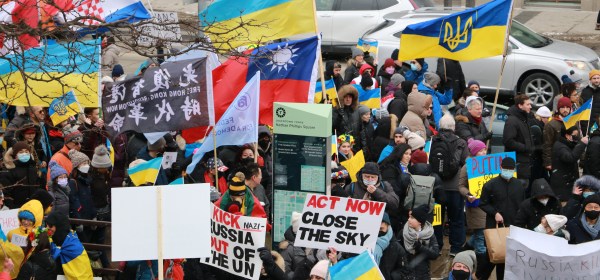
Written by Brian Hioe. The Tsai administration has presented somewhat mixed messaging on the invasion of Ukraine. When questioned by opposition lawmakers, officials such as Premier Su Tseng-chang have rejected comparisons between Ukraine and Taiwan, stating that the two contexts are sufficiently different and cannot be compared. On the other hand, President Tsai Ing-wen has said that Taiwan stands with Ukraine as a fellow democracy and has condemned Russia’s actions. Contributions from her administration have included the establishment of a relief fund.

Taiwan’s Middle Power Humanitarian Diplomacy

Written by Huynh Tam Sang. As the resurrection of great-power politics has tragically befallen smaller powers, Taiwan has enhanced its agency via embracing humanitarian diplomacy and has sought a meaningful role in the global arena by supporting like-minded countries. The lesson from Taiwan’s humanitarian diplomacy is that when democracy is exposed to challenges, middle powers should potentially play a responsible role by investing in diplomatic support and humanitarian aid to vulnerable people.

1 38 39 40 41 42 94