Military Diplomacy: Another Way to Support the Defense of Taiwan

Written by John W. Tai. The United States has long relied on weapons sales to demonstrate its support for the defense of Taiwan. This practice has incurred cost for both Taiwan and the United States due to its high visibility and significant financial resources for Taiwan. In addition, the growth of the Chinese military makes it increasingly unlikely for Taiwan to be successful in defending itself by relying simply on traditional military means.

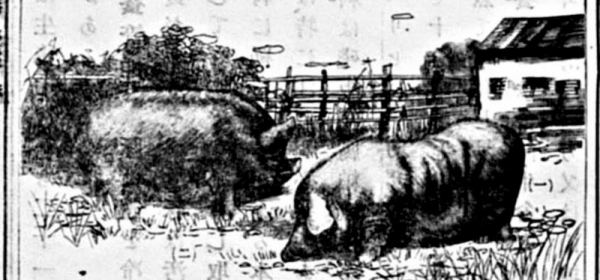
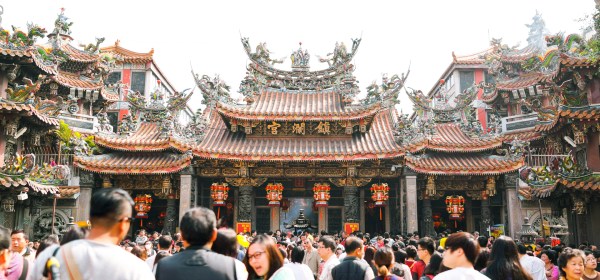
The Risky Business of Importing Pigs: The Story Of Taiwan’s First Insurance Company

Written by Ko Lien. The demand for pig and pork products increased, but businessmen had begun to import pigs from across the strait since supplies have dwindled. As refrigeration technology was still in its infancy at this point, live pigs were imported. However, many overdue would die on the journey to disease or ship wreckage. In response to this, Taiwan’s first-ever insurance company was founded for protecting against pig loss.

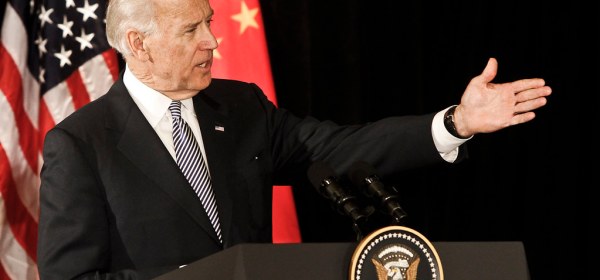
Taiwan’s Opportunities and Risks under the Biden Administration

Written by Jacques deLisle. As the Biden administration takes office, expectations—and, in many quarters, hopes—are high that much will change in American foreign policy. U.S. policy on Taiwan-related issues, however, is not likely to shift fundamentally. That is an outcome that should be – and generally will be -welcome in Taiwan. The relationship’s foundations may be strengthened, and apparent post-Trump setbacks are likely illusory. For Taiwan, reasons for concern mostly lie elsewhere, in the fraught U.S.-China relationship, the mounting challenges posed by Beijing, and questions about how the U.S. will respond.

Gods of Democracy: Divination and Epidemic Prevention in Taiwan, 2020

Written by En-Chieh Chao. Scientific epidemic prevention measures are essential and critical, but sometimes not enough. As demonstrated in Taiwan’s experience of 2020, other than an alert government, it takes a civil society and divine deities. After all, to prevent an epidemic literally requires human bodies to work together. The question is: what makes us work together? It could be democracy for some, and divination for others. Sometimes, it is both.

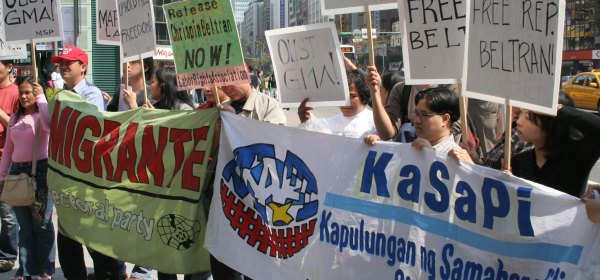
Protecting the ‘Orphans’: Advocacy Networks and Labour Movements in Taiwan

Written by Ratih Kabinawa. In an attempt to raise awareness about the lives of marginalised groups in Taiwan, the Taiwan Studies Programme at the University of Nottingham, U.K., organised a movie screening and discussion – Migrant Lives Matter: ‘Nine Shots’ – that showcased the dark side of migrant labour recruitment and employment in Taiwan. The film reveals some perspectives from different stakeholders, including labour advocacy networks, in addressing problems related to Taiwan’s labour migration system. Using the movie as a prompt, this article explores various advocacy networks and migrant labour movements in Taiwan. Why and how do these networks emerge and organise themselves? What are their motivations and activities? And how do these networks advocate for policy change and work to build solidarity to empower migrant workers?

Does Press Freedom Come with Responsibility?

Written by Lihyun Lin and Chun-yi Lee. On November 18, 2020, the National Communications Commission (NCC) in Taiwan refused to renew the licence of CTiTV. This decision caused much protest from the opposition party, with the Kuomintang (KMT)’s high-pitch of ‘protecting press freedom.’ We found ironic how the KMT used Deng Nan-jung (鄭南榕) ‘s case as an example to indicate how the ruling party in Taiwan – the Democratic Progressive Party (DPP) – intervened in press freedom and sacrificed Taiwan’s democracy.

The Labor Market, Economic Insecurity, and Populism in Taiwan

Written by Wei-Ting Yen. In the past few years, two political outsiders in Taiwan have quickly accumulated popularity and became serious political contenders in elections. One is Ko Wen-Je, currently the mayor of Taipei. The other one is Han Kuo-Yu, the recently impeached mayor of Kaohsiung, the second-largest city in Taiwan. Their rise has prompted the island nation to widely debate whether populism has grown its roots in Taiwan because Ko and Han share similar populist traits.

The Politics of Hate and Fear

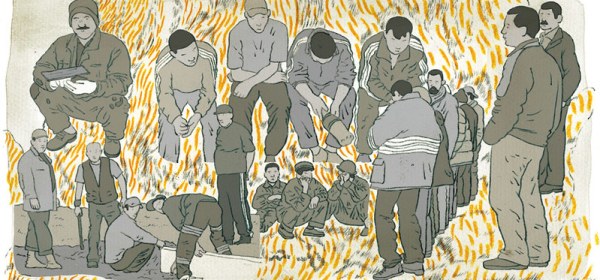
Written by Andreas Sierek. A migrant construction worker was enjoying himself at a river. We might have disapproved of him being drunk, drugged and naked. We even might have been incensed by his rampageous behaviour. But shooting him dead? Like a stray dog infected with rabies? Not with one bullet but with nine? Insisting that the man – while lying on the dirt, in a pool of blood, dying – must be handcuffed before medics can approach him?

Imagining a Tragedy in Cyberspace: Online Postings after the Death of an Undocumented Migrant Worker

Written by Isabelle Cheng. On 31 August 2017, Nguyen Quoc Phi, an undocumented Vietnamese worker, was shot dead by a policeman in Hsinchu, northern Taiwan. Public responses to Phi’s death were polarised between pro-police campaigners, who supported the police’s use of force, and human rights activists, who emphasised the plight of migrant workers who are exploited by brokers and employers and who are regulated by a hostile guest worker system. This polarisation is also evident in cyberspace. The reporting of Phi’s death in September 2017, the sentencing of the policeman in July 2019, and the deaths of George Floyd and Rayshard Brooks in the U.S. in May and June 2020 prompted Taiwanese netizens to comment on PTT.

What does the New Biden Administration Mean for Taiwan?

Written by Douglas H. Paal. Four years ago, on December 2, 2016, shortly after Donald Trump had become president-elect, Taiwan’s President Tsai Ing-wen placed a phone call to Trump to congratulate him on his recent victory. Reportedly, someone trusted by Taipei with access to Trump had told Ms Tsai that her call would be received and not rejected. It was the first such opportunity for contact at that level since the United States broke diplomatic relations with the Republic of China in 1979, and so politically irresistible for Taiwan’s leader.

US-Taiwan Relations Under President Joe Biden

Written by Elizabeth Freund Larus and Shirley Martey Hargis. After a protracted battle, the election of Joe R. Biden as the 46th US President is all but certain. All eyes in Taiwan are now turning to Biden to see whether he will continue President Donald J. Trump’s hardline against China and support of Taiwan. For the past four years, the Trump administration and the US Congress have responded to Beijing’s attempts to ostracize Taiwan by increasing support for Taipei. During his campaign, Biden promised to get tough on China. Yet his history as a political moderate makes it unlikely that he will be antagonistic to China, especially when it involves Taiwan.

What Would a Biden Presidency Mean for US’ Taiwan Policy?

Written by Gerrit van der Wees. The victory of Joe Biden and Kamala Harris in the US Presidential elections will mean a sea change for how the United States deals with the rest of the world, and how the world perceives the United States. However, interestingly, for Taiwan, it is expected to bring continuity. Biden himself has a long history of support for Taiwan. He was already a member of the United States Senate in 1979 when the Taiwan Relations Act was approved. When he became chair of the Senate Foreign Relations Committee in 2001, the first country he visited as chairman was Taiwan. Moreover…

1 55 56 57 58 59 94