The Best-Laid Plans of Rice and Men (And Ducks): Organic Farming in Yuanli Township

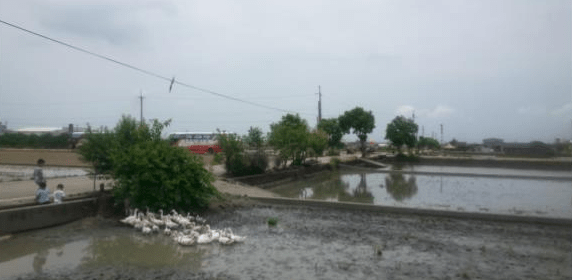
Written by Li Ching Chen, Translated by Sam Robbins. Hae works on a rice-duck farming cooperative in Yuanli. He wanted to take advantage of the fact that ducks eat rice pests and raise the ducks in the rice paddies. Although the idea was good in theory, there were many difficulties in practice. For example, he told me many of the dogs from the township started hunting the ducks. As ducks slowly waddled through the rice paddies, the dogs would start salivating.
The Homecoming of Indigenous Tea Farmers

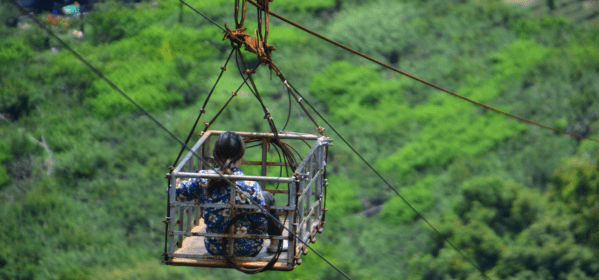
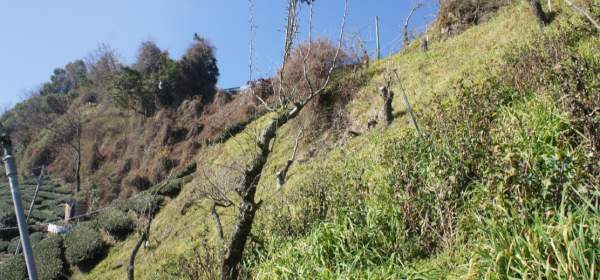
Written by Szu-yu Lai, translated by Sam Robbins. When people in Taiwan think of indigenous communities, they think of millet, traditional clothing, and other stereotypical markers. However, from the story of Atayal tea farmers in Li Mountain, we can see that such static imaginings don’t bind indigenous peoples. Admitting to Taiwan’s rapidly changing culture and economy, cultivating tea became a way for Atayal people to reflect on their own culture and relationship with mainstream society. Although tea is not a part of the Atayal people’s traditional culture, it has slowly become a crucial part of how Atayal tribes market themselves through legal and economic changes. 

Cultivating Support from a Distance: The Transnational Activism of Taiwan Alumni Associations in Southeast Asia

Written by Ratih Kabinawa. Since Tsai Ing-wen won power in 2016, Taiwan has experienced increased international isolation. Beijing stepped up its offensive policy toward Taiwan by blocking Taipei’s participation in international forums, for example, in the WHA, WHO, and International Civil Aviation Organisation (ICAO). The PRC also exercised its dollar diplomacy to push Taiwan’s remaining diplomatic allies to switch recognition from Taiwan to China. As a result, during Tsai’s first term (2016-2020), Taiwan lost its major diplomatic allies, leaving the country with only thirteen diplomatic allies. Consequently, the Taiwanese government has looked to overseas communities to enhance its image and visibility, including Taiwan alumni associations. The Tsai administration has given these overseas communities a significant role under Taiwan’s New Southbound Policy (NSP). 

Divided Reaction to the Ukraine Invasion in Taiwan

Written by Brian Hioe. The Tsai administration has presented somewhat mixed messaging on the invasion of Ukraine. When questioned by opposition lawmakers, officials such as Premier Su Tseng-chang have rejected comparisons between Ukraine and Taiwan, stating that the two contexts are sufficiently different and cannot be compared. On the other hand, President Tsai Ing-wen has said that Taiwan stands with Ukraine as a fellow democracy and has condemned Russia’s actions. Contributions from her administration have included the establishment of a relief fund.

‘Today’s Ukraine is Tomorrow’s Taiwan’?

Written by Chieh-chi Hsieh. In sum, there is no reason to believe that imminent conflict in the Taiwan strait would occur after the Russia-Ukraine war outbreak. However, it is imperative to underscore that the proposition is not formed based on comparing Taiwan’s relative advantages over Ukraine. Instead, it is underlined by how the ongoing war has been perceived by not only Taiwan’s general public and government but also Xi and the CCP.

Are We “Post-Sunflower” in Taiwanese Politics?

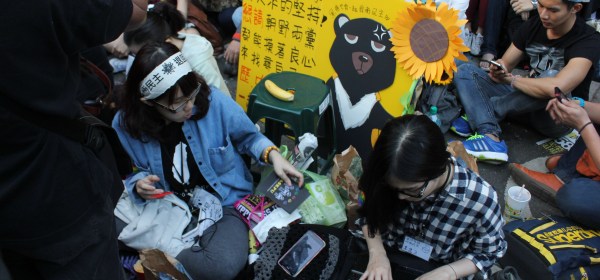
Written by Brian Hioe. Certainly, some of the discursive effects of the Sunflower Movement have faded, even if they were always hard to quantify. However, it is a harder question as to whether the direct influence of the movement has faded to the extent that the present would be seen as post-Sunflower. This perhaps will only become clearer after future anniversaries.

Solidarity Rally For Ukraine Takes Place At Liberty Plaza

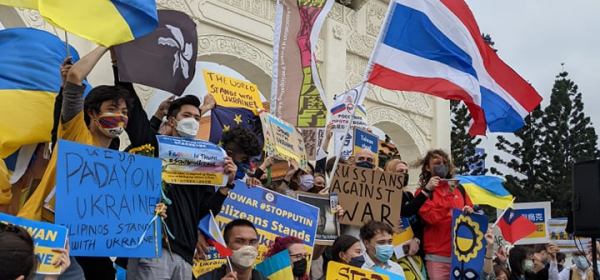
Written by Brian Hioe. Several hundred rallied at Liberty Plaza yesterday in the largest of a series of solidarity rallies that have taken place in Taipei since late February. The event sought to call attention to the humanitarian crisis that has ensued since the Russian invasion of Ukraine, as well as show support for Ukrainians at a time in which their democratic freedoms and sovereignty are threatened. 

Salivating Sales: Ethnic Chinese Malaysians and the Edible Bird’s Nest Industry.

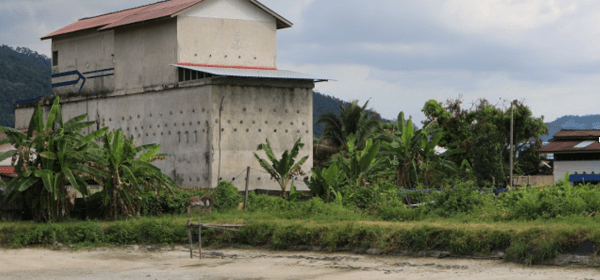
Written by Yu-an Kuo 郭育安, translated by Sam Robbins. Despite being a common food in Taiwan, Taiwan’s climate makes it unsuitable for cultivating edible birds nest. Consumption of edible birds nest in Taiwan can be traced back over 200 years, but this consumption has always relied on imports. The product’s history in Taiwan is tied to the history of Dihua street in Taipei, which developed towards the end of the Qing dynasty. This street became a main sight for the selling of exported “Chinese goods” (華貨)in Taiwan, including Ginseng, Jujubees, louts seeds and shark fins. Official statistics suggest that Taiwan currently imports over 10 tonnes over birds nest each year, with over 90% being imported from Indonesia. However, this number is likely unreliable since the illegal smuggling of birds nest remains a constant problem in Taiwan.

A History of Taiwan’s Apple Farmers

Written by Hui-Tsen Hsiao (蕭慧岑)Translated by Sam Robbins. “They write up a sloppy official document that doesn’t even say anything meaningful, and now everything we’ve worked so hard to have has to go like that. You want us to demolish our own house, we cried and hugged as it happened. You’re a government agency, and you’re willing to let people go through this?” “And after we were forced to demolish our house, the debris from the house was even been set on fire” Ron added. 

1 3 4 5 6 7 22