Taiwan’s 2022 Local Elections: The State of Electoral Campaigns

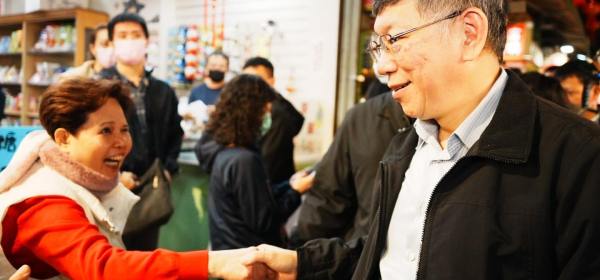
Written by T.Y. Wang. Taiwan will hold its 2022 local elections on November 26. Dubbed the “9-in-1” elections, voters will select candidates in several races, including mayors of the six special municipalities, 16 county/city magistrates, council members, and heads and representatives of boroughs. Candidates of the ruling Democratic Progressive Party (DPP), the main opposition Nationalist Party (Kuomintang or KMT), and smaller parties, such as the Taiwan People’s Party (TPP) and the New Power Party (NPP), will participate in the elections. The electoral outcomes will have important political implications as they not only determine the fate of candidates running for more than 11,000 positions but also impact the future direction of main political parties, the viability of small parties and the playing field of the country’s 2024 presidential election.

‘Dissertation Gate’, Candidates’ Background and the 2022 Local Elections in Taiwan

Written by Mei-Chuan Wei. The term ‘Dissertation Gate’ has been used by the media and general public to highlight an issue which marked the 2022 local election campaign in Taiwan. It refers to the phenomenon unseen before the mayoral by-election of Kaohsiung City in 2020, when the candidate of the Kuomintang (the KMT) Mei-jhen Li (李眉蓁) was fiercely criticised for plagiarism in her Master’s dissertation. Li publicly apologised for her plagiarism after the university from which she obtained her Master’s decided to revoke her degree. Whether or not plagiarism was the major factor contributing to Li’s failure in the election remains to be proved. Yet negative campaign strategies focusing on candidates’ dissertations, specifically plagiarism, have become increasingly popular among almost all parties since then.

Why Does Education Affect Local Elections in Taiwan?

Written by Yu-tzung Chang. What is more worrisome is that the majority of candidates in this local election have adopted a negative campaign strategy and have not put forward specific policy proposals, which may lead to more confrontation in society in the future. Political polarization has produced a crisis of democracy in Western countries. Traditional political polarization is being replaced by affective polarization, in which partisans are hostile to supporters of other parties and regard them as the main enemy. Taiwan is no exception to these developments. This will have a potentially negative effect on the development of Taiwan’s democracy.

How Europe looks at Taiwan – and how Taiwan fails to send out a clear message

Written by Gunter Schubert. The Taiwanese people and their political representatives must decide if they want to forge a national consensus on their relationship with China and communicate this clearly in Europe and beyond – or if they would rather prefer to adhere to an unclarified stance on their national identity and the concept of ‘unification’, giving in to uncompromising viewpoints and undermining any chances as gaining the lasting support of the countries that cherish democracy and admire their struggle for survival.

Whiteness and Protestant Christianity in Taiwan 

Written by Yin-An Chen. The connection between Whiteness and Protestant Christianity does not simply result from its relation to Western missionaries but is consolidated by the power of Western Christianity in its theological language, ideology, and hierarchy. In other words, what Whiteness maintains in Protestant Christianity is not about whether white European and American people established Protestant churches—it is about who can talk about God and explain the doctrine. It is about the power of speech and authority instead of skin colour. Whiteness, in this sense, is a method of securing the power of speech and authority. 

Whiteness Intertwines with Taiwaneseness: Taiwanese Heavy Metal Music and its Decolonial Paradox

Written by Mark Hsiang-Yu Feng. It is common to see that many Taiwanese musicians employ Western compositional concepts, theories, and approaches to express Taiwanese identity through music and musical performance. For example, during the 2020 presidential and general election in Taiwan, Legislator Freddy Lim, the vocalist of a renowned Taiwanese metal group called ChthoniC, gave a live concert called Taiwan Victory to congregate voters and solicit votes in front of Taiwan’s Presidential House. Many Taiwanese people showed interest in his performance, as he sang heavy metal songs to gather voters and fight against political infiltration from China. After the concert, The Guardian’s report highlights Lim’s unique career trajectory from a musician to a politician in Taiwan and the creativity of bringing music to the campaign. 

The Interaction between Taiwan’s Indigenous and Migrant Workers: Lessons from Construction Industry

Written by Hsuan Lo. Translated by Yi-Yu Lai. In Taiwan, a narrative concerning the opposition of migrant and Indigenous workers appears to be a continuing source of contention. In 1997, director Ming-hui Yang released a documentary, “Please Give Us a Job.” One of the film’s impressive scenes depicts an off-duty Indigenous worker sobbing uncontrollably in front of the camera while lamenting the employment difficulties caused by the introduction of migrant workers. In 2016, Chen Ying, a DPP legislator from the Puyuma Indigenous community, brought this issue back into the public eye by highlighting the impact of “illegal migrant workers” on the employment of Indigenous workers. Unfortunately, the notion that “migrant workers take jobs from Indigenous workers” has become deeply ingrained.

With What Difficulty Indigenous LGBTQ Groups Struggles in Taiwan

Written by Remaljiz Mavaliv. Translated by Yi-Yu Lai. Taiwan is a beautiful country with diverse cultures, the Indigenous peoples of which are often viewed as significant worldwide highlights. Currently, sixteenth Indigenous groups are officially recognised in Taiwan. However, this does not protect them from discrimination and unfair resource distribution. After successive colonial regimes arrived in Taiwan one after another, colonialism and imperialism profoundly influenced the Indigenous population, and the political repercussions have persisted to the present day.  

Taiwanese Mountains and Plains Indigenous Peoples: Facing Different Trials, Yet the Same Fate

Written by Chen I-Chen. Is Indigeneity a self-evident category? Or is “Indigenous” defined differently by the policies and politics of each nation-state? On June 28, 2022, a constitutional review of the Supreme Court’s debate on the Indigenous Status of the “Plains” peoples (the “Pingpu,” 平埔族群) shed light on the discussion surrounding Taiwan’s national recognition of Indigenous status. The “Plains” peoples, headed by the Siraya, had fought for more than three decades to have their Indigenous status recognised under the category of the “lowland” Indigenous peoples (平地原住民)”. As a crucial result of the long struggle for the Plains peoples’ legal status, the final judgement will be declared no later than this late November.

1 47 48 49 50 51 134