Taiwanese Gay Bear Culture in a Grizzly Area of Taipei 

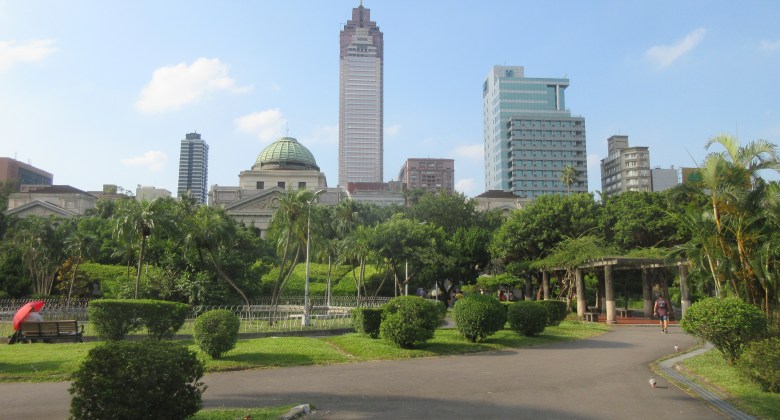
Written by Yu Dung Shiu. Once, I spoke with a man who looked like a bear; he was shocked that I called a man sitting about two meters away from a “bear.” That man was bigger than anyone else in the café and was eating a lot of food (a large size dinner box, two loaves of bread and a whole bunch of grapes) for his dinner. “I think you’re too naïve to recognise who is a bear and who is …it may be harsh but…a pig,” said the bear-man smoking with me. So, I asked him if he could teach me how to recognise who is a bear and who’s not.  

Sexual Minorities Excluded by other Sexual Minorities: Bisexuality in Taiwan

Written by Yen-Ting Kuo, Translated by George Bobyk. Just as most homosexual people do not take coming out to heterosexual people lightly, many bisexual people feel afraid to come out to either heterosexual or homosexual people for the above reasons. Today, due to the lack of “bisexual groups” in Taiwan, for many bisexual people, the only way to survive in gay circles and avoid stigma and discrimination is to hide their true identity and chose to identify as gay instead. 

Breaking Down the Wall: Generational Gaps, Generational Prejudice and HIV Treatment in Taiwan 

Written by Geng-Hui Lin. Compared to HIV risk, which is assessed through responses to a CDC survey, age is a relatively inflexible criterion for MSM’s who want to obtain PrEP through Taiwan’s PrEP program. There are ways to be categorised as an elevated risk for HIV infection depending on your answers to the CDC’s HIV risk assessment. As a result of these criteria, although some MSM’s over thirty-five have been enrolled in the program, access and availability remain mostly limited to those under this age. This leaves older MSM’s as outsiders to the program, unable to enter. 

Almost-Marriage Equality in Taiwan

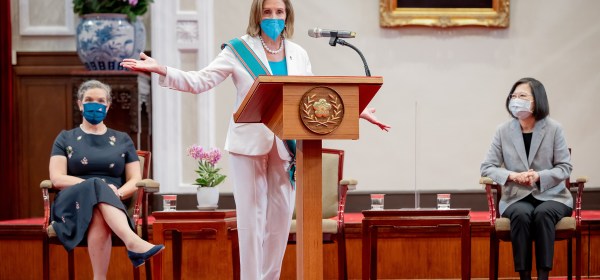
Written by JhuCin Rita Jhang. There are major legal rights not covered by the Act for Implementation of J. Y. Interpretation No. 748. First, it does not allow same-sex couples to co-adopt a child unrelated to either parent by blood. Once a same-sex couple gets married, they lose the right to adopt whatsoever, and they would have to obtain a divorce to be able to adopt as a single person. Even if someone adopts first as a single and then gets married to a same-sex person, the spouse still cannot cross-adopt this child. This bizarre and counterintuitive legal conundrum sends many same-sex couples wishing to co-adopt on a long, winding legal fight. Even though one married same-sex couple had won the lawsuit and became the first-ever same-sex couple to co-adopt a genetically unrelated child in January 2022, this was ruled on a case-by-case basis.

USA, China, and Taiwan: Post-Endemic Strategies for a New Global Economy

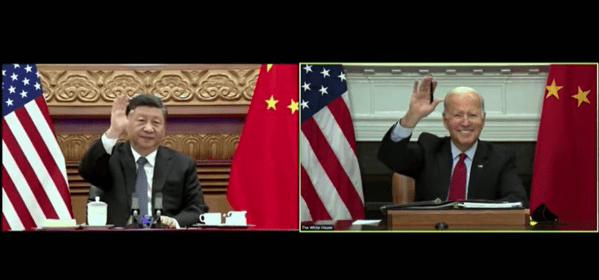
Written by Ian Inkster. Joe Biden’s recent scooping up of the fog of ‘strategic ambiguity,’ the seldom re-specified policy of the USA towards China in the case of an overt attack on Taiwan, was made in haste but has set the tail of the cat alight and its very colour in doubt. In Japan, Biden warned that China was ‘flirting with danger’ and then admitted that the US would defend Taiwan against invasion by China as contra to the Ukraine case. He was then asked directly if the US would defend Taiwan militarily if China invaded, when it has not done so in the invasion of Russia against Ukraine.

Three Times is a Charm: President Biden’s Taiwan Remarks in Tokyo

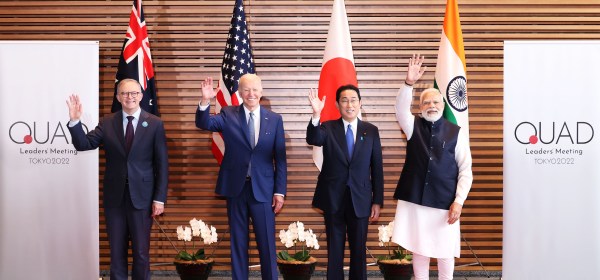
Written by Gerrit van der Wees. At a press conference on 23 May 2022, President Biden – who was in Tokyo to attend a meeting of the Quadrilateral Security Dialogue and the launch of the Indo-Pacific Economic Forum (IPEF) – was asked by CBS reporter Nancy Cordes: “You didn’t want to get involved in the Ukraine conflict militarily for obvious reasons. Are you willing to get involved militarily to defend Taiwan if it comes to that?” “Yes,” Mr Biden answered flatly. “You are?” the reporter followed up. “That’s the commitment we made,” he said.

A Further Response to Sinology’s Involvement in Taiwan Studies

Written by Hung-yi Chien. In short, I would argue that “being Sinitic” is not inconceivable. New students of Taiwan studies in overseas countries need elements of sinology to grow up. The lesson from the Taiwan studies programmes in Taiwanese universities suggests that a new discipline requires a fertile ground to nurture it. In countries where sinology is available, this “politically incorrect” discipline is inevitable to play an important role in recruiting new students to Taiwan studies.

Taiwan’s Covid-19 Surge: From “Zero-Covid” to “Living with Covid” 

Written by Tsung-Mei Cheng. Time will tell how quickly Taiwan can bring the Covid surge under control. However, the fundamentals that worked so well for Taiwan before the surge—preparedness (a national plan), universal health coverage, advanced IT and communications infrastructure, and a cooperating public—should continue to serve Taiwan well in the fight against the current surge. Moreover, it will hopefully also defend us against future variants of the Covid-19 coronavirus to come.  

What’s Exactly Wrong with Taiwanese Media?

Written by Ti Wei. To solve the Taiwanese media problem, the first step is to recognise that the problem is unique and not like any other case in the world. Moreover, this problem could not be explained by any Western theories. Therefore, we need to carefully clarify and re-examine the nature of the problem and study society and the audiences thoroughly. Then, based on the re-acquainted knowledge, we may draw a new and reflective plan for rebuilding the media system. The only thing for sure is that it is neither commercial nor public in the Western sense. In addition, the latest development of media platformatisation and the new audience generation should be considered. The task is tough, but any endeavour to pay should be worthy when we think of how much hardship Taiwanese media have been through.

Taiwan’s Enduring Controversy on Absentee Voting and the Role of Media

Written by Julia Marinaccio and Jens Damm. However, Taiwanese journalism also did its share. Like the political party system, Taiwan’s existing media landscape is ideologically divided over the question of how to fashion cross-Strait relations. Through their ideological orientation paired with a lack of investigative journalism, they act as mouthpieces of political parties. In doing so, they reinforce existing political cleavages rather than exercising their role as informants and watchdogs.

OTT in Taiwan: How Global Platforms Meet Local Productions and Politics

Written by Yu-peng Lin and Chang-de Liu. The development of over-the-top (OTT) media services is currently the main concern of Taiwan’s audiovisual industries. An OTT media service is an audiovisual streaming service provided directly to the audience by the Internet. The Taiwanese government wishes to strengthen this industry while also seeking balanced growth for international and local operators. For the latter, how to accelerate the production of their content in the face of global competition is the biggest concern. Furthermore, given the recent success of the Asian market, international operators are interested in co-producing content with Taiwanese companies.

A Sketch of Taiwan’s Digital News Media Landscape in the Twenty-first Century

Written by Ming-yeh T. Rawnsley; Yuan-hui Hu; Victoria Y. Chen; and Lihyun Lin. Crowdfunded journalism is no longer unfamiliar to Taiwanese people who care about the media ecosystem. Although journalism in Taiwan has been challenged by the powerful influences of political and business alliances in the news industry and the constant impact of ever-changing technological advances, crowdfunded journalism has provided a fresh possibility and lent financial assistance to independent media organisations and citizen journalism. All these undoubtedly positively affect the reconstruction of Taiwan’s news and media industry.

1 55 56 57 58 59 134