Gender, Remittances, and Taiwan’s Migrant Worker Financial Ecosystem: Beyond the Numbers

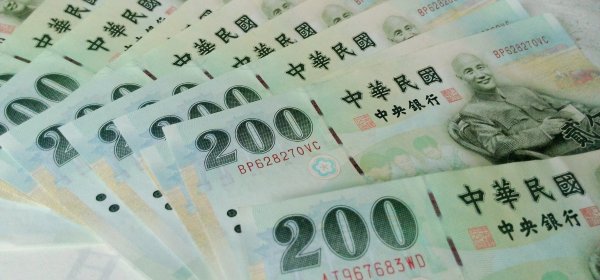
Written by Renee Te-Jung Chen. This article looks beyond the numbers of Taiwan’s Small-Amount Remittance Services for Foreign Migrant Workers from a gender perspective. It argues that the milestone of becoming the primary remittance channel obscures the gendered patterns in adopting the new platform. It suggests that the collection of sex-aggregated data is necessary.
Envisioning Migrant Worker Policy: Toward Dignity and Well-being 

Written by Hang-Tang Chen; translated by Yu-Chen Chuang. Taiwan needs to refine its migrant worker policies to focus not only on labour contributions but also on the well-being and dignity of the workers. Personal stories of migrant workers in this article reveal the necessity for comprehensive policies that address the physical and mental health needs, acknowledging the humanity behind the workforce.

Taiwan, Be on the Right Side of History on Labour Migration

Written by Bonny Ling. A few months before the presidential elections, I gave a talk in Taipei on the responsible recruitment of migrant workers, where they do not bear the cost of their job recruitment and begin their employment saddled by debt. Afterwards, a participant came up to ask me which presidential candidate I thought would stand the best chance to reform Taiwan’s labour recruitment system towards the Employers Pays Principle, where the costs of recruitment are borne by the employers. I was asked this from time to time in the runup to the January 2024 elections, so this alone did not surprise me. What did was his next statement: “And I will vote for them.” I studied his face to see if he was serious. Not sure. Had I just met my first single-issue voter on migration in Taiwan? Are there more?

‘They’d rather sit in an air-coned office than work under the scorching sun’: dirty, dangerous and difficult farm labour in rural Taiwan

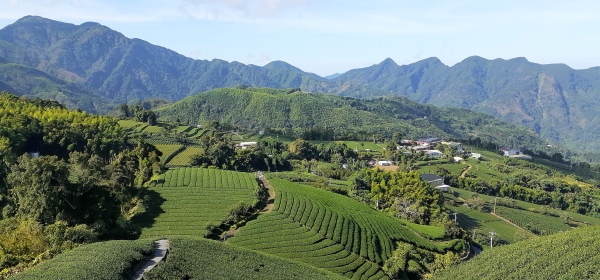
Written by Isabelle Cockel. Labour migration from Southeast Asia to Taiwan has been indispensable to Taiwan’s economic development in the last three decades. Farm work is one of the most recently opened sectors for migrant labour, and migrant farm workers, regular and irregular, have become a new and crucial source of labour in rural Taiwan. How was the recruitment of farm workers justified by the Council of Agriculture (CoA, currently the Ministry of Culture), the lobbyist for opening the farm labour market, and the Ministry of Labour (MoL), the overseer of migrant labour policy, sheds light on three critical and inter-related issues.

Transformation of Women’s Status in Taiwan, 1920-2020

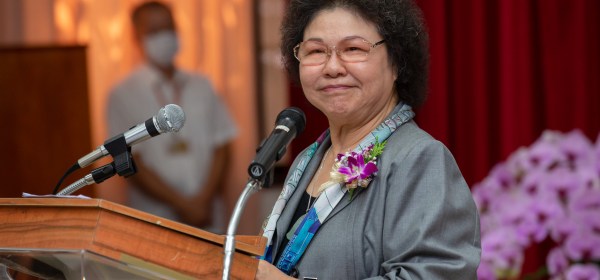
Written by Doris T. Chang. Among all the gains made by Taiwanese women in the past century, achieving leadership roles in the political arena is perhaps Taiwanese women’s greatest achievement. During the Japanese colonial era, women had no right to vote. However, after lifting martial law in 1987, Taiwan emerged as a vibrant democracy. Due to political parties’ commitment to nominating more qualified women candidates for elections in the late 1990s and after that, the percentage of women elected to Taiwan’s Legislative Yuan reached 42 per cent in 2020 — the highest in Asia. This is equivalent to the percentage of women legislators in most Scandinavian countries. But Taiwanese women’s achievement in the political arena would not have been possible without making significant progress in their educational attainment throughout the twentieth century.

Matsu Migrants in Bade, Taoyuan City

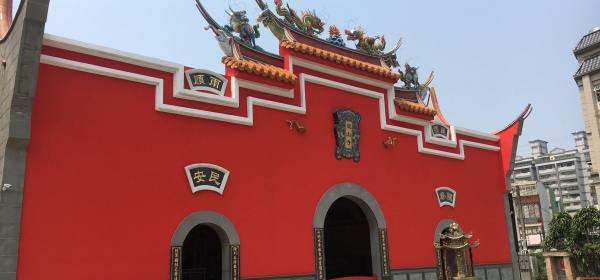
Written by Cheng-Chung Wang. In Taiwan, we rarely see Matsu in the textbooks, maps, or other materials we’ve been exposed to since childhood, let alone how much we know about Matsu people. Some of us may be unaware that there are many descendants of Matsu migrants living around us. Their moving and settling experiences are very attractive stories that deserve to be told. 

Care work in Singapore and Taiwan: Beyond ‘Migrant Maids’ and Female Employers

Written by Lynn Ng Yu Ling. From the domestic caregivers in both locations, I gather that although there are important differences in the hiring criteria for employers, the root problem of employers having the upper hand in an asymmetrical working relationship remains unresolved. On the whole, it is harder for Taiwanese families to hire a ‘migrant maid’ (wai yong) than in Singapore, and several differences in the hiring process seem to indicate that Taiwan treats home care more seriously.

Maintaining Taiwan’s Global ICT industry lead by Improving Employee’s Training

Written by Bo-Yi Lee. Employee training is critical in the success of organisations, including productivity, profitability, innovation capabilities and overall competitiveness. Due to the everlasting and intensifying global competition among firms, particularly in the ICT industry, the Taiwanese government has incentivised firms to build formal training systems. This includes establishing a training committee at the corporate level, creating skill development maps and building e-learning databases for employees. Thus, it will help employees catch up with predicament of ever-changing technologies. However, R&D engineers in the Taiwanese ICT industry rely much more on informal training to update their knowledge and skills in related technologies.

A Wake-Up Call to Improve Factory Working Procedures in a Time of Crisis

Written by Chan-Yuan Wong, Ker-Hsuan Chien, and Mei-Chih Hu. As the world enters the second year of the Covid-19 pandemic crisis, Taiwan – previously acknowledged as a Covid-free nation – encountered a new outbreak in mid-May 2021. This wave of infection has been deemed critical, as the number of infection cases has surpassed 700, and the infectivity rate is as contagious as measles. To date, Taiwan encountered 635 death cases related to Covid-19 – of which 98% are attributed to the recent outbreak since 15 May 2021.

1 2