Civic Efforts Fostering Rule of Law: Judicial Reform Foundation’s 2024 Recap and 2025 Aspirations  

Written by Cheng-Ching Lin and Grace Huang. The Judicial Reform Foundation (JRF) unites dedicated allies from Taiwan’s civil society to advance judicial reform. This article highlights their efforts and achievements in 2024, as well as their outlook for 2025. Despite the challenges posed by political turmoil in parliament, JRF remains committed to fostering public engagement, rebuilding trust in democratic governance, and upholding the rule of law.


Building a Regional NGO Hub in Taiwan

Written by Robert Wang. Over the past two years, with the support of AIT and MOFA as well as local NGOs, a Taiwan NGO alliance has successfully initiated a Fellowship Program to provide training for young NGO activists in the region and to create an NGO support network in Asia. It is important that this program be continued and expanded in order to strengthen civil societies and bolster democracies in the region.

Taiwan Diplomacy: Worth the Effort?

Written by David Pendery. Commentary has recently focused on Taiwan’s diplomatic ties, following the loss of a number of allies under President Tsai Ing-wen’s tenure, most recently Nicaragua, which caused quite a stir internationally. The state of affairs has worsened to the point that many in the nation are now questioning the value of diplomatic relations in general and whether it is even worth the trouble for Taiwan to maintain its diplomatic relations with its remaining official allies. This is a query worth addressing.

Is Taiwan Ready to Go Net-Zero by 2050?

Written by Ming-sho Ho. On Earth Day (April 22) of 2021, Taiwan President Tsai Ing-wen unveiled the goal of realizing carbon neutrality by 2050. By then, Taiwan is expected to absorb or eliminate all locally generated greenhouse gas to reduce the net emission to zero. Tsai reiterated this pledge in the National Day (October 10) speech. The government is also preparing to amend the 2015 Greenhouse Gas Reduction and Management Act (GGRMA) by stipulating the net-zero commitment and adopting the measure of carbon pricing. As the world leaders are gathered for the Climate Change Conference of the Parties (COP26), more than 130 countries made official promises to go net zero.

Protecting the ‘Orphans’: Advocacy Networks and Labour Movements in Taiwan

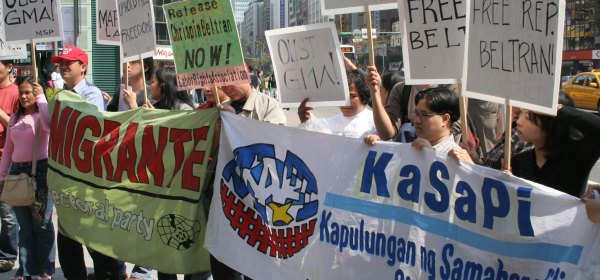
Written by Ratih Kabinawa. In an attempt to raise awareness about the lives of marginalised groups in Taiwan, the Taiwan Studies Programme at the University of Nottingham, U.K., organised a movie screening and discussion – Migrant Lives Matter: ‘Nine Shots’ – that showcased the dark side of migrant labour recruitment and employment in Taiwan. The film reveals some perspectives from different stakeholders, including labour advocacy networks, in addressing problems related to Taiwan’s labour migration system. Using the movie as a prompt, this article explores various advocacy networks and migrant labour movements in Taiwan. Why and how do these networks emerge and organise themselves? What are their motivations and activities? And how do these networks advocate for policy change and work to build solidarity to empower migrant workers?

The Child Welfare League Foundation’s Responses to the Government’s Childcare Policies for Children under five

Written by the CWLF.
In order to counter the declining birth-rate in Taiwan, in August 2018 the Executive Yuan enacted new childcare policies to support families with children aged zero to five. The new policies mainly consist of expanding the scale of public childcare services, establishing a set of mechanisms for quasi-public childcare providers, and raising childcare subsidies.