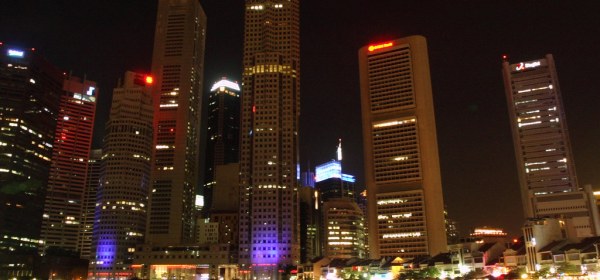
Japanese Colonial/Occupational Histories in the National Museums: A Comparison Between Taiwan and Singapore

Written by Pin-Yi Li. In the postcolonial Asian context, national museums reflect the countries’ colonial histories and their transformation, offering the country’s incumbent political elites the opportunity to reinvent or adjust the initial museum discourses framed by the colonisers. For example, respectively built by the Japanese and British colonial governments, both the National Taiwan Museum and the National Museum of Singapore are the oldest public museums in each country.

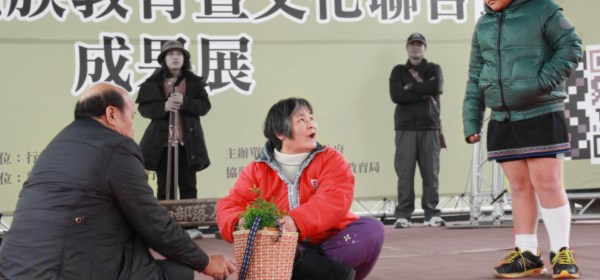
Roots and Routes in the Malay World and Beyond: Dialogues Between Singapore and Taiwan

Written by Doris Yang. In 2021, five artists/researchers from Singapore, Malaysia, and Taiwan gathered to present their project, The Malay World Project: Roots & Routes, in an online event held by Taipei Performing Arts Center. This event was inspired by a research project asking, ‘Where do the Malays originate?’ Not only did the project study the diaspora of Malay peoples around the Asia-Pacific, but it also created a space for dialogue between Taiwan’s Indigenous people and Malay in Singapore and Malaysia on the issues of identity and belonging. This article compares the advocacy experiences of Malay people in Singapore and Indigenous people in Taiwan. I argue that there is space to foster additional connections and collaborations between the civil societies among these two groups.

Exploring Migration Experiences of Young Taiwanese Migrant Workers in Singapore’s Service Industry Sector

Written by Chia-Yuan Huang. Unlike the so-called Taiwanese ‘elites’ or ‘talents’ who were headhunted by Singaporean companies with the highest-level employment pass, a number of recently-migrated young Taiwanese workers in Singapore are engaged in the service industry. Most work on a contractual basis, dispatched by an agency and hold the lowest-level work pass (hereafter WP), which has many restrictions.