
Written by Meng Kit Tang.
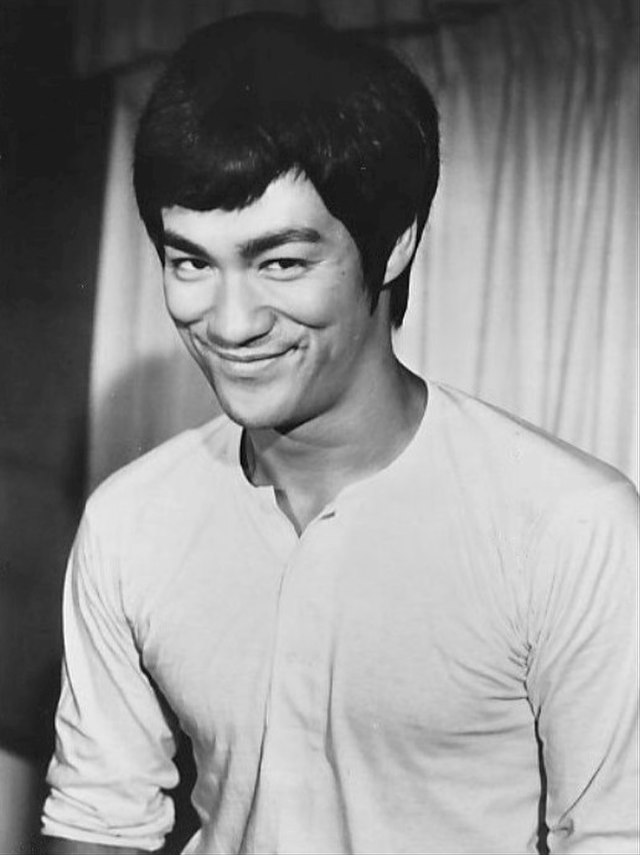
Image credit: Public domain.
Introduction: Why Bruce Lee Matters Today
Bruce Lee, known as 李小龍, was born in the United States, raised in Hong Kong, and grew to become a global icon of Chinese culture and pride. Yet, he was far more than a martial artist. He was a cultural philosopher, a symbol of resilience, and a bridge between East and West. His legacy crosses generations and national borders, inspiring millions worldwide. In a time when Taiwan faces an acute generational split over identity, with over 60 per cent of its youth now identifying as “Taiwanese only,” according to the National Chengchi University Election Study Centre in 2023, Bruce Lee’s life and philosophy offer a new path forward.
Taiwan’s identity crisis is compounded by waning confidence in Chinese cultural heritage and persistent political pressures from the People’s Republic of China. This divide threatens to alienate young people from their rich cultural roots and narrows the possibility of peaceful cross-strait engagement. Bruce Lee’s story and teachings offer a living model for rebuilding a modern, inclusive Chinese identity that is rooted in strength, openness, and dignity. He stands as a cultural reframer who can inspire unity and foster peace by emphasising shared heritage without coercion or political agenda.
Bruce Lee as a Cultural Reframer of Chinese Identity
Bruce Lee challenged the rigid and state-bound perceptions of Chinese identity that have long dominated political narratives. Rather than defining “Chineseness” solely by government or geography, Lee embodied an adaptable, open, and self-determined cultural identity. His life was a demonstration that Chinese identity can be philosophical, global, and evolving.
Drawing from Taoist principles, especially his famous teaching to “be water,” Lee merged ancient wisdom with modern creativity and global dynamism. He encouraged individuals to absorb what is useful and discard what is not, a philosophy that resonates deeply with Taiwan’s multicultural society, which embraces Holo, Hakka, Indigenous, and immigrant communities. Bruce Lee’s Chinese pride transcended boundaries, speaking to diasporic Chinese communities in Hong Kong, Taiwan, Southeast Asia, and beyond.
His impact in Taiwan is not just historical but ongoing. In the 1970s, his films were massive box office successes, ingraining him in popular culture. Today, his presence is still felt through martial arts schools, cinema, and youth culture, providing a continuous cultural thread linking generations.
A Youth Role Model for Strength and Cultural Confidence
Bruce Lee’s bicultural and globalised background mirrors the lived realities of many young Taiwanese people. They are rooted in tradition but are also increasingly connected to the world. Lee’s story empowers youth to embrace their complex identities without shame.
In a time when Asian masculinity was often stereotyped as weak or submissive in Western media, Lee broke these moulds. His portrayal of strength combined with dignity and self-respect redefined Chinese masculinity and became a beacon of pride for Asian youth everywhere. Yet, his legacy is much more than martial arts. It is about discipline, creativity, and authentic self-expression.
This philosophy remains relevant for education and personal development. Taiwanese schools, indie filmmakers, and youth philosophy groups can draw from Lee’s ideas to nurture confidence, resilience, and cultural pride among young people. Integrating his approach offers a way to move beyond simplistic or politicised notions of identity toward a richer, values-based self-understanding.
Bruce Lee’s Relevance to Taiwan’s Identity Crisis
Taiwan’s current youth overwhelmingly identify exclusively as Taiwanese, signalling a shift away from traditional Chinese identity. Bruce Lee offers a way to reconnect with cultural roots that does not carry political baggage or obligations to any regime. His example demonstrates that embracing Chinese cultural heritage and maintaining a Taiwanese identity are not contradictory but complementary.
The idea of a plural Chinese identity, one that Taiwan can claim is distinct from Beijing’s nationalist narrative, is vital. This identity is rooted in shared values, culture, and philosophy rather than political allegiance. Bruce Lee’s life and legacy embody this pluralism and inclusivity, offering a foundation on which Taiwan can build a confident, open Chinese identity.
Moreover, Lee’s appeal spans generations. He resonates with older Taiwanese familiar with martial arts culture as well as younger generations engaged in pop culture. This intergenerational connection creates a shared cultural ground that can foster dialogue and mutual understanding within Taiwan’s diverse society.
From Cultural Confidence to Cross-Strait Peacebuilding
Bruce Lee’s legacy presents a non-threatening and apolitical platform for empathy and dialogue across the Taiwan Strait. Unlike political symbols, his image and philosophy transcend official state narratives, making him a unique shared hero celebrated on both sides of the Strait.
This common heritage offers a starting point for peacebuilding initiatives that prioritise cultural unity over political division. For example, a Bruce Lee Youth Dialogue Camp could bring together young people from Taiwan, China, and Hong Kong to engage in martial arts training, film workshops, and philosophical discussions inspired by Lee’s teachings. Similarly, Taipei-Hong Kong film collaborations could produce youth-led documentaries exploring Lee’s legacy and identity, fostering a deeper understanding of shared culture.
Establishing a Bruce Lee Day in Taiwan, focusing on cultural strength and self-expression, could reinforce a sense of pride that is both local and transnational. These initiatives would build bridges not by erasing differences but by celebrating common heritage and human values.
Addressing Limitations and Counterpoints
It is important to acknowledge that Bruce Lee’s image has often been commercialised and simplified into kung fu clichés, which can obscure the deeper philosophical and cultural messages he championed. Restoring the full depth of his legacy requires emphasising his creativity, discipline, and philosophy rather than just physical prowess or spectacle.
Critics sometimes argue that Lee’s legacy embodies hypermasculinity, which can be exclusionary or reinforce gender stereotypes. However, Lee’s emotional strength, openness, and creative spirit challenge such narrow readings. His philosophy encourages emotional honesty and pluralism, values that align closely with Taiwan’s multicultural and inclusive society.
There are also sensitivities around the notion of “Chinese identity” in Taiwan. Some may see any invocation of Chinese culture as politically charged or threatening. Bruce Lee’s example clarifies that cultural pride can be entirely separate from political allegiance. His life affirms that values, history, and creativity can shape identity without being defined by authoritarian regimes or nationalist agendas.
Conclusion: A Cultural Blueprint for Unity and Peace
Bruce Lee stands as a dynamic, inclusive, and non-political symbol of Chinese pride for Taiwan and the wider diaspora. Taiwan has the opportunity to lead in reframing Chineseness as open, global, and values-based. This reframing can replace confrontation with shared heritage, allowing a confident, plural identity to flourish.
Policymakers should support youth-led cultural exchanges that use Bruce Lee as a symbolic bridge for cross-strait understanding. Educators can incorporate his philosophy into curricula that explore ethics, identity, and creativity. Cultural leaders should champion a Chinese identity that embraces Taiwan’s unique qualities while honouring shared traditions.
As Bruce Lee once said, “To express oneself honestly, not lying to oneself – that, my friend, is very hard to do.” Let this be Taiwan’s approach to identity: honest, strong, and grounded in shared cultural confidence. Like water, Taiwan can be both adaptable and powerful, proudly rooted in a cultural heritage that transcends politics and builds peace.
Tang Meng Kit is a Singaporean freelance analyst and commentator who works as an aerospace engineer. He graduated from the S. Rajaratnam School of International Studies (RSIS), NTU, Singapore in 2025.
 Taiwan Insight