Why Do Taiwan’s Environmentalists Oppose Renewable Energy Facilities?

Written by Ming-sho Ho. Upon winning the re-election in January 2020, Tsai Ing-wen’s Democratic Progressive Party government is set to realise the goal of abolishing nuclear energy by 2025. At the same time, they wish to raise the proportion of green energy in the electricity mix to twenty per cent. While the dream of “nuclear-free homeland” has been championed by Taiwan’s environmentalists for more than three decades, the top-down push for renewable energy has unexpectedly met some opposition from the same camp.

DocuSky and Digital Humanities Research

Written By Chijui Hu. Making masses of recourses accessible through digitisation is one of the core tasks for those wanting to promote digital humanities research. After twenty years of digitising archival efforts, Taiwan has amassed a sizeable digitised collection of primary materials and resources. Digital presentation of an indexing dataset in databases has facilitated far-reaching research work. However, the fact that each database has its own format and functions with its own tools makes it challenging to integrate material from multiple databases. That is, many materials have been digitised, but they cannot be used together.

Mapping the Development of Capitalism in Colonial War-time Taiwan Through New Digital tools 

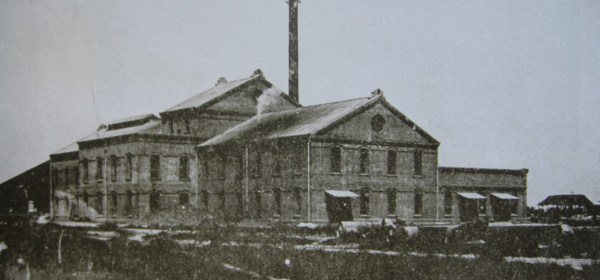
Written By Yueh-Cheng Tien. Establishing relations is a central feature in the research of humanities and social sciences. It also lies at the heart of most historical analysis—these relations concern how different individuals and institutions connect and influence one another. However, researchers often struggle to prove specific relationships due to the multitude of relations that exist concurrently, and the actual effect of these relationships can be hard to prove. This has led many historians to turn to digital and mathematical methods to model relations visually and statistically.

Preserving the History of the Present: Lessons from National Taiwan University Web Archiving System (NTUWAS)

Written by the team at NTUWAS. The 21st century is, of course, very much still ongoing. We have worked to preserve documents from defining events such as the 2003 SARS pandemic and the flooding that occurred in Southern Taiwan in 2008. Recently, we have been working on recording the digital history of the ongoing pandemic and have created a new event section titled “COVID-19”

Taiwan and 21st Century Chinese Realpolitik

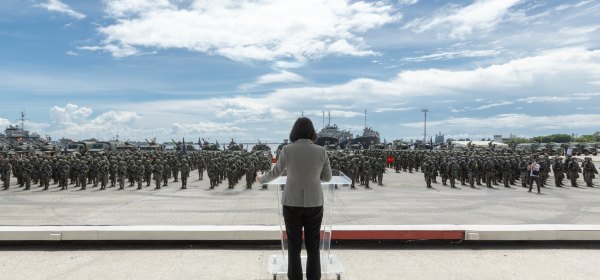
Written by Aidan Hall. The existence of China’s impressive military and economic strength is nothing new. It seems long ago that Beijing abandoned Deng Xiao Ping’s “hide your strength and bide your time” principle. To be sure, China is now more comfortable than ever being placed alongside the US and Russia as one of the world’s major powers. Awareness of China’s geopolitical significance is also nothing new (…) What is new, however, is China’s use of its military and economic muscle to improve its geopolitical position in profoundly aggressive ways.

Taiwan and the EU ‘safe list’

Written by Ian Inkster. It will now be well-known to our readers that the European Union has excluded Taiwan from ‘a safe list,’ which allows citizens unhindered travel to-and-fro the Eurozone. It is important to note that there is no obligation for the EU to give full, or even sensible reasons, for this decision. Still, we can nevertheless examine the evidence for ourselves.

Taiwan can help!

Written by Chun-yi Lee and Yu-ching Kuo. The world changed this year. Covid-19 appeared in the Chinese city of Wuhan, and gradually spread to Europe and the United States. At the time of writing (June 14), there are nearly 8 million confirmed cases of the virus worldwide. The global death toll is 431,225, with the United States suffering the most deaths (115,578). Yet Taiwan, a small, self-ruled island that is geographically close to mainland China, had seen only 443 confirmed cases and 7 deaths by June.

Taiwan’s Mask Diplomacy and the International Responses

Written by Najee Woods. In early April, President Tsai Ing-wen announced that the nation would donate 10 million masks to nations in need, particularly to the United States and European countries. These countries being the two hardest hit by COV-19. The news was welcomed by both the governments of the United States and the Europe Union. The U.S. Department of State lauded Taiwan for being a true friend in a time of need, while the European Commission President Ursula von der Leyen personally thanked Taiwan via her official Twitter account.

The KMT’s Shifting Attitudes on Tsai’s Mask Diplomacy

Written by Najee Woods (葉正忠). While Taiwan’s current mask diplomacy has been perceived as successful, the question arises: why doesn’t the KMT want the central government aiding those nations in dire need for masks? The party flip-flopping sends a mixed message to the international community that Taiwanese are not willing to lend a helping hand to combat COVID-19, which hurts the interest of all Taiwanese people, not just the ruling party. While the PRC health diplomacy is faltering, the international community has now begun to seek out Taiwan, allowing the island nation to lead the world in combating COVID-19.

Can Tsai Ing-wen Avoid the Second Term Curse?

Written by Kharis Templeman. If Tsai Ing-wen is superstitious, she should be worried: second term presidents in Taiwan appear to be cursed. Much like President Tsai, her predecessor Ma Ying-jeou started his second term on a confident and triumphant note. But over the next four years, he faced a relentless series of political crises, including an intraparty power struggle with Legislative Yuan Speaker Wang Jin-pyng, massive protests against the death of a military conscript and construction of a nuclear power plant, and of course the Sunflower Movement occupation of the legislature, which effectively halted cross-Strait rapprochement with Beijing.

1 27 28 29 30 31 58