Matsu Language: A Language Too Unique To Forget

Written by Kai-Yang Huang. In 2019, President Tsai Ing-wen signed the National Language Development Act and announced its implementation. For a long time, pragmatism has had a significant impact on Taiwan. People believe that by promoting the use of English to become a “bilingual country,” Taiwan will be able to keep up with the rest of the world. Little do they know that what distinguishes Taiwan in the international community is the very distinctiveness of Taiwanese cultures. As a result, the primary principle of promoting natural language as a national language is to re-inherit a local worldview that has been around for a long time. This will strengthen the worldwide competitiveness of Taiwanese college students. 
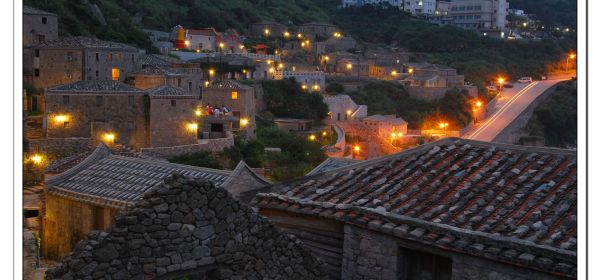
Matsu Migrants in Bade, Taoyuan City

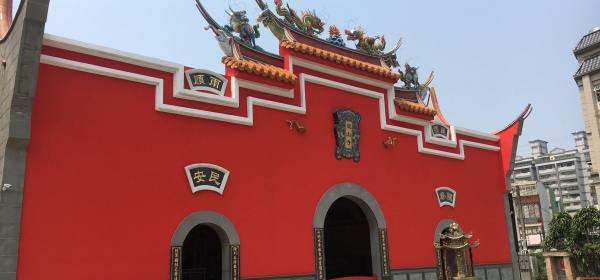
Written by Cheng-Chung Wang. In Taiwan, we rarely see Matsu in the textbooks, maps, or other materials we’ve been exposed to since childhood, let alone how much we know about Matsu people. Some of us may be unaware that there are many descendants of Matsu migrants living around us. Their moving and settling experiences are very attractive stories that deserve to be told. 

Two Hong Konger Projects on Taiwanese Soil: A Personal Encounter

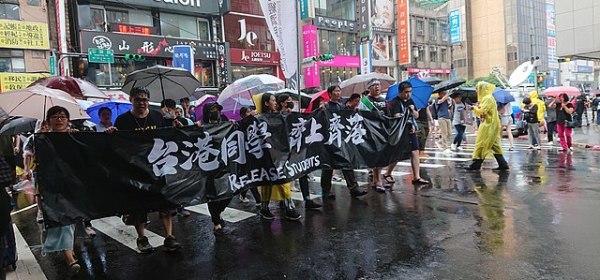
Written by Judy Lee. I very well understand why he considers Taiwan a promising base for the initiative—a general acceptance of Hong Kong and Hong Kongers as an individual entity in its own right, favourable geographical location for necessary shipments and visits, highly-educated Traditional Chinese users ready to provide assistance…; but most importantly, just as in my own case, it is the generosity and amicability that Taiwan people offer that encourages continuous work and cooperation towards a more comprehensive narrative for the Greater China area.

Care work in Singapore and Taiwan: Beyond ‘Migrant Maids’ and Female Employers

Written by Lynn Ng Yu Ling. From the domestic caregivers in both locations, I gather that although there are important differences in the hiring criteria for employers, the root problem of employers having the upper hand in an asymmetrical working relationship remains unresolved. On the whole, it is harder for Taiwanese families to hire a ‘migrant maid’ (wai yong) than in Singapore, and several differences in the hiring process seem to indicate that Taiwan treats home care more seriously.

A Great Linguist with a Scientific Mind and Poet’s Soul: In Memory of Professor Robert Blust

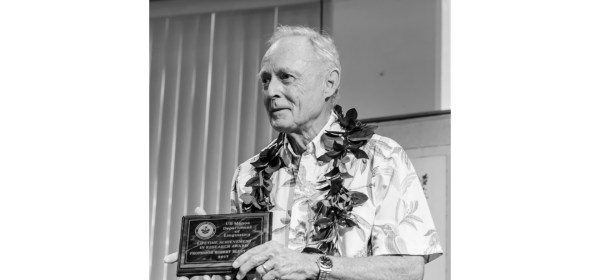
Written by Hsiao-Chun Hung. Professor Robert (Bob) Blust was a world-renowned linguist whose contributions will be sorely missed by his many colleagues. Bob’s ideas sometimes provoked controversy. Small groups sometimes seek fleeting moments of fame in academia by targeting well-known scholars, often without sufficient or relevant supporting evidence. This approach attracts attention as a “newsworthy” difference of opinion, at least temporarily, until it can be dispelled. Facing such challenges, Bob consistently retained stoic confidence in his scientific methodology, regardless of the enthusiasm of his critics.

Saving an Ageing Industry by Employing Migrant Workers: The Legalisation of Agricultural Migrant Workers in Taiwan

Although 2022 may be seen as the continuation of the Covid-19 pandemic worldwide, it has also marked the third year after Taiwan opened its agricultural labour market to Southeast Asian workers. It is widely known in Taiwan that small tenant farmers in the vegetable, fruit, and tea sectors and livestock farmers have been challenged by chronic shortages of seasonal labour.

Taiwan’s Migrant Workers Versus Labour Brokerage System 

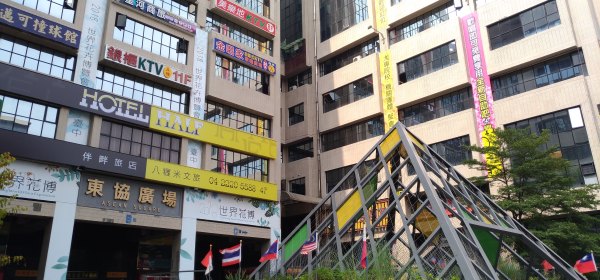
Written by Huynh Tam Sang and Wen-Chin Cheng. Taiwan’s labour brokerage system has made migrant workers vulnerable to a myriad of untransparent fees. Under the current system, migrant workers must pay hefty fees, including service fees and related pre-employment fees for migrant labour agencies or brokers, adding up to the total amount ranging from NT$60,000 to NT$200,000. To make matters worse, the current system has allowed brokers to charge migrant workers a monthly recurring fee, from NT$1,500 to NT$1,800. The “service fee”, according to Taiwan’s Ministry of Labour, is used to arrange work and daily life for migrant workers. However, brokers or agencies charge employers “very few or no fees”, shifting the disproportionate financial burden onto migrant workers.

From Taiwan to Macau in 16 Years: A Domestic Worker’s Migration Biography

Narrated by Yosa Wariyanti, written by Isabelle Cheng. I have spent a total of 16 years abroad. When we return home, we have our savings, and we may open businesses. But businesses do not always go well. It is difficult for us to find jobs because we do not have good education or professional certificates. No one would hire us. Soon my daughter will go to university. I want to give her a good education. I need to work for at least another five years to pay for her tuition fees. So, I will just go on, and on, and on working abroad.

The “Lost Outlying Island” of the Tachen Diaspora

Written by Kai-yang Huang. As Taiwan’s identity debates are slowly eking towards a consensus, it is essential to also pay attention to the diverse marginal voices of the people of Taiwan. Thus, because discourse about Taiwan as a “maritime nation” is increasingly common, more attention has been paid to marine conservation—for example, the IOC established the Maritime Protection Agency and has preserved traditional fishing techniques (for example, the Marine Science Museum exhibits traditional Han fisheries). For the Tachen diaspora, the ocean has long been an important part of their customs and a poignant reminder of their forced migration from their homeland due to the Chinese civil war and their subsequent migration to the United States. Supposing that Taiwan perceives itself as a “maritime nation.” In that case, these narratives deserve a place in Taiwan’s modern historical understanding.

The Penghu Migrants Behind Kaohsiung’s Post-war Boom

Written by Tshinn-Hun Miguel Liou. Strictly speaking, there’s nothing inherent about the connection between the people of Kaohsiung and Penghu, and the route that many people from Penghu took from Kaohsiung was often more treacherous than the path for those emigrating within Taiwan. However, the consensus linking people from these two places should give pause for thought. So, why is Kaohsiung the first choice for people from Penghu who move to Taiwan? 

At the Edge of State Control: The Creation of the “Matsu Islands”

Written by Sheng-Chang Lin. As well as creating Matsu as a region, the Cold War also tied Matsu to Taiwan. Communication had been minimal between the two before the war—Taiwan was a colony of Japan, whereas Matsu was part of Fujian—but not both regions were part of a new post-war state. Especially due to the prosperity on Taiwan Island, migration from Matsu to Taiwan has become increasingly common. Nowadays, the Bade district of Taoyuan City(桃園市八德區) and Keelung City (基隆市)are known for their large Matsu population.

1 2 3 4 5 9