Climate Change Adaptation in Taiwan: Empowerment Workers and Mental Health Challenges in Post-Morakot Reconstruction  

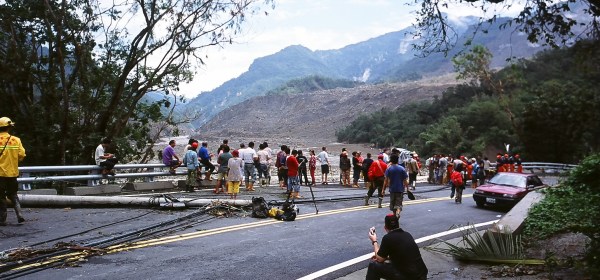
Written by Tzu-Ming Liu. Based on the author’s experience participating in reconstruction after the 2009 Morakot Typhoon, this article focuses on the role of disaster companions (empowerment workers) who connect disaster victims with external resources, highlighting the need for their mental health support for companions and strengthened communication with the government.
Envisioning Migrant Worker Policy: Toward Dignity and Well-being 

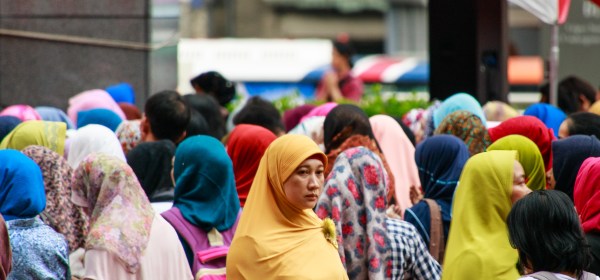
Written by Hang-Tang Chen; translated by Yu-Chen Chuang. Taiwan needs to refine its migrant worker policies to focus not only on labour contributions but also on the well-being and dignity of the workers. Personal stories of migrant workers in this article reveal the necessity for comprehensive policies that address the physical and mental health needs, acknowledging the humanity behind the workforce.

An Unconventional Networking Workshop: Self-care, Wellness and Community 

Written by Yung-Ying Chang. In 2021, amid the global pandemic and the sheer transformation of lives that followed, the North American Taiwan Studies Association’s (NATSA) annual conference launched its first-ever mental health-centred networking session, “Networking? Or Working on Your Net: Care Companions & Love Objects for Mental Health.” The unconventional session invited participants to use the time during an academic conference to work on something that was not purely academic: participants shared their life setbacks and frustrations not only in academia as scholars but also in life as the various roles they have assumed in response to various expectations.

Health Issues Facing Tongzhi/LGBTQ+ People in Taiwan 

Written by JhuCin Rita Jhang, Ph.D. The possibilities to study tongzhi/LGBTQ+ health are endless. Tongzhi/LGBTQ+ issues are a chance to reexamine existing power structures, assumptions, beliefs, and biases and challenge exclusive and even oppressive systems. Suppose Taiwan pledges to adhere to international human rights standards and aspires to be the leader in tongzhi/LGBTQs rights in Asia. In that case, we cannot afford to ignore tongzhi/LGBTQ+ (nor anyone else) in health, medicine, and social policies.  

Falling Through the Cracks of Care: Southeast Asian Migrant Workers Navigating Through Healthcare in Taiwan

Written by Shao-Yun Chang (張韶韻) and Hang-Tang Chen (陳翰堂). Since their labour was first viewed as a supplement to the domestic labour market, Southeast Asian migrants have become indispensable to the manufacturing, agricultural, fishing, and care industries over the last three decades. While the initial foreign population was primarily Thai and Filipino workers, Vietnamese and Indonesian workers are now taking over factory jobs, farm work, and caring for seniors and the disabled. 

Mindfulness in Taiwan

Written by Chung-Wei Lin Mindfulness originated from the early Buddhist classics referred to as “Samyukta-Agama” and “Satipaṭṭhāna Sutta”. Mindfulness are those teachings of the Buddha that were handed to the disciples, and which Buddhists believe are the direct path to realization. Mindfulness has four steps: mindfulness of the body