DETENTION OF TAIWANESE PRO-UNIFICATION ADVOCATE IN CHINA FOR OVER 420 DAYS RAISES WORRYING POSSIBILITIES

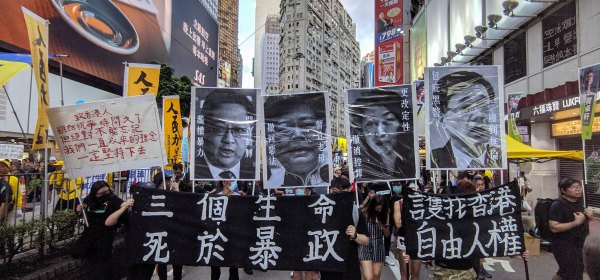
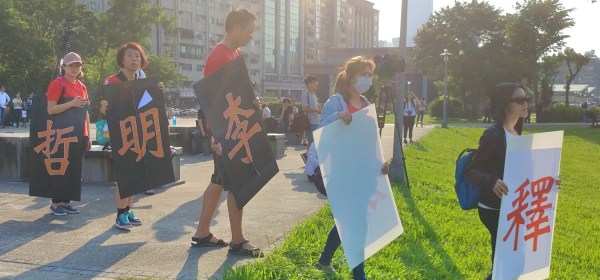
Written by Brian Hoie. Caution seems necessary for Taiwanese traveling to China going forward, then. There are at least three cases of Taiwanese held in China—if not more—on charges of endangering the state security of the Chinese government. At this point, whether pro-independence or pro-unification, it seems that simply being Taiwanese could possibly be sufficient cause for arbitrary detention by the Chinese government.

Reserved For Whom? The Shifting Dynamics of Indigenous Voting Behaviour in Southern Taiwan

Written by Daniel Davis. In next year’s legislative elections both the KMT and DPP are hoping to secure a majority, but after the shock results of 2018 and the growing number of small parties, every seat seems to be contested. The seats held by indigenous legislators, traditionally seen as iron votes for the KMT and pan-blue parties, have also become an open contest and could play a pivotal role in the outcome of the elections.

The Fight for Third Place: Minor Parties in the 2020 Election

Written by Gray Sergeant. A Green Party Taiwan (GPT) poll early this month showed President Tsai commanding a substantial lead over her KMT rival, Kaohsiung Mayor Han Kuo-yu, in a head-to-head race. Although the eighteen point advantage to Tsai and the DPP is strikingly large, it does fit in with general polling trends over the past few months showing Mayor Han’s slumping popularity. This same survey also asked respondents how they would vote in the island-wide party ballot for the country’s Legislative Yuan. Here the DPP lead crumbled with only 25% voting for the governing party, while 35% for the KMT.

Taiwan’s Independent Labour Movement is at a Crossroads

Written by Santanu Sarkar and Mei-Chun Liu. The independent labour movement is at a crossroads. The DPP’s campaign for independence will reduce jobs as the mainland will curb exports and investment in Taiwan, whereas defending unification will rob Taiwanese jobs as the mainland friendly KMT will not hesitate to liberalise the economy so that the outflow of foreign investment increases alongside privatisation.

Taiwan’s 2020 Elections: Too Many Unknowns and Incalculables

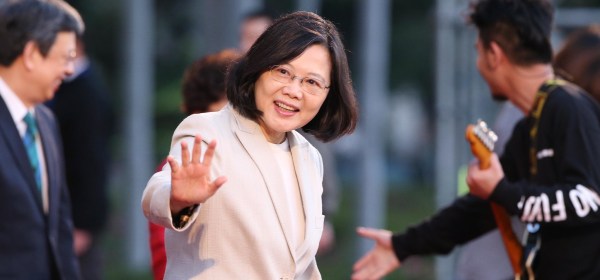
Written by John F. Copper. In July, Taiwan’s two main political parties, the ruling Democratic Progressive Party (DPP) and the opposition Nationalist Party (Kuomintang or KMT), held primaries to select their presidential candidates for the coming election. President Tsai Ing-wen won for the DPP. Kaohsiung Mayor Han Kuo-yu will represent the KMT. At that juncture, pundits opined that January 11, 2020 would be a seminal event or “election of all times”. They said that the prevailing issue and one that cleaves Taiwan’s soul in half is independence versus unification. Clearly the two candidates mirrored the two sides of this seeming irreconcilable difference.

What is the Role of New Residents in Taiwan’s Next Elections?

Written by Lara Momesso.
As Taiwan’s presidential and legislative elections approach, major and minor parties are busy defining their agendas, electoral campaign strategies, and potential interest groups. New immigrants have emerged as an increasingly important constituency in Taiwanese political debate In January 2016, new immigrants with Taiwanese citizenship comprised 1.33% of the total electorate. Although this does not yet constitute a major constituency, the portion is predicted to increase next year.

Effects of local traditional culture and workstation locations on conserving green sea turtles

Written by Tzu-Ming Liu. The traditional culture of the local aboriginal Tao tribe on Lanyu Island has a very strong cultural taboo regarding the Green Sea Turtles. Their habitat is close to the local population’s traditional cemetery and the area is regarded as the living space of evil spirits. The organisms living in these areas, such as green sea turtles, are believed to have devil spirits.

From Miracle to Bottleneck: the Future of Municipal Solid Waste in Taiwan

Written by Natalie Wong.
The economic boom and intensive urbanisation of the late 1970s generated a mountain of garbage in Taiwan. Improper waste disposal and poor municipal solid waste management (MSW) led to sanitary problems and environmental pollution. Although the Taiwanese government implemented a municipal waste policy in 1984, the citizens protested industrial landfills and open dumping sites for years. Later, the Taiwanese government implemented a recycling and waste scheme and the volume of waste was successfully reduced.

The Median Line in the Taiwan Strait: A Dangerous Loophole

Written by R. D. Cheng. On March 31, People’s Liberation Army Air Force (PLAAF) warplanes flew across the “median line” in the Taiwan Strait that has long served as an unofficial airspace boundary between Taiwan and China. This behaviour was unusual and provocative move on China’s part — the first time in 20 years that such a deliberate incursion took place.

Ivan Karamazov with a Maoist Face: Guo Songfen’s Book Collections and Third World Existential Marxism

Written by Po-hsi Chen. Guo’s concern resembled the philosophical rendition of the post-war Czechoslovakian ‘socialism with a human face’, which emphasised individual freedom and personal choice under the Soviet regime. Indeed, Guo passingly referred to ‘Second World’ Eastern European communist theorists’ re-reading of Sartre in the post-Stalin context.

1 71 72 73 74 75 93