Tsai’s Triple Stimulus Voucher Programme and a Missed Opportunity

Written by Chieh-chi Hsieh. After the Democratic Progressive Party (DPP) Government’s astonishing policy responses in containing the outbreak of COVID-19, the new battleground that would determine the trajectory of President Tsai Ing-wen and her Government’s approval rate lies in their ability to revitalise Taiwan’s economy. With the official launching of the “triple stimulus voucher” (三倍券) programme in July, it provides a good opportunity to evaluate the underlying rationale for this economic stimulus package and why it was a missed opportunity for Tsai to further her green agenda.

Taiwan and the EU ‘safe list’

Written by Ian Inkster. It will now be well-known to our readers that the European Union has excluded Taiwan from ‘a safe list,’ which allows citizens unhindered travel to-and-fro the Eurozone. It is important to note that there is no obligation for the EU to give full, or even sensible reasons, for this decision. Still, we can nevertheless examine the evidence for ourselves.

Tsai’s Second Term and Rethinking Lee, Chen and Ma

Written by Mark Wenyi Lai. What will President Tsai Ing-wen do in her second term? To answer this question, this essay reviewed three previous Taiwanese Presidents’ second terms and attempted to assess how Tsai and Taiwan politics operate in 2020-2024. Tsai is the most formidable Taiwanese President of the last thirty years. Her unprecedented political clout contributes to seven explanations as to why this is the case.

Han Revoked: Wither the Kuomintang?

Written by Chieh-chi Hsieh. On 6 June 2020, Kaohsiung Mayor Han Kuo-yu suffered a devastating defeat in the recall election with almost 940,000 ballots agreeing to remove him from office after just 18 months since his inauguration. What are the underlying reasons for Han’s abrupt rise and fall over two years? What are the political implications of Han’s recall for not only the Kuomintang (KMT) but also the development of Taiwan’s democracy?

Power Dynamic Reshuffles in the Green and Blue Camp Following Tsai’s Re-election

Written by Milo Hsieh. In January, Taiwan saw the re-election of its DPP President Tsai Ing-wen. The January election, which saw the DPP once more taking a firm majority in the Legislative Yuan, was a victory for the DPP that also gave rise to smaller parties. The KMT, taking lessons from its defeat, went on to reposition its policy on cross-strait issues with the election of a new party chairman.

Tsai’s Second Term and the Taiwan Strait: Greater Clarity, Same Challenges

Written by J. Michael Cole. The first four years under the Tsai Ing-wen administration have brought greater clarity regarding Beijing’s attitude toward Taiwan and its democracy. Although in the months prior to her inauguration on May 20, 2016, it was still possible to imagine that the two sides could find a modus vivendi despite Beijing’s longstanding antipathy toward the Democratic Progressive Party, Beijing almost immediately adopted an unforgiving course of action which soon poisoned the relationship.

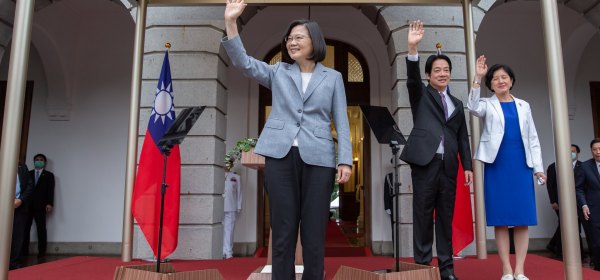
President Tsai Ing-wen Post-Re-election: A Six-Month Report Card

Written by John F. Copper. Nearing the half-year point in her second term as president it is fitting to ask: how is President Tsai faring? It is a good time for a report card. On January 11, President Tsai won a resounding re-election victory over her KMT opponent Han Kuo-yu, the Mayor of Kaohsiung. Her party, the Democratic Progressive Party (DPP), also secured a majority in the concurrent legislative vote, though it was not as impressive as Tsai’s win

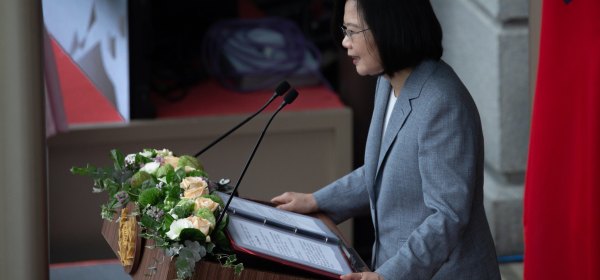
Tsai Ing-Wen’s Inaugural Address for the Second Term: “Unprecedented Challenges and Unparalleled Opportunities”

Written by Qi Dongtao. As usual, Tsai Ing-wen’s inaugural speech on May 20 maintained her low-key, down-to-earth style without much surprise. From Beijing’s perspective, since she did not explicitly accept the “one-China principle” in the speech, she failed Beijing’s so-called “exam” again and therefore was severely criticised by Beijing. But since Beijing had already concluded that she would never openly accept the “one-China principle,” her speech did not surprise Beijing.

Prospects for President Tsai Ing-wen’s Second term

Written by Gerrit van der Wees. Her overwhelming victory in the elections already gave President Tsai Ing-wen a solid mandate to push domestic reforms with greater vigor, while the country’s excellent performance in combating the Coronavirus crisis gave Taiwan an unmatched international visibility, which will help in pushing back against China’s mounting political and economic aggressiveness.

‘Tigertail’ Missed These Opportunities to Tell Taiwan’s History

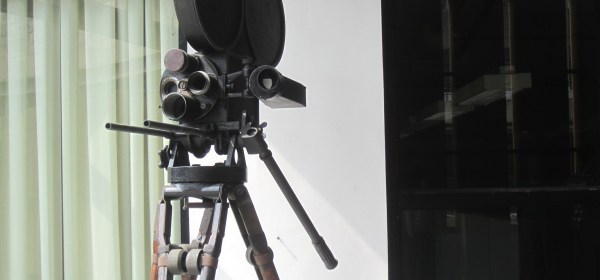
Written by Milo Hsieh. Alan Yang’s first feature film, Tigertail, recounts the tale of Pin-jui, a Taiwanese immigrant estranged from his family after arriving in New York. The Taiwanese backdrop sets the film apart from The Farewell, which also captured attention with its Asian American immigrant narrative. This has heightened expectations among Taiwanese and diaspora audiences for a film that portrays Taiwan not as a generic East Asian country but one with a unique culture and history.

The Memeification of Chen Shih-chung

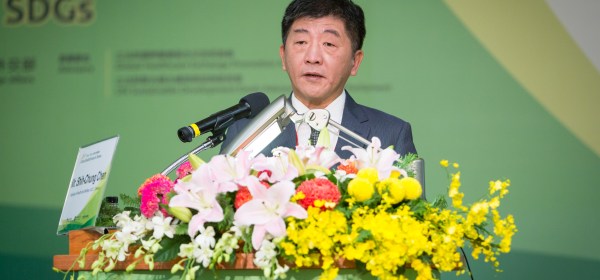
Written by Sam Robbins. Currently, if you visit the Department of Sociology at National Taiwan University, you will be greeted by a cartoon cut out of Taiwan’s Minister of Health and Welfare, Chen Shih-chung (陳時中). The Cartoon tells you to use your card to buzz in and to get your temperature checked. If you are a user of popular social messaging app Line, you can now download a package of cartoon stickers of Chen accompanied with messages like, “stand together and defeat the virus” (團結對抗,戰勝病毒).

Taiwan’s COVID-19 Success: More Than Just a Number

Written by Ratih Kabinawa. In a time of crisis, such as during pandemic, temporary migrants are typically subject to discriminatory policies and are considered society’s second-class members. The government will likely prioritise the health and safety of its citizens instead of temporary migrants, who stay for a short time either for studying or working. In Australia, for example, the prime minister, as well as the premiers of each state, have mentioned several times in their public statements on COVID-19, the need to give top priority to Australian citizens and permanent residents. Taiwan has taken a different approach.

1 11 12 13 14 15 22