Referendums and Their Relationship to Taiwan’s Politics

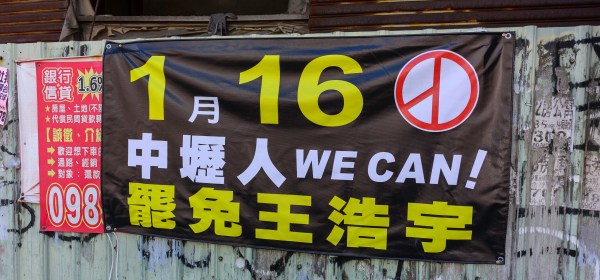
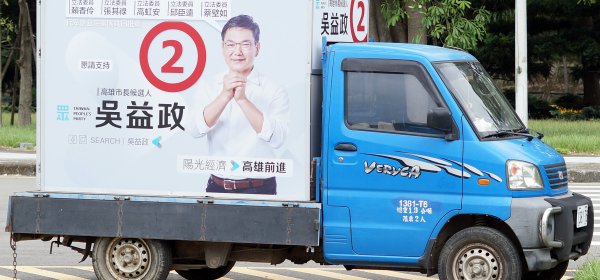
Referendums and Their Relationship to Taiwan’s Politics Written by Chia-hung Tsai. Perhaps the biggest challenge for the DPP is the import of the US pork referendum. However, the KMT argues that the referendum targets every pork product containing ractopamine, which is used to enable animals to grow larger and leaner. This drug is currently legal in the US but banned in Taiwan. Many polls show that most people agree to ban meat containing ractopamine, partly because food safety is a salient issue in Taiwan, especially after the gutter oil incidents in 2014. The DPP seems to frame this referendum as the plebiscite on whether Taiwan would ally with China or US.

The History and Significance of Referendums in Taiwan

Written by John F. Copper. On December 18, 2021, a four-question referendum will be presented to voters in Taiwan. The first question deals with constructing a receiving terminal for natural gas on Taoyuan’s Datan Algae Reef. The second is about importing pork from the United States that may contain a possible dangerous additive. The third concerns the activation of the Lungman Nuclear Power Plant. Finally, the fourth allows, or rejects, referendums being held together with general elections.

Making Sense of Taiwan’s Invitation to the Summit for Democracy

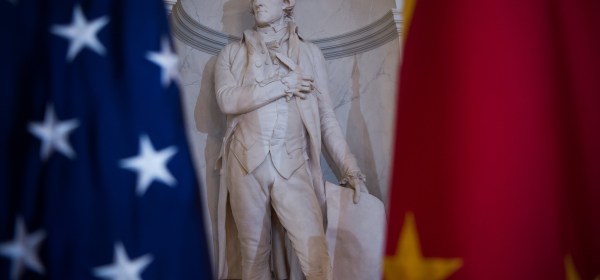
Written by Charles K. S. Wu, Austin Horng-En Wang, Fan-Yu Chen, Yao-Yuan Yeh. Amidst the latest series of actions that draw China’s ire, the U.S. officially invited Taiwan to participate in an inaugural Summit for Democracy along with 109 states. Though the summit has several major themes for discussion on its agenda, including defending against authoritarianism, fighting corruption, and promoting human rights, many observers would agree that the convention is primarily symbolic and would not deliver substantial policy changes among the participants.

What Does the Summit for Democracy Tell Us About U.S.-Taiwan Relations?

Written by John W. Tai. The Biden administration just concluded its first Summit for Democracy. Prior to the event, the world took notice that Taiwan was among the 111 countries invited, but much to China’s ire, the latter was not. This invitation is the latest in a series of moves that seems to demonstrate Washington’s determination to upgrade its ties with Taiwan. In this context, what should we make of Taiwan’s participation in President Biden’s signature event? What does it mean for U.S.-Taiwan relations?

Taiwan’s international space: expanding or contracting? Shining at the Summit for Democracy but losing Nicaragua

Written by Gerrit van der Wees. December 9 and 10, 2021 proved to be an interesting moment for Taiwan’s international space: on the one hand the country was invited to President Biden’s Summit for Democracy in Washington, where Digital Minister Audrey Tang gave a stellar performance in showcasing how Taiwan has enhanced its democracy in spite of the threats posed by China, and the hardships caused by the Covid-19 pandemic. On the other hand, on December 9, 2021 it was announced that Nicaragua was switching its diplomatic ties from Taipei to Beijing, reducing the total number of formal diplomatic ties down to fourteen.

Unrecognised Indigenous Groups of Taiwan and their Struggle for Language Revival

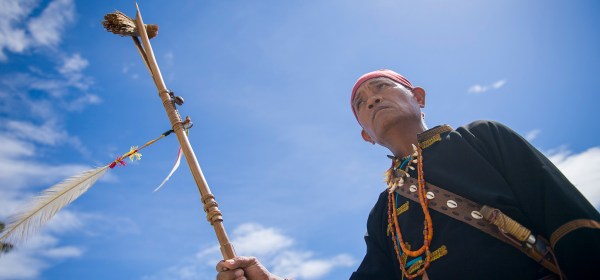
Written by Barnaby Yeh. Nearly all Plains Indigenous language advocates emphasize the importance of recognition from the national government. As summarized by Kaisanan Ahuan, a Taokas activist from Puli, lack of government recognition is the primary obstacle to a full-fledged revival. “Because Plains Indigenous are not nationally recognized as Indigenous people, their languages are not national languages. Therefore, we cannot teach our mother tongues under the national education framework.

A Bilingual Nation? What are the Efforts from Southern Taiwan Stakeholders?

Written by Brian Doce. In 2018, Taiwan President Tsai Ing-wen announced the government’s objective to transform Taiwanese society into a bilingual nation to elevate the English fluency of the Taiwanese people and upgrade the country’s national competitiveness. Looking at the current blueprint published by the National Development Council, the plan’s enumerated key performance indicators (KPI) show a government-centric outlook by emphasising the simultaneous use of Mandarin and English by government agencies for respective services.

The Global, the Local and Intercultural Communicative Competence in Taiwan

Written by Jenna Lynn Cody. Since its inception, the “Bilingual by 2030” initiative has drawn widespread criticism, primarily focused on a single titular keyword: bilingual. Social media posts citing “Mandarin” and “English” as the target languages of “Bilingual by 2030” by Vice President William Ching-te Lai certainly didn’t help. An initial focus on the possibility of making English a “second official language” in Taiwan and a failure to assuage worries that everyone would be forced to learn English made matters worse.

The Problem of Naming the Most Popular Non-Mandarin Language Used in Taiwan

Written by Hung-yi Chien. There seems to be no problem with saying “Taiwanese” or “Taigi” in English. People know Taiwanese is the most spoken non-Mandarin language in Taiwan, and Taigi (Tai[wan] language) is how the language calls itself. However, these names give a false impression that Taiwanese is the only language that genuinely belongs to Taiwan and neglects the existence of Hakka and indigenous languages in this culturally and ethnically diverse country. Hakka activists have complained about the name Taigi for decades. They urge to use other names to call this language and reserve Taiwanese/Taigi for all languages spoken in Taiwan. The Taiwanese/Taigi fellows do not welcome this proposal because there is no agreement on how to call this language if Taiwanese/Taigi is not an option. Up until today, the name of the most spoken non-Mandarin language in Taiwan is still in dispute.

The Dangers of a One-dimensional View of life and nation

Written by David Pendery. Nigerian Chimamanda Ngozi Adichie has spoken of “the danger of a single story” and how such one-dimensional narratives can preclude us from understanding other peoples and nations, leading to misunderstanding and misrepresentation. These stories can stereotype others, and, Adichie argues, single stories often stem from confusion and a lack of familiarity with other peoples. At worst, these stories often have a malicious intent to suppress other groups, but they are also simply misconceptions and misjudgments. She says that our lives and cultures are composed of many overlapping stories.

1 66 67 68 69 70 137