Desired Female Care Labour, Undesirable Migrant Care Workers, and Their Unwanted Reproduction

Written by Isabelle Cheng. [Migrant] men can’t produce babies, but women can. We can’t allow foreigners to give birth in Taiwan and breed more foreigners […] It is indeed inhumane to repatriate a pregnant woman. However, even permitted to give birth in Taiwan, she and her child would have to be deported eventually. It is even more inhumane to break her family and separate the child from the [Taiwanese] father after they’ve developed bonds (the Legislative Yuan, 17 April 1992, Taipei).

As Taiwan Develops, can Racism and Discrimination be Avoided?

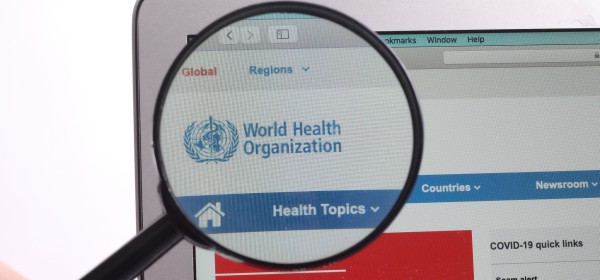
Written by Milo Hsieh. To what degree is race-based discrimination an issue in Taiwan? The answer may differ depending on those asked. To the World Health Organization Director Dr Tedros Adhanom Ghebreyesus—who was made into an effigy by anonymous Taiwanese comic artists in April over the WHO’s continued exclusion of Taiwan—yes, Taiwan’s government allegedly sponsored racist attacks against him. One the other hand, to the group of Taiwanese influencers—who came under attack later in June after wearing blackface to imitate the dancing coffins viral video—no, as clearly many in Taiwan overreacted.

Taiwanese Identity and Racism in Taiwan

Written by Chieh-chi Hsieh. When the impact of COVID-19 was at its height in Asia this April, the director-general of the World Health Organisation (WHO), Dr Tedros Adhanom Ghebreyesus, publicly accused Taiwan of continuously attacking him with racist slurs for months. Although these accusations have been proven to be false, with the ongoing Black Live Matters campaign taking place, it does give a good opportunity to reflect on whether racism exists in Taiwan. More importantly, how this contributes to the formation of Taiwan’s identity in the contemporary epoch.

Is Taiwan Covering over Contemporary Issues of Racism with a Veneer of Multiculturalism?

Written by Brian Hioe. Over the past four years, it has become a refrain of the Tsai administration to tout Taiwan’s increasing diversity. Namely, given increased immigration to Taiwan from Southeast Asia, one in ten children in Taiwan has a foreign parent. This is a fact that Tsai and members of her administration have taken to frequently citing, often during occasions in which Taiwan is visible on the international stage.

Today Hong Kong, Tomorrow Taiwan”: Taiwan’s Strategic Conundrum

Written by Ferran Perez Mena. During the past year, the Hong Kong protests, along with the newly approved National Security Law, have generated much anxiety in Taiwan. They have been perceived by both the DPP’s political elite and the Taiwanese public as a premonition of what lies ahead for Taiwan. One of the popular slogans of the protests, “Today Hong Kong, Tomorrow Taiwan” (今天的香港,明天的台灣), perfectly epitomises the widespread unease that such political events are producing and the apparent inevitability of Taiwan’s downfall.

China Impact, Income Inequality and Its Discontents in Taiwan

Written by Thung-Hong Lin. In March 2014, the Sunflower Movement, a student-led protest to oppose the Cross-Strait Service Trade Agreement (CSSTA), shocked the Taiwanese public. For 24 days (March 18–April 10, 2014), Taiwan’s legislature was paralysed by protesters occupying the chamber, nearby roads and surrounding alleys, which prevented their eviction by police. The protesters claimed that the CSSTA would favour large companies investing in China, damage local small and medium-scale enterprises’ (SMEs) business and have a devaluing effect on local labour’s wages.

Pandemic, Labour, and Inequality

Written by Chin-fen Chang. As an export-driven economy, Taiwanese manufacturing has suffered a sharp drop in demands overseas during the first half of this year. Local businesses in Taiwan have also been affected by a lack of foreign tourists. Moreover, Taiwanese have been self-restrained in their consumption, suffering from income loss or concerning worse financial conditions to come in the near future. Labour markets also show significant job losses along with cutting regular earnings for those fortunately still on the payroll.

Moving Toward a More Inclusive Society: The Educational Policy of New Immigrant Children in Taiwan

Written by Dorothy I-ru Chen. Ethnocentrism is often found in a highly homogenous society like Taiwan. There have been stereotypes and bias against new immigrant children over the years. Studies conducted in the early days suggested that these children’s academic achievements were lagging. Moreover, these studies failed to recognise the problem may lie within schools which are not capable of meeting the needs of children from diverse cultural backgrounds.

Welfare State System Development in Taiwan: The Causal Determinants of the Past and the Future

Written by Christian Aspalter. Taiwan today has a relatively comprehensive welfare state system due to the work of Lee Teng-Hui and millions of Taiwanese. These citizens pushed the very same man to open and safeguard the process of democratisation back in the late 1980s, and to set up the first major system of the Taiwanese welfare state, the universal National Health Insurance, back in 1996. Lee listened to what people wanted, and that means all of the Taiwanese people, not just the elite, the ancient regime of the Kuomintang (KMT) or the business tycoons. Other leaders behaved quite differently.

Social Inequality, Score Ladders, and College Choice in Taiwan’s Expanded Higher Education

Written by Ruo-Fan Liu. If you travel to Taiwan in February or July, you will probably hear people talk about their children’s exam scores in MRT stations, coffee shops, and traditional markets. These days, high schoolers are busy applying for colleges, sustaining admissions from selective universities, and hoping that what happens at this stage in their life will set themselves apart from peers in the future. Since the Taiwanese Government expanded higher education and diversified admission channels for different kinds of students, this process has become more complex, and admission rules are continually changing.

New Curriculum, Same Problems? Can the New 2019 High-School Curriculum Help Tackle Inequality?

Written by Yi-hui Lee and Kai-chieh Yang. As a result of geographic and economic factors, educational recourses have long been distributed unevenly in Taiwan. This has long caused some disquiet. The effect of this recourse inequality worsens at every stage of the education system and severely hampers class mobility. The new “school-determined curriculum,” which is so central to the 2019 curricula reforms, will change many of the compulsory class requirements for high-schoolers in Taiwan. With inequality being such a clear issue, it is essential to ask: what affect will this have on the uneven recourse distribution across schools?

More Channels, More Inequality? the Debate around University Admissions Reforms

Written by Jen-Chen Chao. Up until the 1990s, all university applicants in Taiwan were allotted university places based solely on their test scores on a standardised exam. This was generally seen as leading to a high-pressure environment in which students had to prepare endlessly for a high-stake test. Recent attempts by the Government have tried to alleviate some of this pressure whilst also promote the learning and developments of students.

1 88 89 90 91 92 134