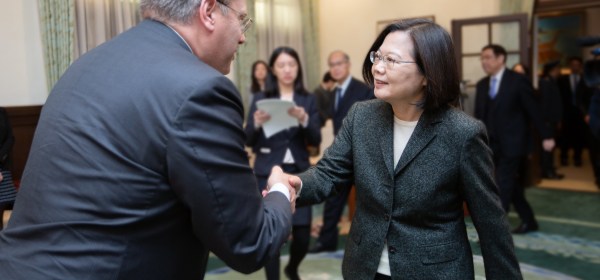
Tsai’s Second Term and Rethinking Lee, Chen and Ma

Written by Mark Wenyi Lai. What will President Tsai Ing-wen do in her second term? To answer this question, this essay reviewed three previous Taiwanese Presidents’ second terms and attempted to assess how Tsai and Taiwan politics operate in 2020-2024. Tsai is the most formidable Taiwanese President of the last thirty years. Her unprecedented political clout contributes to seven explanations as to why this is the case.

Han Revoked: Wither the Kuomintang?

Written by Chieh-chi Hsieh. On 6 June 2020, Kaohsiung Mayor Han Kuo-yu suffered a devastating defeat in the recall election with almost 940,000 ballots agreeing to remove him from office after just 18 months since his inauguration. What are the underlying reasons for Han’s abrupt rise and fall over two years? What are the political implications of Han’s recall for not only the Kuomintang (KMT) but also the development of Taiwan’s democracy?

President Tsai Needs to Choose her Allies Wisely in the Post-Pandemic US

Written by Fumiko Sasaki. The Trump administration has intensified its anti-China campaign. Consequently, rhetoric has been strongly pro-Taiwan. Due to the increased negative sentiment toward China in the U.S., the presidential candidate from each party will need to take a tough stance toward China to win the election. Regardless of the election outcome, President Tsai Ing-Wen should not anticipate such trends to continue and must be wise in aligning with allies inside the U.S.

Power Dynamic Reshuffles in the Green and Blue Camp Following Tsai’s Re-election

Written by Milo Hsieh. In January, Taiwan saw the re-election of its DPP President Tsai Ing-wen. The January election, which saw the DPP once more taking a firm majority in the Legislative Yuan, was a victory for the DPP that also gave rise to smaller parties. The KMT, taking lessons from its defeat, went on to reposition its policy on cross-strait issues with the election of a new party chairman.

Tsai’s Second Term and the Taiwan Strait: Greater Clarity, Same Challenges

Written by J. Michael Cole. The first four years under the Tsai Ing-wen administration have brought greater clarity regarding Beijing’s attitude toward Taiwan and its democracy. Although in the months prior to her inauguration on May 20, 2016, it was still possible to imagine that the two sides could find a modus vivendi despite Beijing’s longstanding antipathy toward the Democratic Progressive Party, Beijing almost immediately adopted an unforgiving course of action which soon poisoned the relationship.

President Tsai Ing-wen Post-Re-election: A Six-Month Report Card

Written by John F. Copper. Nearing the half-year point in her second term as president it is fitting to ask: how is President Tsai faring? It is a good time for a report card. On January 11, President Tsai won a resounding re-election victory over her KMT opponent Han Kuo-yu, the Mayor of Kaohsiung. Her party, the Democratic Progressive Party (DPP), also secured a majority in the concurrent legislative vote, though it was not as impressive as Tsai’s win

 A Commentary on President Tsai’s Inauguration Regarding Energy Policy

Written by Manuel Zehr. During her speech, President Tsai repeated and underlined her policy from four years ago. The Democratic Progressive Party’s (DPP) ultimate goal was always to win over voters by shutting down nuclear power plants in Taiwan. Besides keeping this former political promise, renewable energy has the positive side effect of reducing energy imports, which is currently at 97.8%. This is important as China could cut off economic and life support lines at any time.

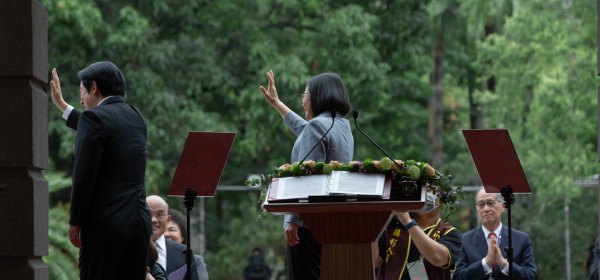
Tsai Ing-Wen’s Inaugural Address for the Second Term: “Unprecedented Challenges and Unparalleled Opportunities”

Written by Qi Dongtao. As usual, Tsai Ing-wen’s inaugural speech on May 20 maintained her low-key, down-to-earth style without much surprise. From Beijing’s perspective, since she did not explicitly accept the “one-China principle” in the speech, she failed Beijing’s so-called “exam” again and therefore was severely criticised by Beijing. But since Beijing had already concluded that she would never openly accept the “one-China principle,” her speech did not surprise Beijing.

Prospects for President Tsai Ing-wen’s Second term

Written by Gerrit van der Wees. Her overwhelming victory in the elections already gave President Tsai Ing-wen a solid mandate to push domestic reforms with greater vigor, while the country’s excellent performance in combating the Coronavirus crisis gave Taiwan an unmatched international visibility, which will help in pushing back against China’s mounting political and economic aggressiveness.

The DPP’s Electoral Victory as a Political Regression?

Written by Ian Inkster. The conclusion is that the DPP should take the risk of dropping the rhetoric of China whilst seeking ways of beginning more positive diplomatic exchanges. And this should be undertaken on a broad basis. DPP negotiations that are not within a reasonably broad-based consensus at home are unlikely to progress far, for domestic quarrels do not make for confident diplomacy on either side of a table.

THE SIGNIFICANCE OF TAIWAN AS THE FIRST AND ONLY CHINESE DEMOCRACY

Written by Frédéric Krumbein. As the only Chinese democracy that has ever existed, Taiwan shows that Chinese culture, authentic democracy and respect for human rights can coexist. It is thus pertinent to ask – to what extent is Taiwan a bastion of democracy and human rights? How has Taiwan gone about promoting these values in the region, and how will it continue to do so moving forward?

1 8 9 10 11 12 17