Taiwan’s Mask Diplomacy and the International Responses

Written by Najee Woods. In early April, President Tsai Ing-wen announced that the nation would donate 10 million masks to nations in need, particularly to the United States and European countries. These countries being the two hardest hit by COV-19. The news was welcomed by both the governments of the United States and the Europe Union. The U.S. Department of State lauded Taiwan for being a true friend in a time of need, while the European Commission President Ursula von der Leyen personally thanked Taiwan via her official Twitter account.

The KMT’s Shifting Attitudes on Tsai’s Mask Diplomacy

Written by Najee Woods (葉正忠). While Taiwan’s current mask diplomacy has been perceived as successful, the question arises: why doesn’t the KMT want the central government aiding those nations in dire need for masks? The party flip-flopping sends a mixed message to the international community that Taiwanese are not willing to lend a helping hand to combat COVID-19, which hurts the interest of all Taiwanese people, not just the ruling party. While the PRC health diplomacy is faltering, the international community has now begun to seek out Taiwan, allowing the island nation to lead the world in combating COVID-19.

Taiwan Youth Climate Coalition (TWYCC)’s Presence and Missions in the International Dialogues on Climate Change

Written by Jing-Yi Zhong, Shun-Te Wang and Wan-Ting Hsu. Youth environmental NGOs, such as TWYCC, have their unique and flexible roles inside the UN-based climate governance framework. As a part of civil society, they can narrow the gap between Taiwan and the UN-based climate regime. Furthermore, as youth non-state actors, they can even access some of the UN’s resources regardless of their Taiwanese identity.

International Law and Public Health Crises

Written by Pratnashree Basu and Aadya Chaturvedi. While countries are opting for varying degrees of response and control measures to curb the spread of the contagion, there is simultaneously a need for strengthening international institutional mechanisms to mitigate the global health emergencies such as the COVID-19 crisis. These mechanisms would warrant enhanced early responses and thus enable the curbing of infectivity. The right to health is recognised in the Preamble of the Constitution of the WHO. Furthermore, the International Health Regulations (IHRs) are considered the cornerstone of the international management of public health emergencies.

President Tsai Needs to Choose her Allies Wisely in the Post-Pandemic US

Written by Fumiko Sasaki. The Trump administration has intensified its anti-China campaign. Consequently, rhetoric has been strongly pro-Taiwan. Due to the increased negative sentiment toward China in the U.S., the presidential candidate from each party will need to take a tough stance toward China to win the election. Regardless of the election outcome, President Tsai Ing-Wen should not anticipate such trends to continue and must be wise in aligning with allies inside the U.S.

Tsai’s Second Term and the Taiwan Strait: Greater Clarity, Same Challenges

Written by J. Michael Cole. The first four years under the Tsai Ing-wen administration have brought greater clarity regarding Beijing’s attitude toward Taiwan and its democracy. Although in the months prior to her inauguration on May 20, 2016, it was still possible to imagine that the two sides could find a modus vivendi despite Beijing’s longstanding antipathy toward the Democratic Progressive Party, Beijing almost immediately adopted an unforgiving course of action which soon poisoned the relationship.

Tsai Ing-Wen’s Inaugural Address for the Second Term: “Unprecedented Challenges and Unparalleled Opportunities”

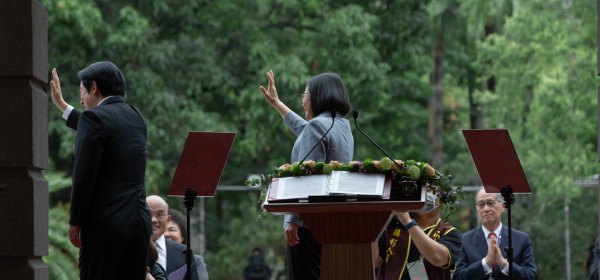
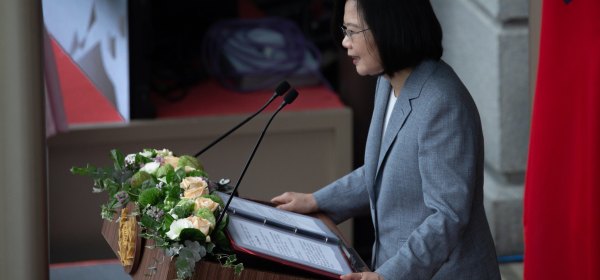
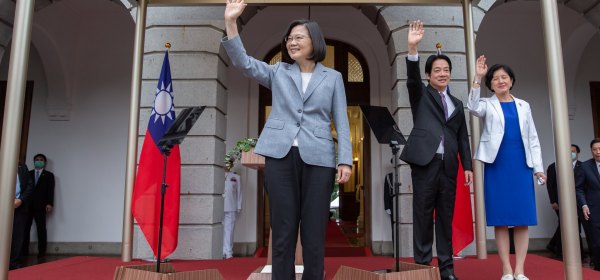
Written by Qi Dongtao. As usual, Tsai Ing-wen’s inaugural speech on May 20 maintained her low-key, down-to-earth style without much surprise. From Beijing’s perspective, since she did not explicitly accept the “one-China principle” in the speech, she failed Beijing’s so-called “exam” again and therefore was severely criticised by Beijing. But since Beijing had already concluded that she would never openly accept the “one-China principle,” her speech did not surprise Beijing.

Prospects for President Tsai Ing-wen’s Second term

Written by Gerrit van der Wees. Her overwhelming victory in the elections already gave President Tsai Ing-wen a solid mandate to push domestic reforms with greater vigor, while the country’s excellent performance in combating the Coronavirus crisis gave Taiwan an unmatched international visibility, which will help in pushing back against China’s mounting political and economic aggressiveness.

Is Taiwan Prepared to Cope with a Post-COVID Economy?

Written by Harry West. The Coronavirus pandemic has presented the world with challenges the likes of which have rarely been seen before. COVID-19 — a disease for which a vaccine is yet to be found — has killed over 300,000 people and infected millions more. As well as the human cost, the virus has had a significant impact on the global economy, with governments across the world implementing social distancing measures as a means for combatting the spread.

Why We Must Press for Full Accounting from China Regarding the Coronavirus

Written by Robert S. Wang. While most people agree we need to probe into the origin of the current Coronavirus pandemic, many continue to urge that we initially focus on containing the pandemic and address the broad issues of cause later on. This is also what China’s President Xi Jinping proposed in his speech, along with the offer of $2 billion in assistance, at the opening of the 73rd World Health Assembly meeting on May 18.

Nostalgia and Exile in the Diasporic Literature of Mainland-born Taiwanese

Written by Fang Tang. The word ‘diaspora’ derives from the Greek – dia, ‘through’, and speirein, ‘to scatter’, and was used to refer to the exile of the Jewish people from their homeland, the historic Israel. William Safran extends this concept in modern society to encompass a feeling of alienation, a nostalgic longing for the homeland and the self-consciousness act of defining one’s ethnicity. Over the past several decades, Chinese diasporic literature has generally been concerned with the motifs of nostalgia, homesickness, cultural identity and a sense of belonging.

1 39 40 41 42 43 61